The National Museum of Damascus holds enough on its own to fill a day: the facade of an Umayyad palace moved stone by stone, the oldest alphabet in the world, the funerary busts of Palmyra. It is the one to start with among Syria museums, but it is only a doorway. Syria is one of the oldest areas of human settlement anywhere, a crossroads of routes through history and a battleground between empires. Its history runs back thousands of years and takes in dozens of civilisations and peoples; every monotheistic religion passed through. So it is no surprise to find dozens of museums and archaeological sites here: there is hardly a span of Syrian ground without a trace of history on it.
We start with the museums, then move on to the ancient cities that continue them.
Syria museums: the four to start with
No Syrian city is without a museum, simply because there is so much worth displaying. There is a main museum in nearly every large city, plus smaller ones at the archaeological sites themselves.
The National Museum of Damascus
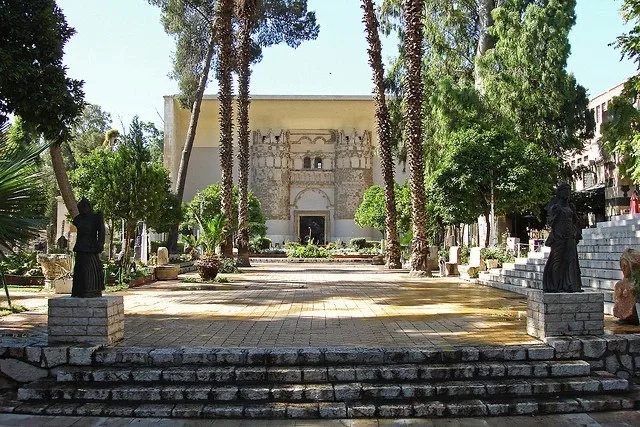
The largest museum in Syria and the oldest of them, it stands in the middle of Damascus on the bank of the Barada. It covers a wide area, most of it an outdoor garden with sculptures from different periods of Syrian history spread through it. The most striking part of the museum is its frontage: it is the facade of a great palace of Syrian history, Qasr al-Hayr al-Gharbi, built in the Umayyad period in the middle of the Syrian steppe and moved here to preserve it.
Inside, the museum divides into four main sections. The prehistoric section holds the remains of the earliest people in Syria. The ancient eastern Syrian section covers the period from the first appearance of writing up to the arrival of Alexander of Macedon in Syria, and includes the finest Canaanite material found at Ugarit — above all the alphabet discovered north of Latakia, the oldest alphabet in the world. This is where you see the first letter.
The classical section holds a large number of finds from Syria belonging to the Greek, Roman and Byzantine periods, as well as the Palmyrene material, of which the most important pieces are the funerary busts and the distinctive Palmyrene burial style.
The Arab-Islamic section holds, alongside the usual objects, a large collection of manuscripts from different periods of the Islamic era in Syria.
The last section is given to modern art: sculptures, paintings and work by contemporary artists who left their mark on Syrian art.
A visit to the museum in Damascus is essential for anyone interested in Syrian history.
Azem Palace
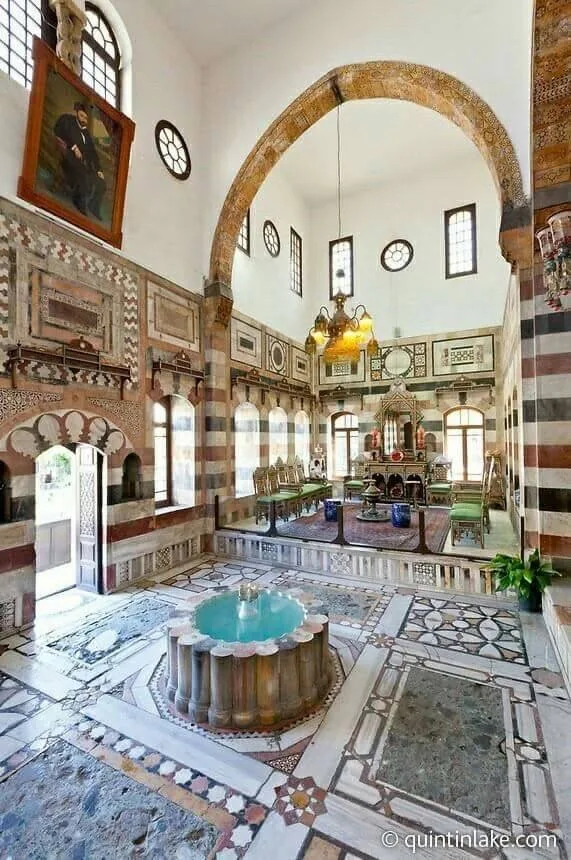
One of the more interesting specialist museums in Syria. Azem Palace sits in the heart of Old Damascus and was built as a residence for the governor of Damascus. In the modern period it became a museum that displays the building itself as the main exhibit, along with tools, finds and weapons from various periods in its many sections. What stands out most, though, are the life-size wax figures showing scenes from daily life in Damascus in the late nineteenth century.
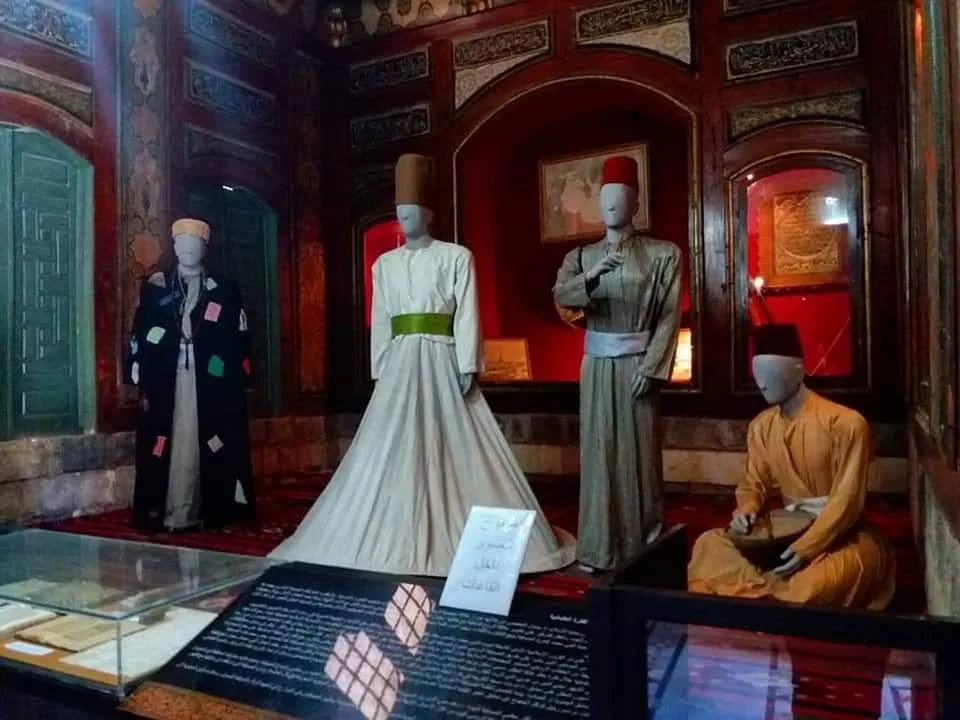
You can move between the parts of Azem Palace and watch realistic scenes of how life in Damascus was lived, arranged according to the original architectural divisions of the house: figures of women in the haramlek section, figures of the household staff at work in the salamlek, and in each new hall another scene, down to the everyday clothing of the period.
The Nur al-Din Bimaristan
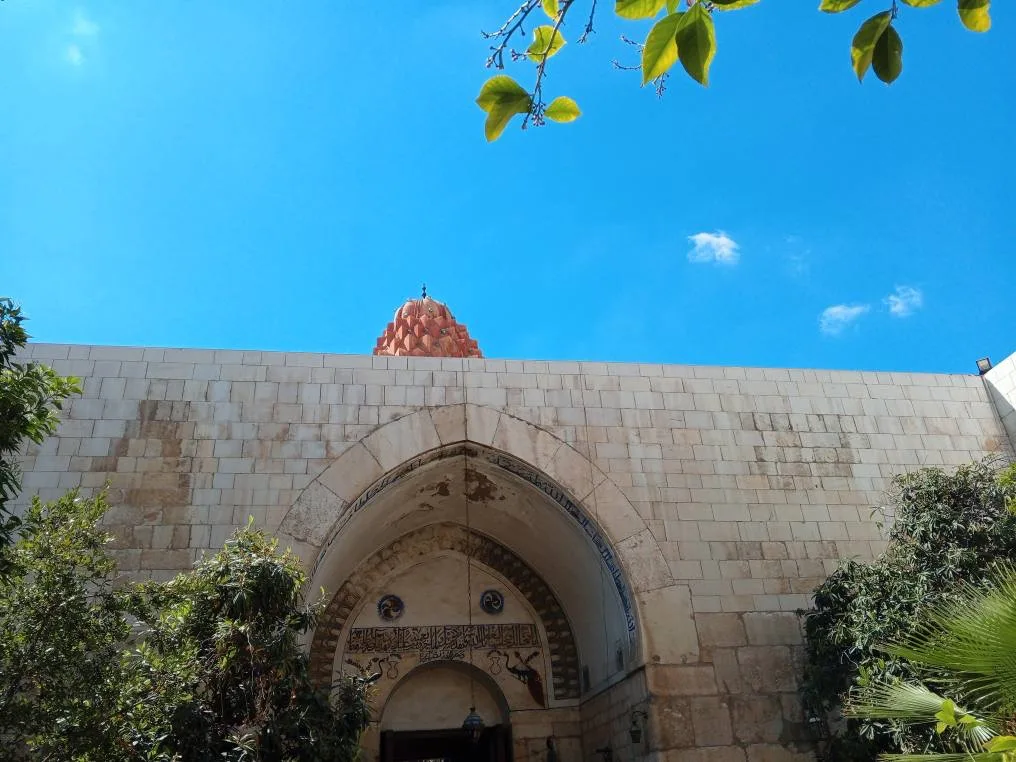
The Nur al-Din Bimaristan stands in the heart of Old Damascus. It was built in the time of Nur al-Din Zengi as a hospital for the poor, and developed into one of the most important medical institutions of its age.
The original building follows the pattern of traditional Damascene houses: an opening to the sky and a pool in the middle of the courtyard, letting in sun and air, with the calming effect that had on patients.
In the modern period the bimaristan became a museum of medical science and of the history of medicine and pharmacy in the Levant. It has a hall on the sciences and their development, a hall on medicine and its history, and another on pharmacy, drugs and how they were extracted, with an attached hall of taxidermied animals of the kind once used for dissection.
The Aleppo museum
The Aleppo museum is an important documentary archive for Aleppo and the region around it, and one of the best museums in Syria.
It stands in the middle of the city and is laid out in sections much like the National Museum of Damascus, but the distinctive thing about Aleppo is that everything displayed is Syrian in origin.
The collection runs from prehistory and the earliest people in their settlements along the banks of the Euphrates, through the beginnings of agriculture, on to the great kingdoms near Aleppo — Ebla and Mari — and then the Greek, Roman and Byzantine periods, with an Islamic section holding its own fine pieces.
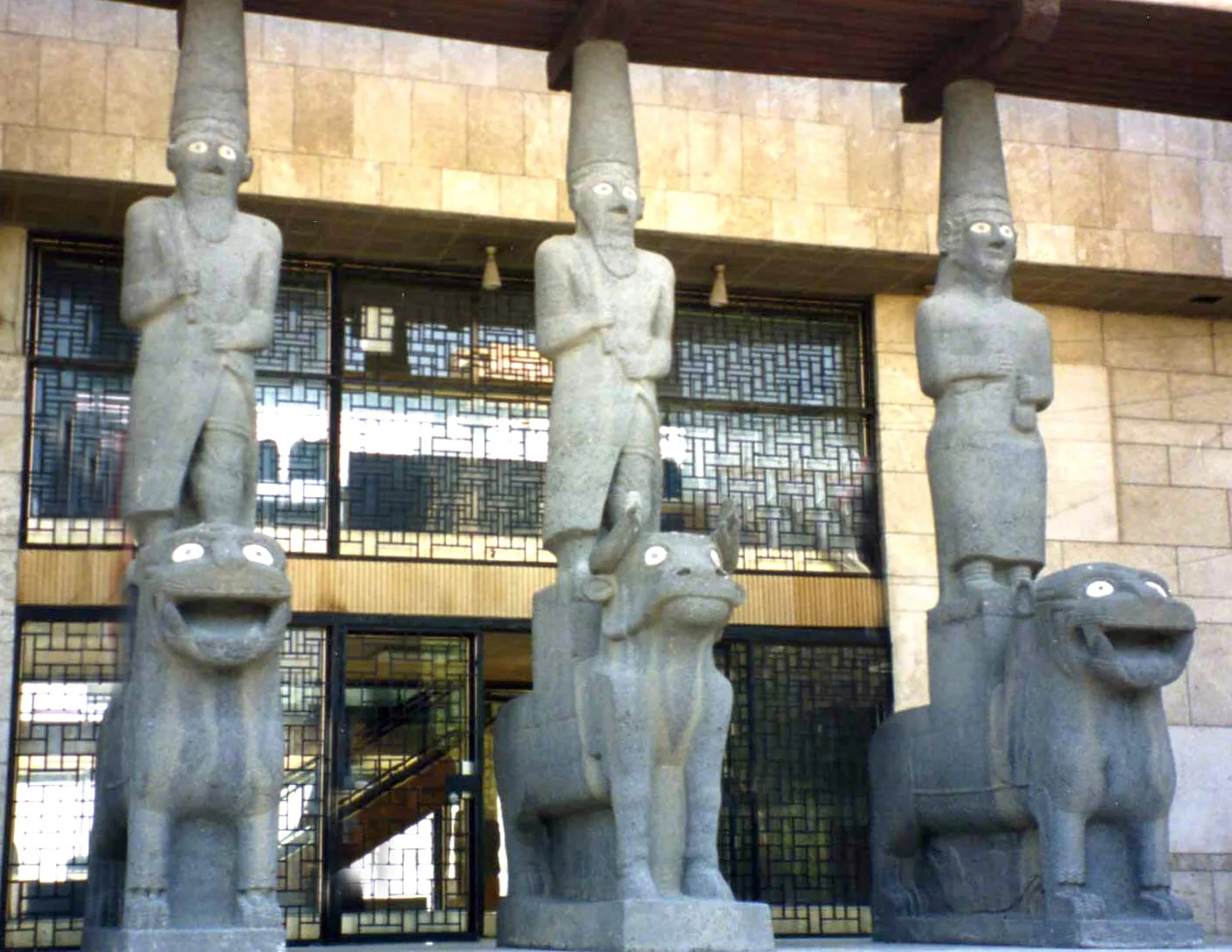
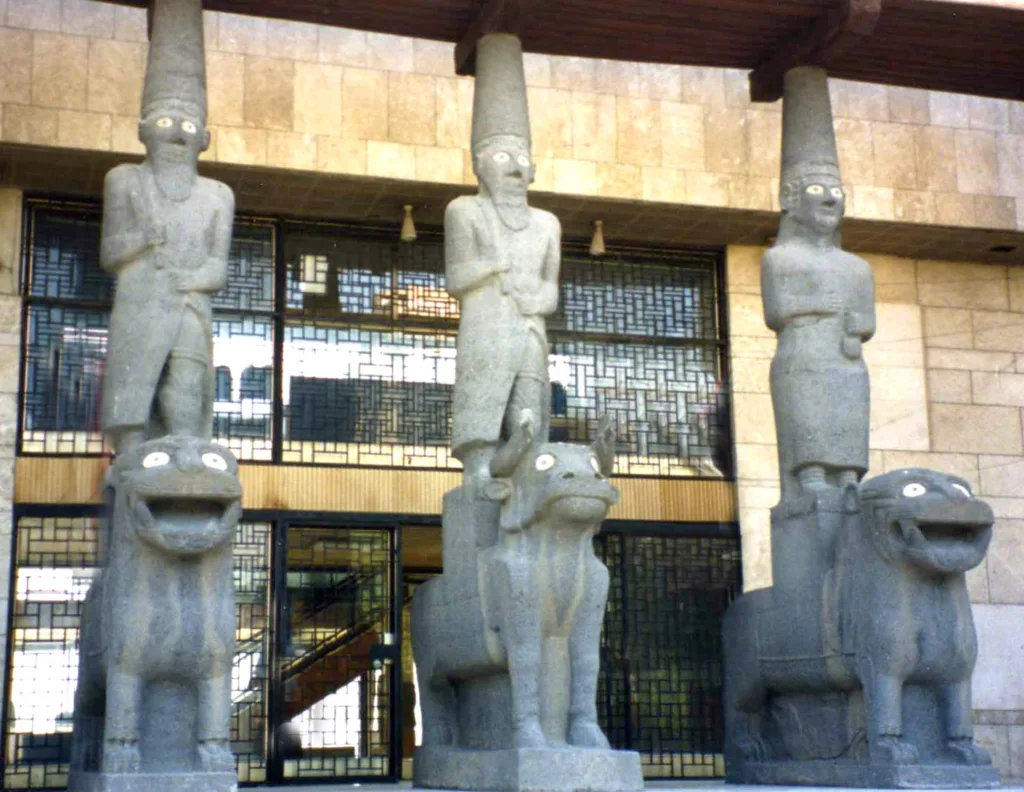
The museum has a remarkable entrance made up of animal figures topped by figures of three men. They formed the facade of the temple or palace at Tell Halaf and date to the tenth century BC.
The Aleppo museum is Syrian civilisation summarised in one place.
The ancient cities
Palmyra
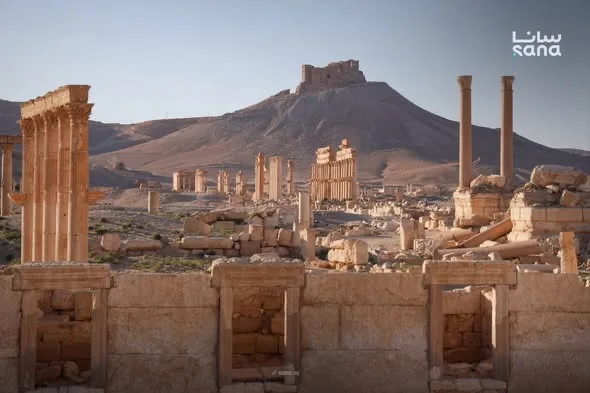
Palmyra is one of the most prominent archaeological sites in Syria and the icon of tourism here. It lies in the middle of the Syrian steppe, about 140 km east of Homs, near an oasis on the old caravan route.
Palmyra has been famous since the time of the Roman Empire, when the city broke away from Roman rule under its queen Zenobia and expanded until it controlled Alexandria, then fell after a battle that ended with Zenobia’s capture.
The ancient city spreads over a wide area, all of it effectively a living museum: the ground is dense with Roman columns and old temples, along with the distinctive Palmyrene tombs and hundreds of statues everywhere. There is also a castle on a nearby hilltop, built to defend the city.
A visit to Palmyra is a basic part of any trip concerned with Syrian antiquity and its history, in particular the colonnaded street, the triumphal arch and the temple of Baal.
Bosra
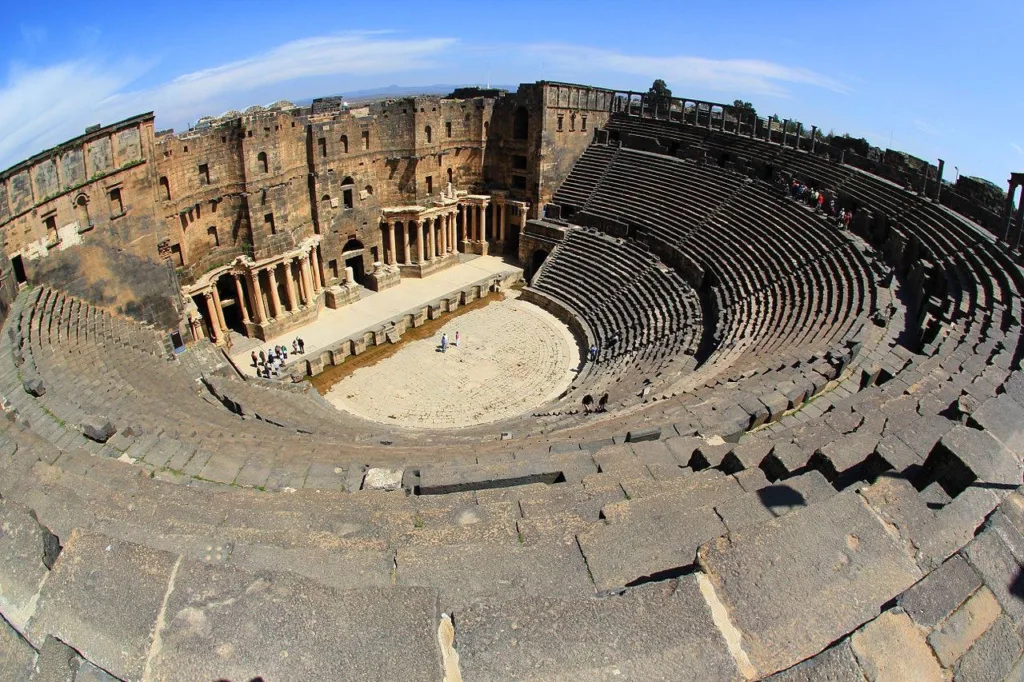
In the far south of Syria an Islamic-style citadel rises around a Roman theatre — a combination you will not find anywhere else.
This is Bosra, a city that has kept going for thousands of years and is still lived in today, where you walk on roads laid out by Roman engineers.
Bosra lies about 40 km east of Daraa, on the Syrian-Jordanian border, and is distinguished by the black basalt stone that turned its buildings into fortresses against time.
The city was one of the Roman centres and holds an ancient theatre seating more than a hundred thousand spectators, with a remarkable system for carrying sound from the stage to the tiers without any amplification — a display of old engineering skill.
In the Islamic period a large citadel was built enclosing the Roman theatre, and the result is strange and impressive. Stone roads and ancient buildings surround the citadel and the theatre, with inscriptions and statues scattered throughout, which gives the city a real weight of antiquity even though daily life has carried on in it for more than two thousand years.
Apamea
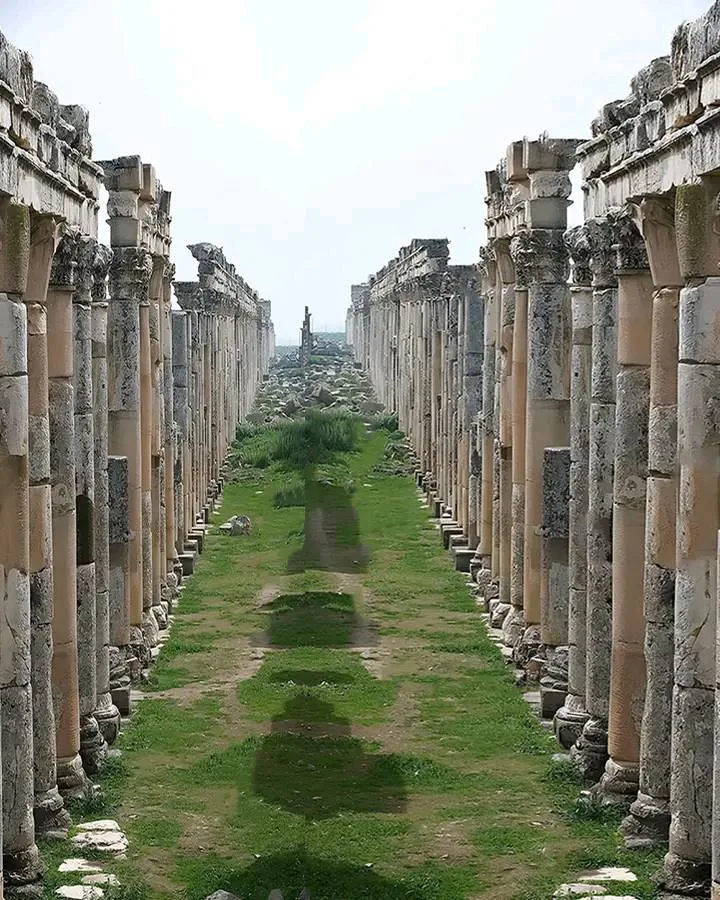
In the Ghab plain there is a forgotten ancient city no less important than any of the ones above: Apamea, founded by the Roman commander Seleucus I Nicator in 300 BC and named after his wife, Apamea.
The city lies 60 km north of Hama, on flat ground near the Madiq castle. It is known for its long street, 1,850 metres of it, lined on both sides with finely carved columns, and it holds other remains as well, including the theatre, the palace and several churches. What stands out most in the area is the number of mosaic panels found there.
Apamea is well worth the trip, because it is a complete city that was forgotten, and because the countryside around it is very beautiful, especially in spring.
Amrit
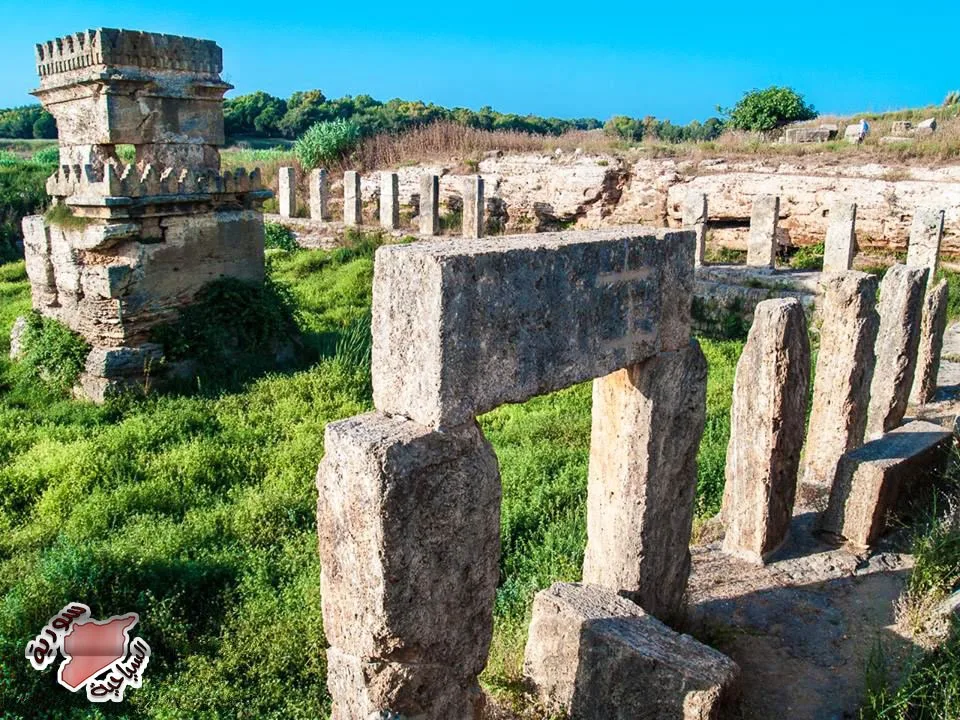
On the Syrian coast near the Mediterranean shore, about 7 km south of Tartus, lies the only Phoenician city left as an original example of that civilisation, because later civilisations did not build on top of its ruins.
Amrit holds a large number of notable remains. The most important is the olympic stadium, the first of its kind in the world, predating the comparable Greek stadiums by some time. The city also has a Phoenician temple cut into the rock, and many distinctive royal tombs known as the maghazil, the spindles.
Amrit is worth seeing for anyone interested in the forgotten civilisations of the Syrian coast. Further north, the alphabet found at Ugarit is part of the same story — the site sits just outside Latakia.