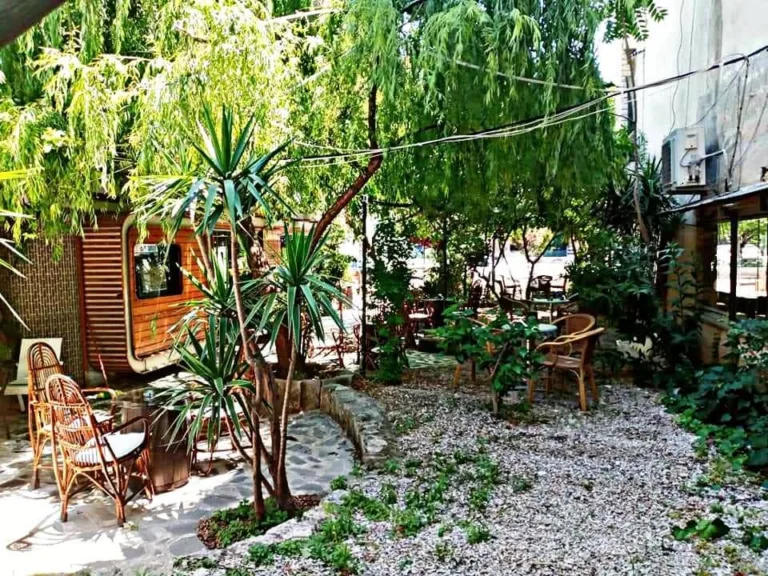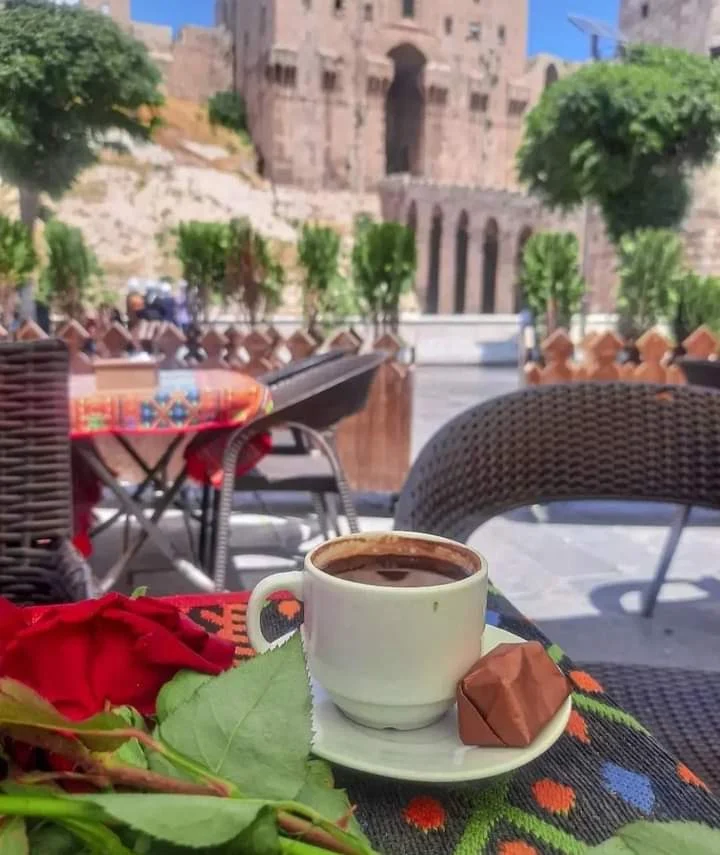
In the streets of ancient Aleppo, street food is as layered as the city’s history. Every neighborhood has its own staples, its own vendors, and its own take on dishes that have been eaten here for centuries. This guide takes you through the popular quarters of Aleppo and the street food you should not leave without trying.
Savory Dishes
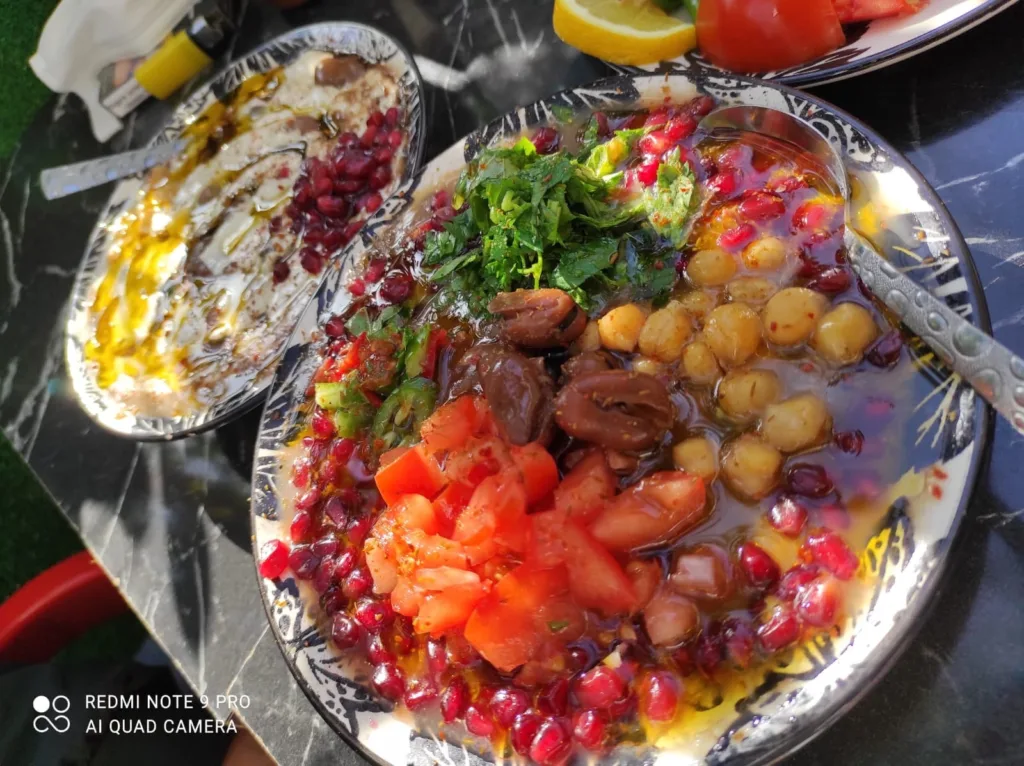
Foul – Stewed Fava Beans
Foul (stewed fava beans) is the dominant breakfast dish across the Levant, but Aleppo — true to form — does it with a distinct personality. The dish appears in virtually every neighborhood and market in the city, served with tahini and olive oil or dressed simply with oil and lemon, garnished with fresh vegetables and accompanied by pickles and raw onion.
The most legendary vendor is Abu Abdo al-Fowwal, who has become a landmark of the city in his own right. Fair warning: foul is deeply filling and dangerously addictive — not the lightest way to start a day of walking.
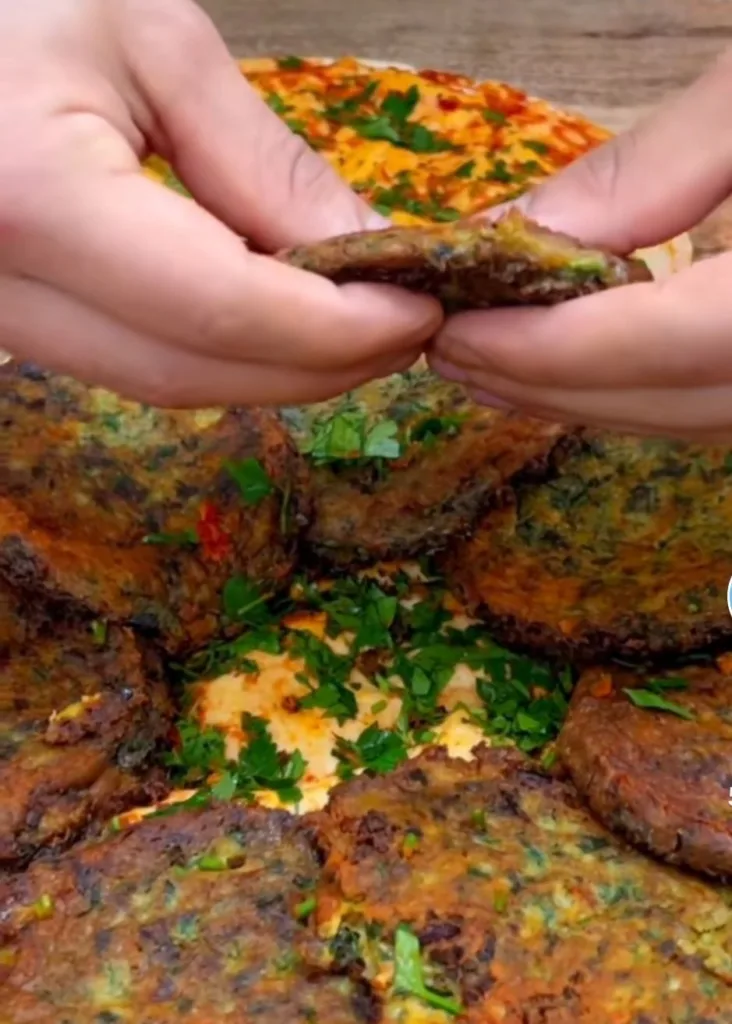
Kibbeh Saqqaqiyya
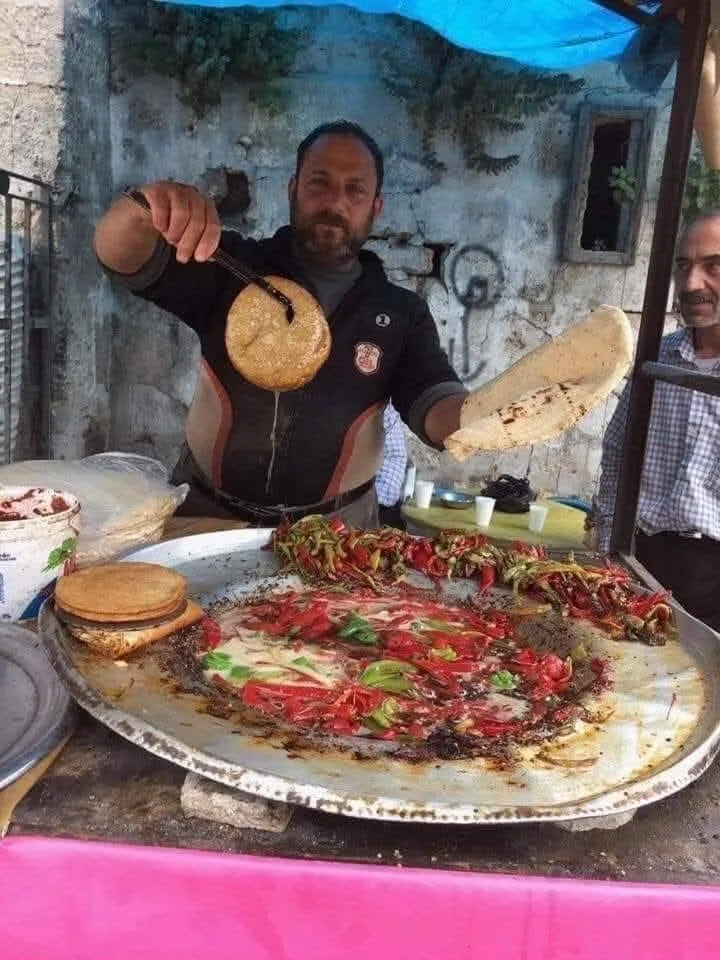
Kibbeh Saqqaqiyya is a distinctly Aleppan creation born from the city’s working-class neighborhoods. The name comes from the Arabic word zuqaq (alley), which tells you exactly where this dish belongs — sold from carts and small stalls in the backstreets of quarters like Bab Jnin and Bab Antakya.
The dish consists of flat discs of kibbeh dough made primarily from bulgur wheat, filled with a mixture of red pepper, onion, and spices, then pan-fried in oil until crisp. They are served as sandwiches — with even more red pepper added on top. Simple, cheap, filling, and entirely specific to Aleppo.
Ajja – Herb Omelette Sandwich
Ajja is one of the simplest and most satisfying street foods in Aleppo — eggs beaten with finely chopped parsley, onion, and spices, fried quickly in hot oil and stuffed into flatbread. The recipe varies slightly from one vendor to the next, but the core flavor is consistent: fresh, herbal, and completely unpretentious.
What makes ajja exceptional is how ubiquitous it is. You can encounter an ajja cart almost anywhere in Aleppo — it requires minimal equipment and a few cheap ingredients, which means it shows up wherever people need a fast, genuinely nutritious breakfast on the move. The ajja sandwich is one of the most popular morning options in the city’s markets and popular neighborhoods.
Abu Hakoub
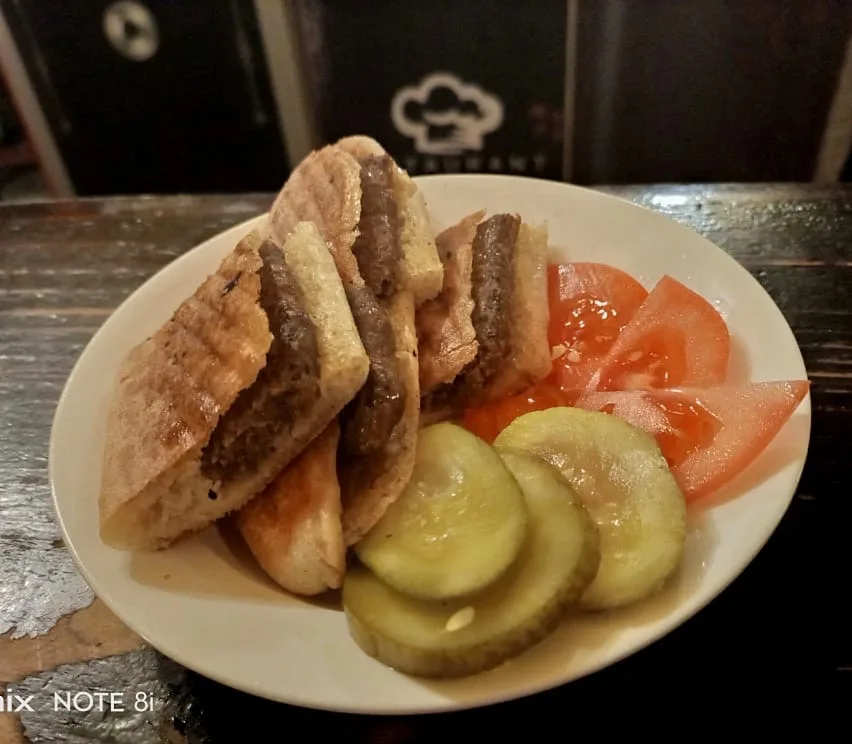
No visit to Aleppo is complete without eating at Abu Hakoub — one of the oldest sandwich shops in the city, with a history stretching back more than a hundred years. Located in the Aziziyya neighborhood near the public garden, the shop looks exactly as it should: weathered, authentic, and unchanged.
Abu Hakoub specializes in Armenian-Aleppan heritage meats — basturma (cured spiced beef), sujuk (spiced dried sausage), qawarma (preserved slow-cooked meat), and the house specialty: sasijou, an Armenian-style sausage preparation that you will not find elsewhere. Everything is served in sandwiches in a setting that feels like a living piece of the city’s culinary memory.
Go for the food, stay for the atmosphere. This place has earned its reputation across a century.
Mamouniyya
Mamouniyya is the great equalizer of Aleppan food culture — a dish eaten by everyone, from street-side workers to restaurant diners. Simple in ingredients, remarkable in effect, and entirely specific to Aleppo in character.
The dish is made from coarse semolina toasted in clarified butter, sweetened with sugar, and finished with cinnamon or crushed Aleppo pistachios. It is served alongside shanklish-style cheese or clotted cream (qishta), which creates a sweet-savory contrast that makes it one of the most memorable breakfast experiences in the country.
Mamouniyya appears everywhere in Aleppo — from humble street stalls to formal restaurants — which is precisely the point. It belongs to everyone.
Sweets and Desserts
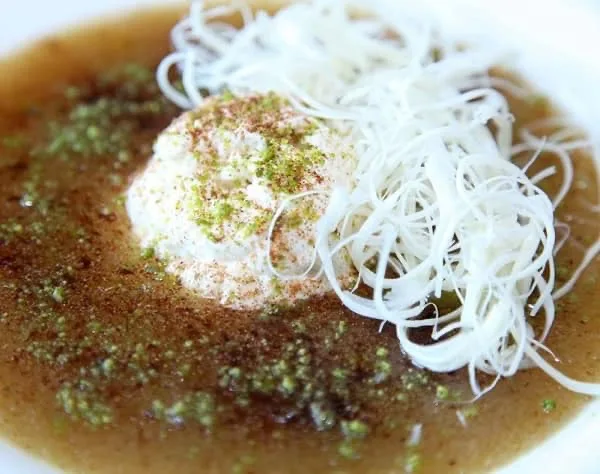
Haytliyya
Haytliyya is Aleppo’s signature summer dessert — and one of the fastest, most distinctively presented sweets in the city. It is made from milk, starch, and mastic (miska), set until firm, then finished with rose water and served topped with Arabic ice cream, crushed Aleppo pistachios, and sugar syrup. Its defining characteristic is its serving vessel: traditional ceramic bowls made specifically for this dessert.
Although the dish originated in Saraqib, it found its permanent home in Aleppo. The most respected shops serving it include Al-Afrah and Salura. Haytliyya is an experience that exists only in Aleppo — do not miss it in warm weather.

Zlabiyya
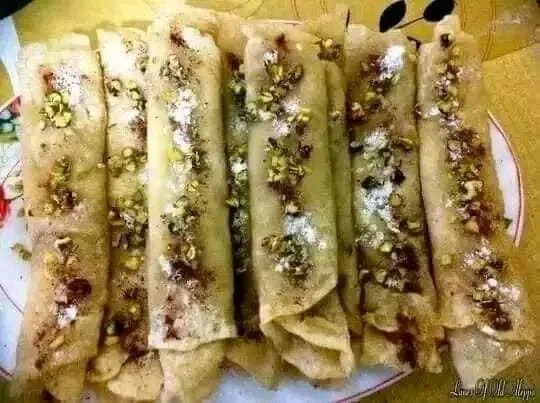
Zlabiyya is a light Aleppan pastry with a recipe that belongs specifically to this city — most closely associated with the Al-Azour shops, though it has since spread across Aleppo and beyond.
The pastry is made from a thin, specially prepared dough, topped with powdered sugar and cinnamon, garnished with nuts, and served either plain or filled with clotted cream and crushed pistachios. It bears some resemblance to Damascene tamari ka’ak, but with a distinctly Aleppan character that sets it apart.
Light, affordable, and entirely specific to Aleppo — zlabiyya is a straightforward reason to visit Al-Azour on your next trip to the city.
Aleppo’s food culture cannot be captured in a single article. When you visit, treat every unfamiliar dish as an invitation — the city’s culinary creativity is genuinely boundless, and you will not regret a single bite.