Latakia, on Syria’s northern Mediterranean coast, holds more than most visitors expect. From a cliff-top corniche with panoramic sea views to one of the most historically significant archaeological sites in the world, the city rewards time spent exploring both its waterfront and its ancient layers.
Sea and City
The Southern Corniche
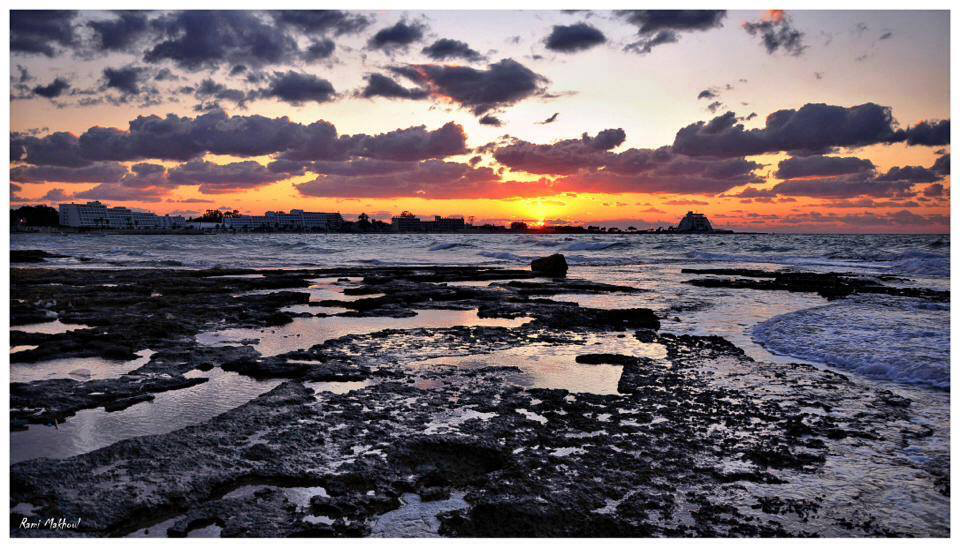
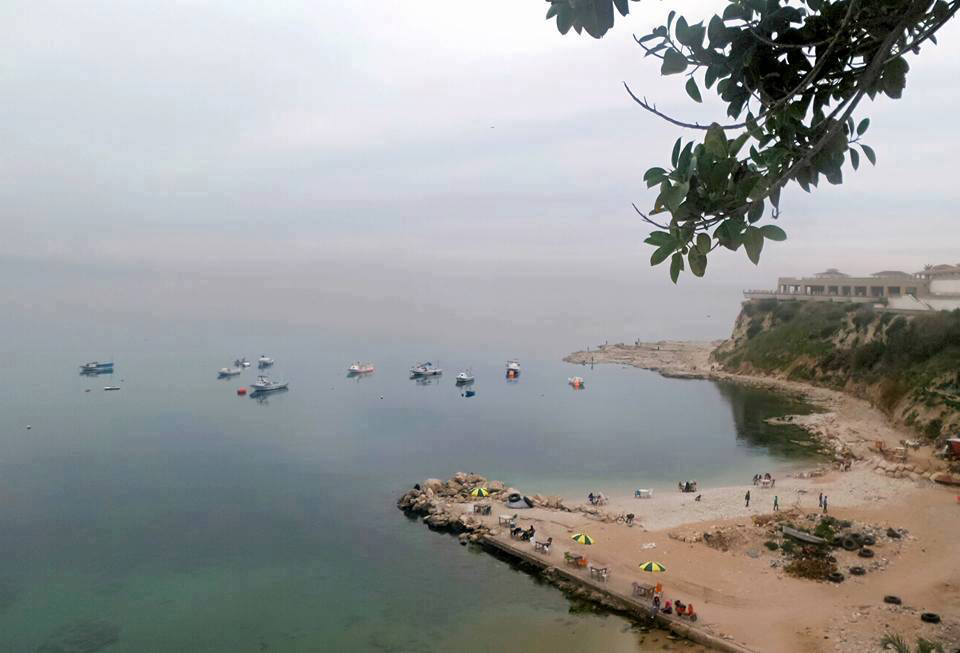
At the southern edge of Latakia, the road rises slightly and the sea appears between the buildings with an immediacy that surprises even people who know it is coming. The southern corniche sits on a natural headland that juts into the Mediterranean, giving it a panoramic view that is genuinely difficult to tire of — the feeling of standing at the edge of the land with open water extending in every direction.
From the top of the rocky cliff, the view opens in both directions: to the left, one of the finest sandy beaches in Syria curves in a broad arc along the edge of the city’s public beach (Masbahat al-Sha’b), rising gradually toward a rocky outcrop at its far end. In the small sheltered bay below lies Al-Qasab marina, where fishing boats take refuge when the sea turns rough. To the right and ahead, the open Mediterranean spreads to the horizon.
The corniche itself is lined with activity across all seasons — from simple qasab (reed) seating directly over the water to full-service restaurants with elevated sea views. No visit to Latakia is complete without walking this stretch.
Sports City
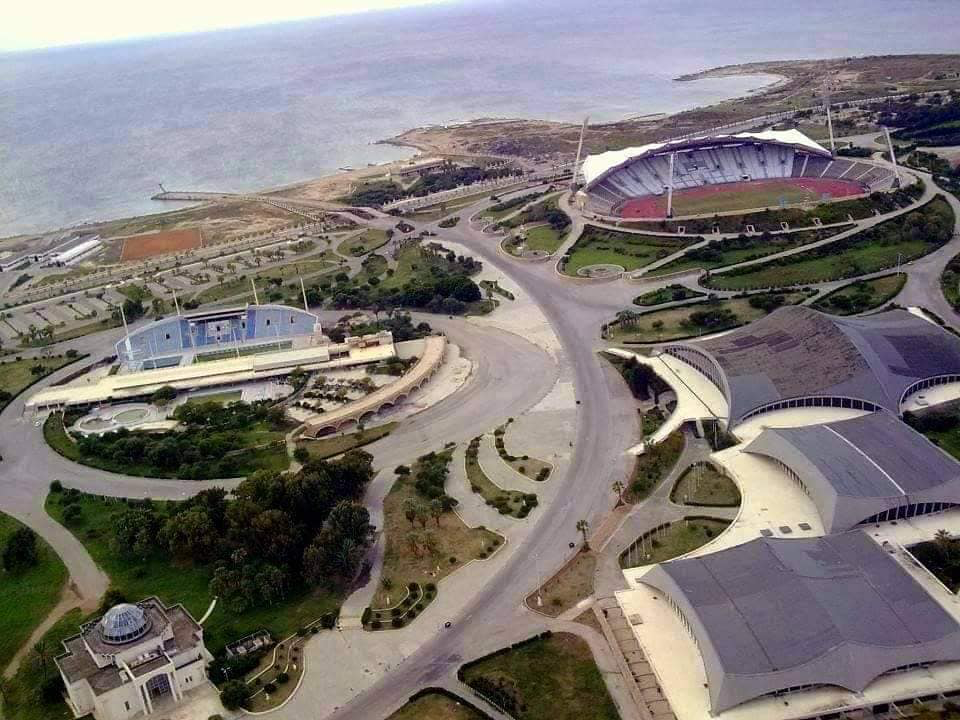
Despite its primary identity as a sports facility, Latakia Sports City has become one of the most visited open spaces in the city — a consequence of its position on the northern seafront and its generous green grounds. Multi-sport venues and shaded walking areas attract visitors looking for a break from the urban density, while the turquoise water directly alongside the complex makes the adjacent beach one of the most visually striking in the city.
The complex also includes an equestrian club and horse racing track positioned directly on the seafront — a combination found almost nowhere else in Syria, and worth experiencing for the spectacle alone.
Blue Beach
North of the city center on a distinctive coastal headland, Blue Beach (Al-Shatt al-Azraq) is the most famous beach in Latakia — and arguably the most recognized beach destination on the entire Syrian coast. Hundreds of beach chalets and facilities of varying sizes and service levels line the shore, offering access to clear Mediterranean water that is consistently among the best swimming conditions on the Syrian coast. The beach’s combination of natural beauty, established infrastructure, and year-round activity makes it the reference point for Syrian beach tourism.
History and City
Latakia National Museum
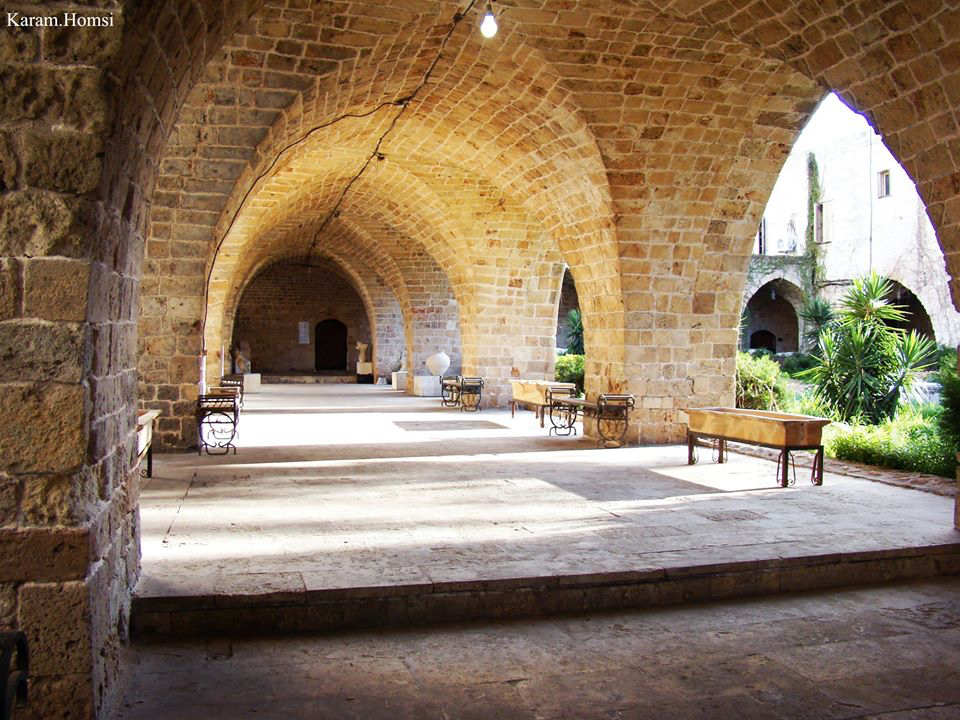
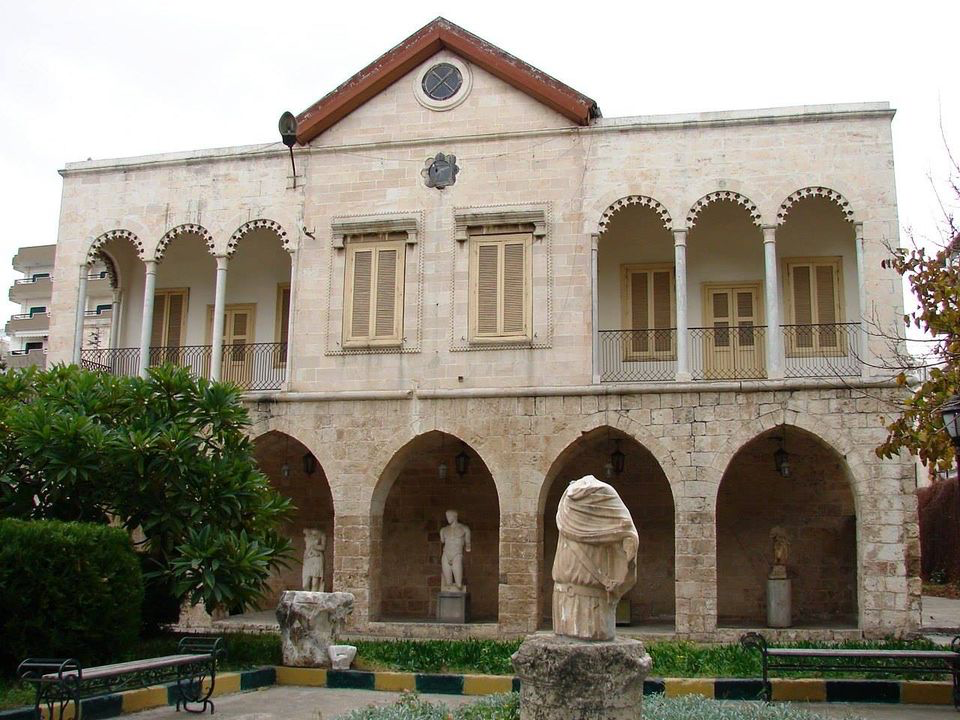
In the heart of Latakia, adjacent to Al-Batruni Garden — a park of enormous old trees that functions as a green lung at the city’s center — the Latakia National Museum occupies a historic two-story building that has had several previous lives. Known at various points as Khan al-Dukhan (the Tobacco Caravanserai) and later as the residence of the French governor during the Mandate period, it eventually settled into its current role as a repository for thousands of historical artifacts.
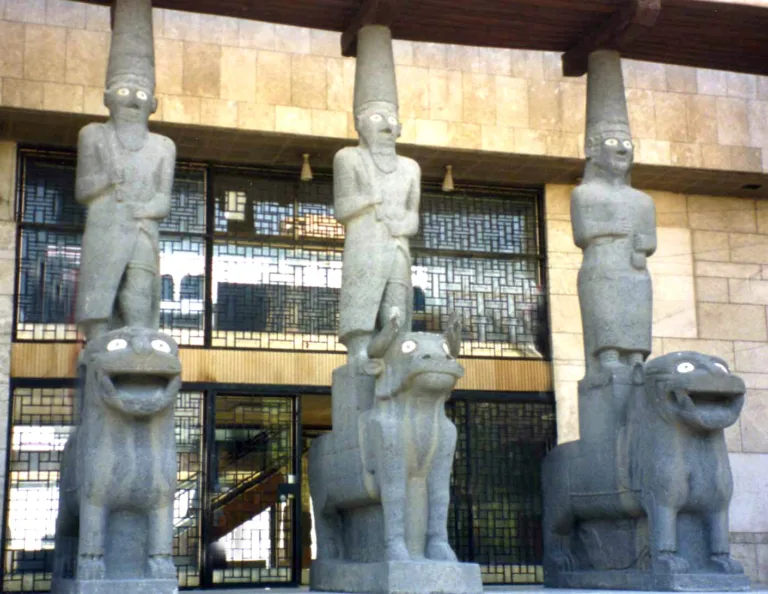
The building’s external arcade — stone arches running along the facade — is lined with sculptures and monuments that span the full arc of the region’s history, from prehistory to the Islamic era. Inside, six stone-vaulted halls organize the collection by period, each containing artifacts, small objects, and detailed finds that document Latakia’s layered past. Archaeological excavations in the museum garden itself have also yielded discoveries, making even the grounds part of the exhibit.
For anyone interested in history, the National Museum is an essential stop. For anyone who simply wants a shaded, green, unhurried space in the middle of the city, it works equally well on those terms.
Ras Shamra – Ugarit
On the northern edge of Latakia, directly on the Mediterranean shore, lies the ancient city of Ugarit — one of the most historically significant archaeological sites in the world. This is the city where the world’s oldest known alphabet was developed, where the world’s oldest recorded piece of music was found, and from which Phoenician ships once sailed to every corner of the Mediterranean, as far as Carthage.
Excavations at the site have uncovered clay tablets documenting some of the earliest commercial transactions between civilizations, along with evidence of a thriving Bronze Age urban center that traded with Egypt, the Aegean, Anatolia, and Mesopotamia simultaneously. The ruins visible today give a sense of the city’s scale — temples, a royal palace, residential quarters, and harbor infrastructure that supported one of the ancient world’s most active trading ports.
The coastal setting at Ras Shamra amplifies the experience: the same stretch of Mediterranean shoreline that Ugarit’s merchants and sailors once used is directly visible from the ruins. Few archaeological sites in the world offer this combination of historical magnitude and natural beauty in a single location.
Visiting Ugarit is not optional for anyone traveling the Syrian coast. It is where human writing began.