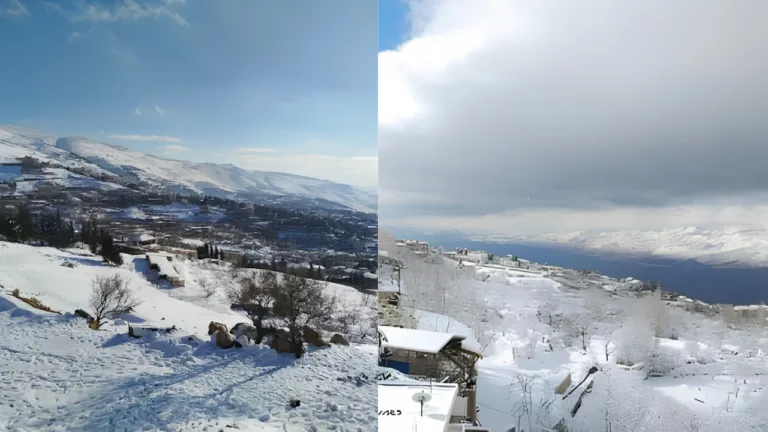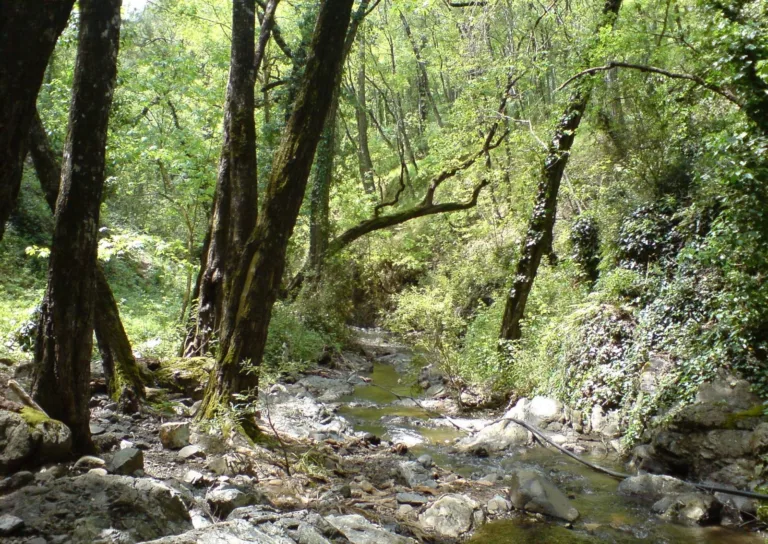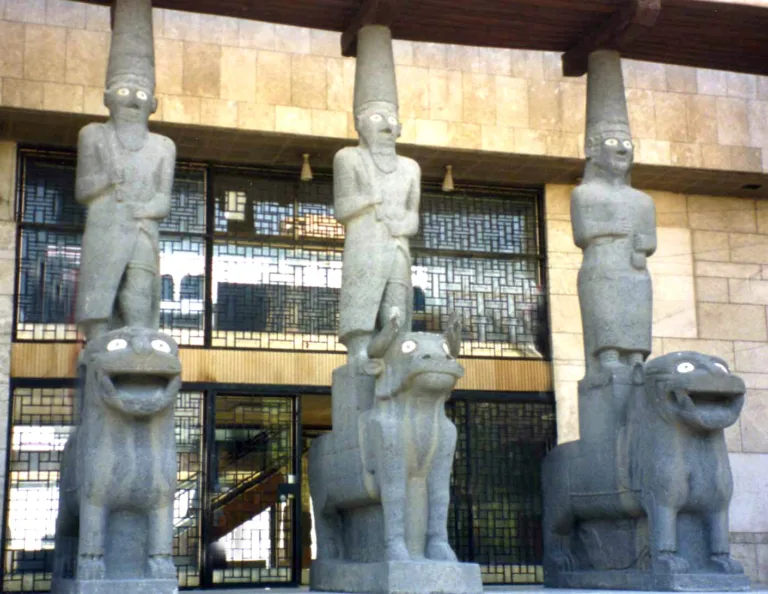
Hama — sometimes called the twin of Damascus — is one of Syria’s most beautiful cities. Positioned at the geographic heart of the country, it combines a deeply layered history with a living urban identity shaped by the Orontes River, which has run through the city for millennia. For visitors interested in natural beauty, heritage architecture, and authentic Syrian culture, Hama is a destination that rewards every hour spent there.
Archaeological Sites
The Old City and Markets
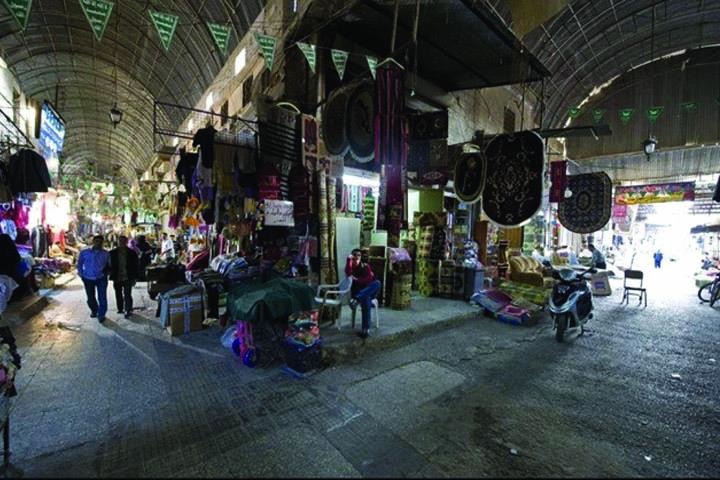
In Hama, history is not confined to museums — it is the texture of the city itself. The lanes, markets, and houses of the old city are living spaces that have been continuously inhabited and traded in for centuries, and the result is a rare combination of archaeological significance and everyday vitality.
The essential stop is Al-Mansouriyya Souq — a long, covered market dating to the Ottoman period, structurally similar to Al-Hamidiyah Souq in Damascus. It remains fully active today, lined with shops selling everything from textiles and spices to household goods. You can spend an entire morning here moving between the architecture and the commerce, and the two are inseparable.
Immediately adjacent is the Coppersmiths’ Market (Souq al-Nahhasin), where traditional copper goods are still manufactured and sold. It is one of the best places in Syria to find a handcrafted souvenir that is actually made where you buy it.
Azm Palace
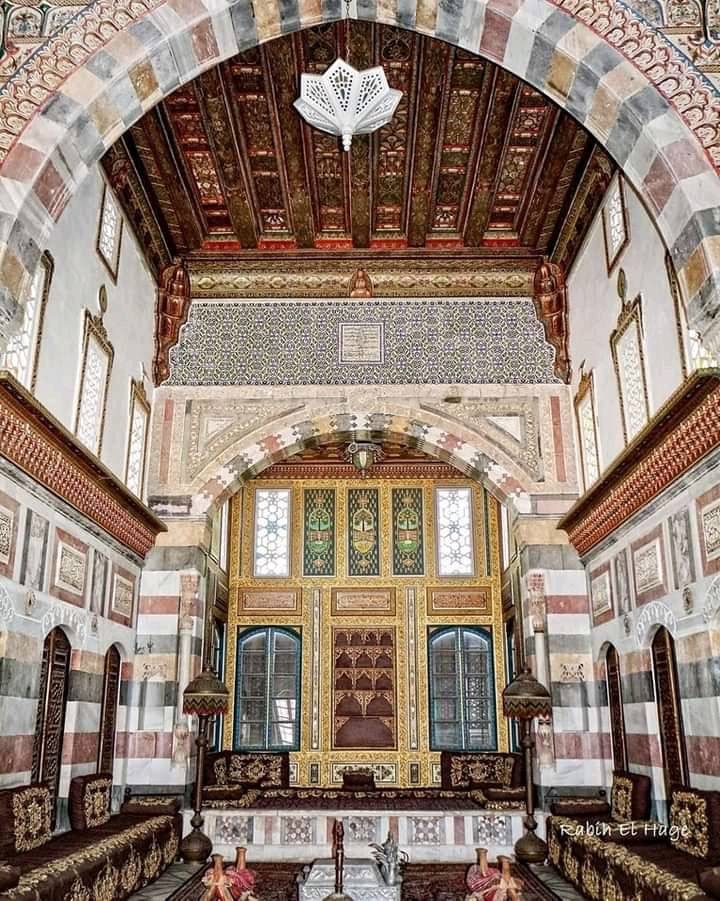
Commissioned by the Ottoman governor Asad Pasha al-Azm — the same figure who built the more famous Azm Palace in Damascus — Azm Palace in Hama served as the seat of the Ottoman governors of the city. The two palaces share a lineage in their architecture and craftsmanship: no room is without carved ornamentation, painted ceilings, decorated doorways, and handcrafted details that together represent the peak of 18th-century Damascene decorative arts.
The palace sits near Hama Citadel in a position overlooking the Orontes River, the city’s famous norias (waterwheels), the Nuri Mosque, and the surrounding historic quarters. Today it functions as a museum of popular heritage, with rooms organized around different aspects of traditional Hamawi life — each featuring wax figures, period tools, and artifacts reconstructing scenes from the city’s past. A visit here is a structured journey through Hama’s social history.
Popular Landmarks
Hama Citadel
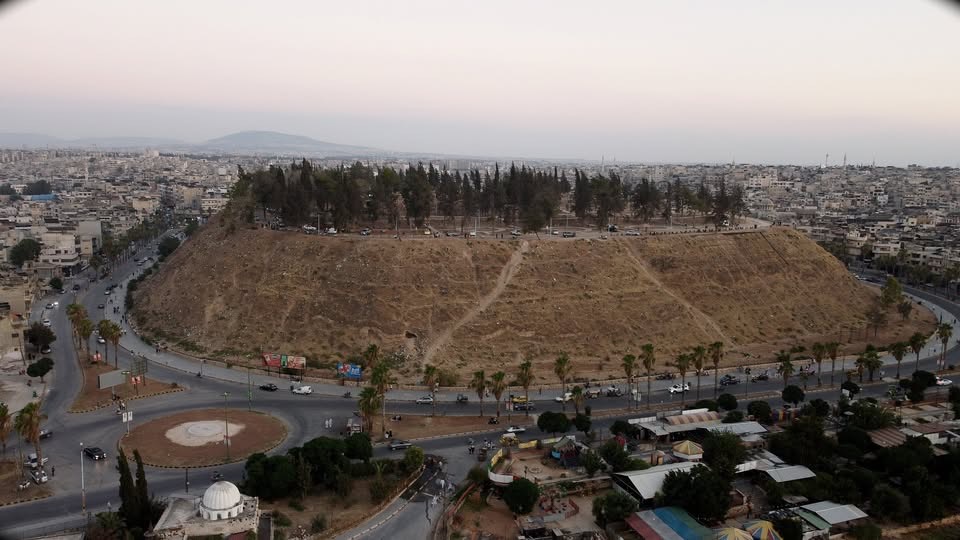
Hama Citadel stands on a natural tell rising above the Orontes River at the center of the city, commanding panoramic views of the river, the surrounding neighborhoods, and the famous norias directly below. Its history extends back to antiquity, and it retained its military function through numerous successive eras until the Mongol invasion of the Levant — after which it was largely destroyed and never rebuilt as a military structure. What remains today is a series of walls and ruins that give a sense of its former scale.
The citadel’s summit has been transformed into a public park — shaded by mature trees, with benches and walkways that make it one of the most pleasant places in central Hama to spend time. The elevated position gives it views that no other point in the city can match, and it has become the natural gathering place for residents and visitors alike.
The Norias of Hama
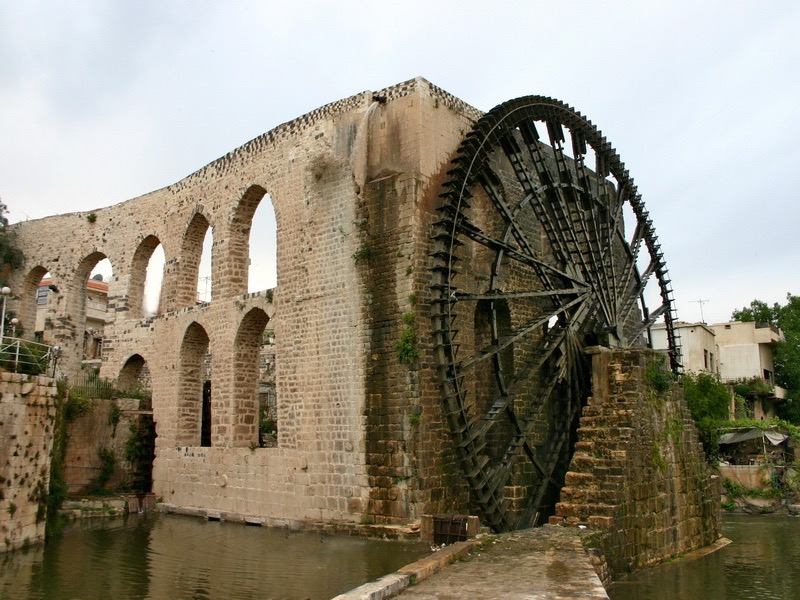
If Damascus has its jasmine, Hama has its norias — and nothing else defines the city so completely. The norias of Hama are ancient wooden waterwheels mounted along the banks of the Orontes, driven by the river’s current to lift water into stone aqueducts that once irrigated the city’s quarters and surrounding orchards. Their precise age is unknown, but they are widely considered the oldest and most sophisticated mechanical irrigation system in recorded history.
Each noria is a large wooden wheel fixed to the riverbank. As the current turns it, ceramic pots mounted around the rim scoop water from the river and carry it to the top of the wheel, where it pours into an elevated stone channel and flows by gravity through the city. The sound they produce as they turn — a low, resonant groaning — has been part of Hama’s identity for so long that it has its own name in the local dialect: ‘aneen al-na’oura, the moaning of the waterwheel. Anyone who has spent time in Hama carries that sound with them.
Several norias remain in the city. The largest are Al-Muhammadiyya and Al-Ma’mouriyya. The most famous is Al-Jasriyya, located near Jisr al-Saraya bridge and overlooking Sahat al-Asi — the city’s most recognized public square.
If you visit at the right time, you may witness one of Hama’s most unusual local traditions: young men climbing the norias and jumping from the top into the Orontes River below — a daring and distinctly Hamawi ritual known as al-naksa al-Hamawiyya (the Hamawi dive). Dangerous, spectacular, and entirely specific to this city.