A day tour of Damascus — the oldest continuously inhabited capital in the world, a living masterpiece, and a civilization that refuses to be forgotten. The city of love, jasmine, and timeless authenticity. Here are the essential experiences in Old Damascus.
The Old City
Old Damascus sits along the banks of the Barada River, enclosed by an ancient stone wall that once served as the city’s faithful guardian. Seven historic gates pierce the wall, welcoming visitors from every direction.
Al-Hamidiyah Souq
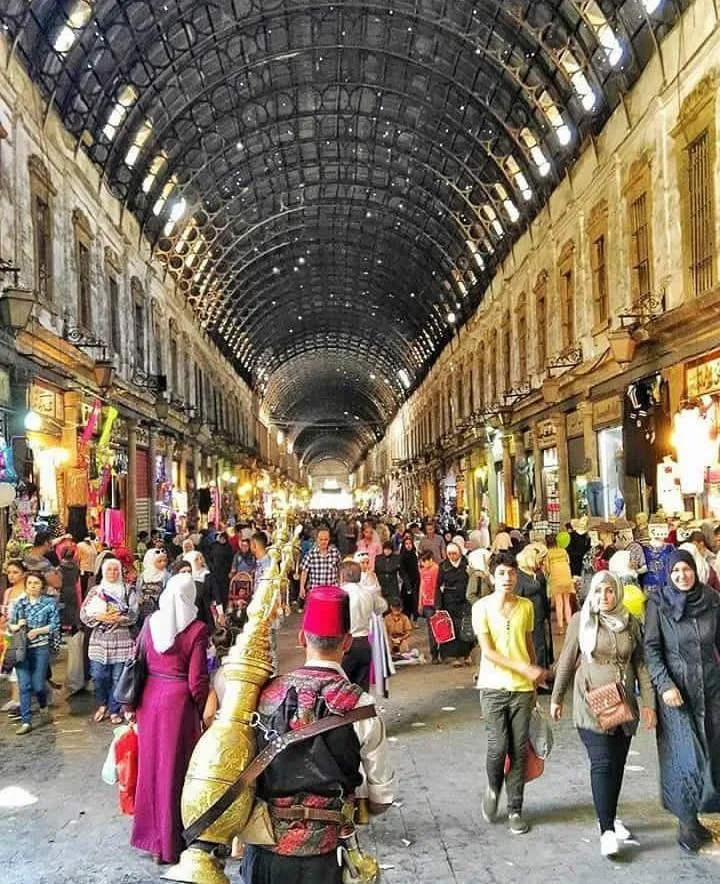
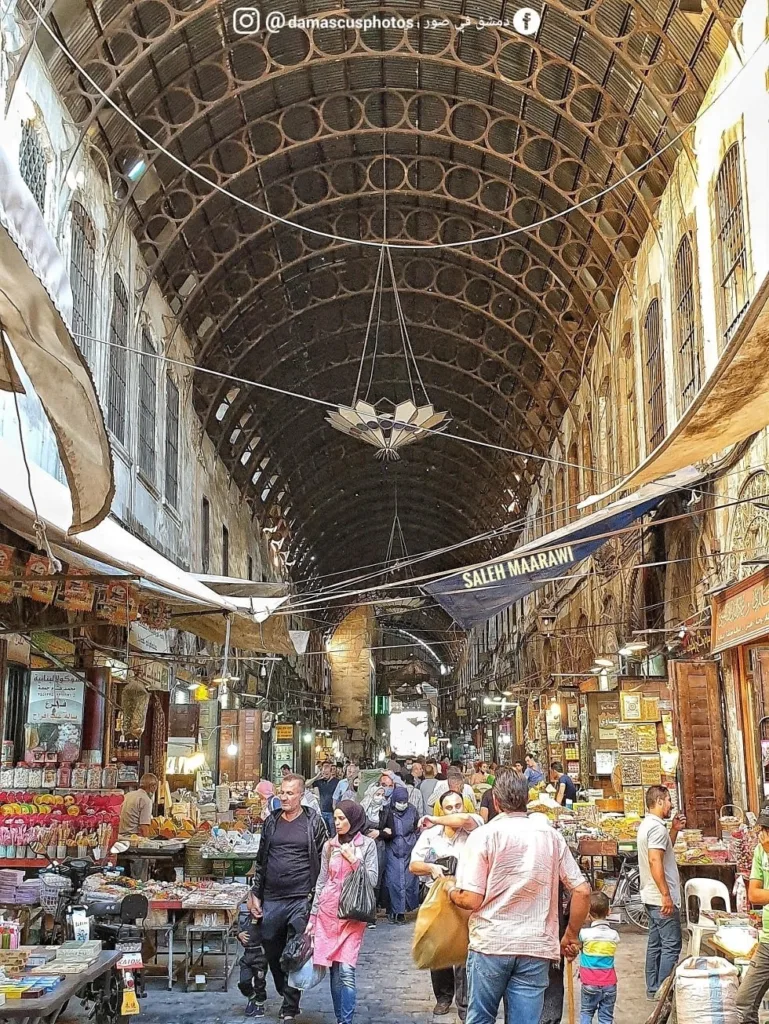
The most iconic landmark in Old Damascus, Al-Hamidiyah Souq stretches from Damascus Citadel all the way to the Umayyad Mosque. The market is lined with hundreds of shops specializing in traditional Damascene crafts — copperware, inlaid woodwork, and distinctive textiles that have made the city famous for centuries.
The souq is fully covered with a barrel-vaulted iron roof and paved with stone, creating an atmosphere unlike any other market in the Middle East. It draws a constant mix of tourists, local shoppers, and traders — many of whom speak several languages, a testament to the market’s long international history. Prices are relatively affordable, and the variety is unmatched.
Al-Hamidiyah Souq is the backbone of any Old Damascus itinerary and should never be skipped.
Umayyad Mosque
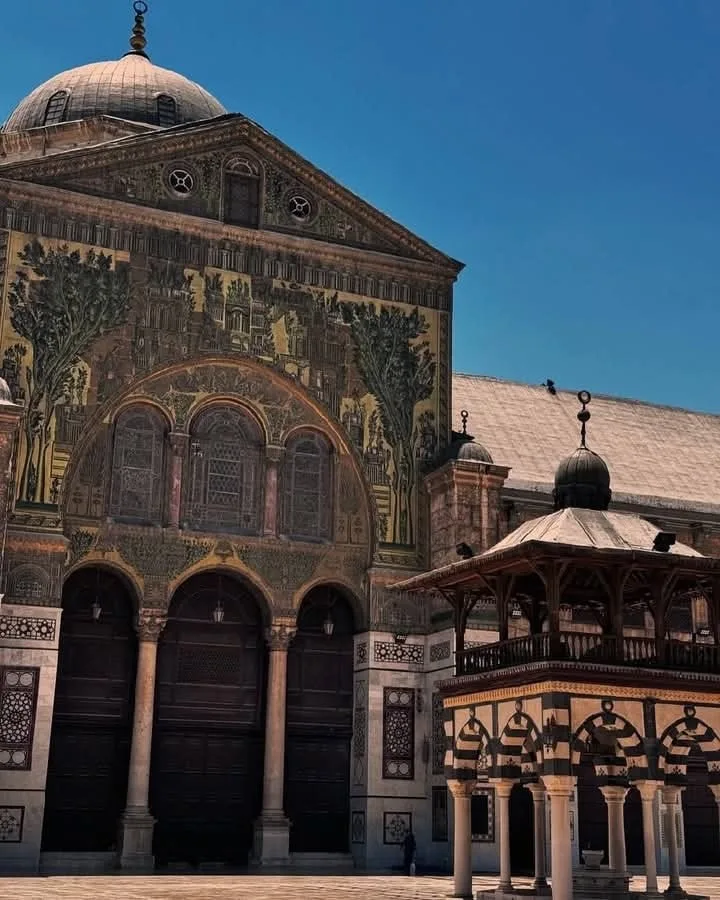
At the far end of Al-Hamidiyah Souq, ancient Roman columns rise in a wide courtyard. Beyond them, towering minarets invite you through a grand entrance — you have arrived at the Umayyad Mosque.
One of the oldest and most significant mosques in the Islamic world, the Umayyad Mosque has a layered history that spans millennia. It began as a pagan temple in the Roman era, was converted into a Christian church, and finally became an Islamic mosque during the Umayyad Caliphate — a history that is still visible in its architecture, where Roman columns, Byzantine mosaics, and Islamic ornamentation coexist in a single remarkable space. Do not pass through Old Damascus without visiting it.
Al-Bzouriyeh Spice Market
Adjacent to the Umayyad Mosque, a cluster of specialty markets mirrors the style of Al-Hamidiyah Souq — each dedicated to a specific trade. Among the most distinctive is Al-Bzouriyeh, historically a market for grains and rare spices. Today it has expanded into a sensory journey through exotic aromas, unusual spice names, and vibrantly displayed sweets and confections that make it an essential stop on any Damascus itinerary.
Azm Palace
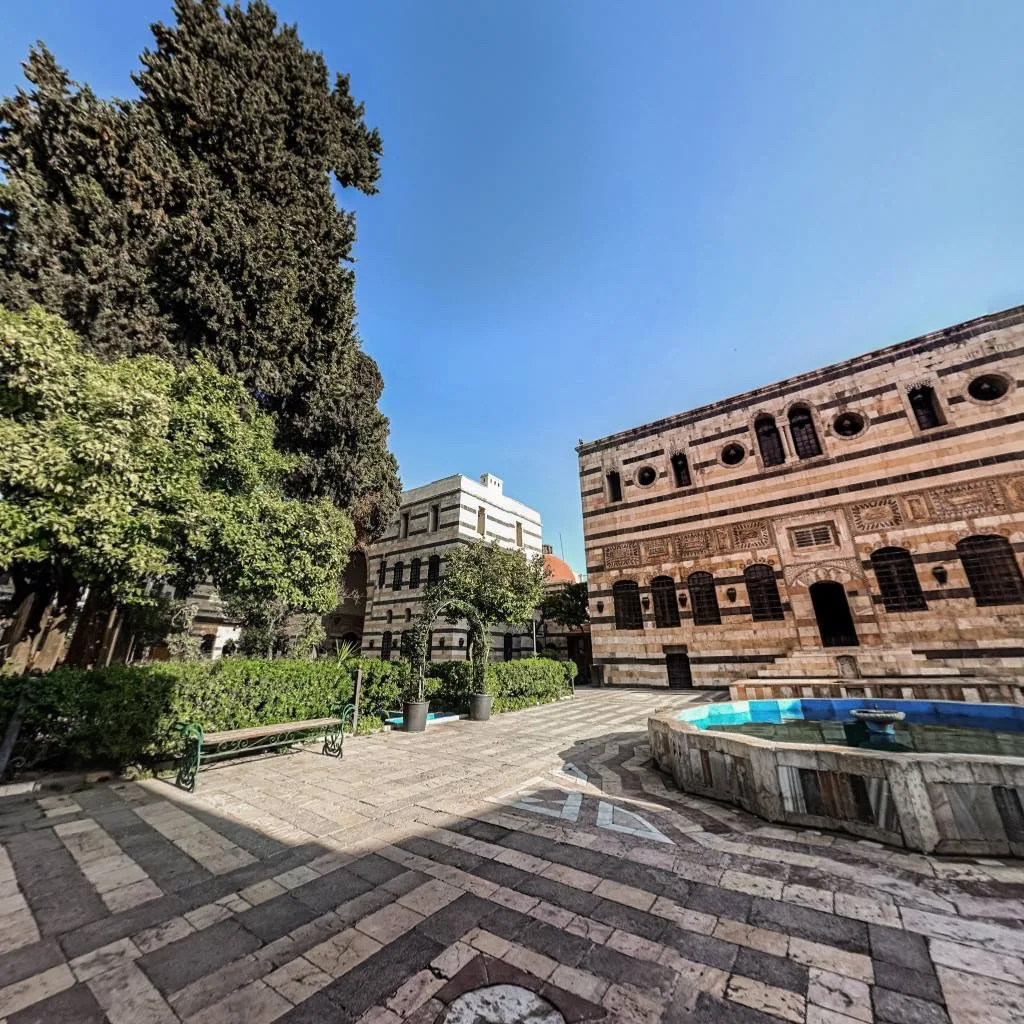
Located behind the Umayyad Mosque, Azm Palace served as the official residence of the Ottoman governor of Damascus. It has since been converted into a museum documenting life in Damascus across different historical periods, including the governor’s household, period tools, weapons, and traditional crafts.
Beyond its collections, the palace itself is a masterpiece of Damascene architecture. Its rooms are divided into residential and service quarters, all adorned with intricate mosaics, ornate carved walls, and inlaid woodwork that showcase the peak of Syrian decorative arts. Wax figures rendered at life size bring the historical rooms to life in a way that few museums manage.
Khan Asad Pasha
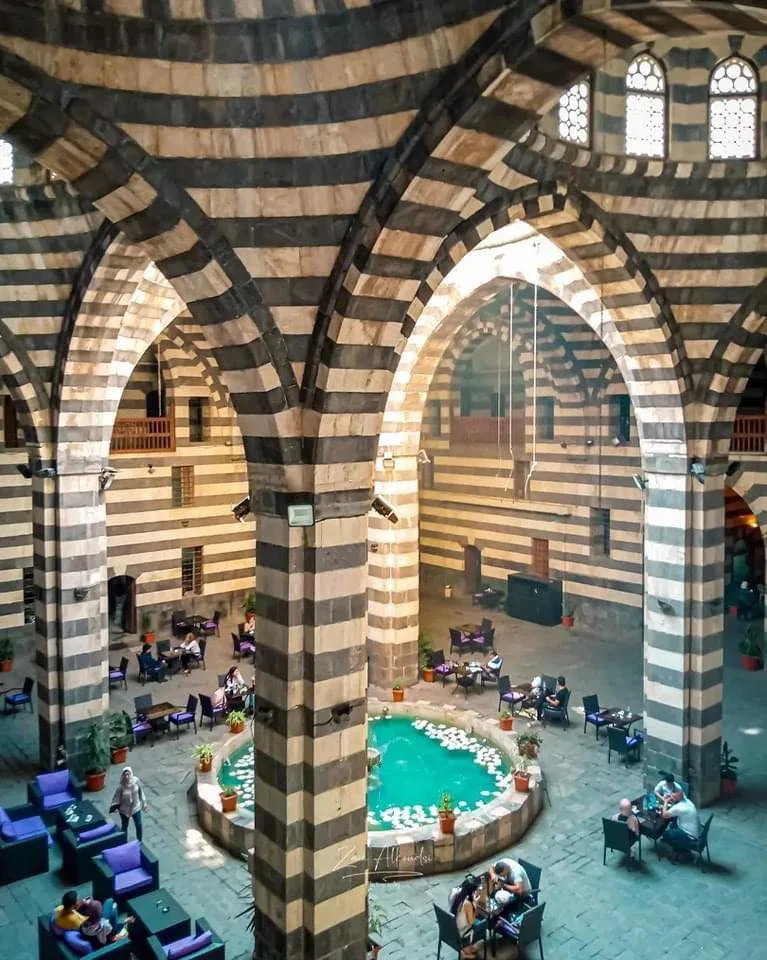
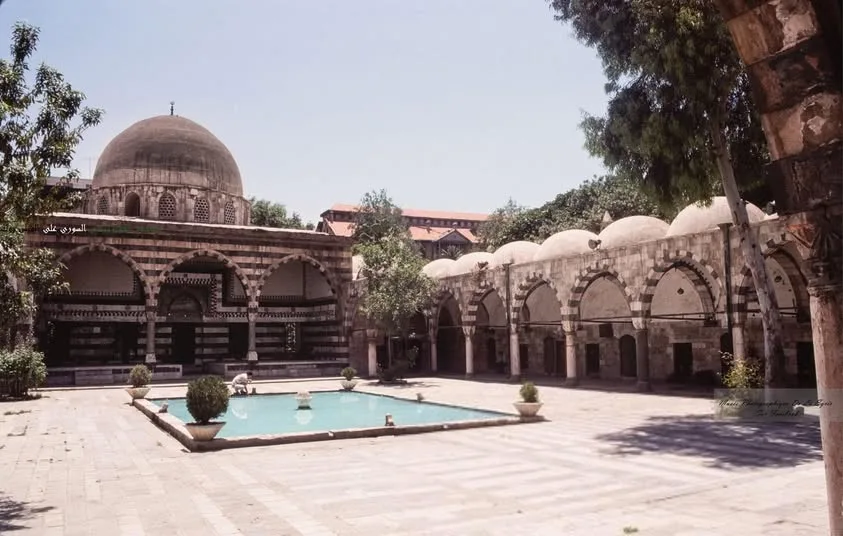
Built near Al-Bzouriyeh market by the same governor who commissioned Azm Palace — Asad Pasha Al-Azm — this caravanserai was originally constructed as an upscale inn and resting point for trade caravans arriving in Damascus from across the region. In its time, it was considered one of the most beautiful buildings in the city.
Today it operates as a heritage destination showcasing the grandeur of Damascene architecture. Its defining features are its eight distinctive domes, a central open-air courtyard beneath the domes, and the striking ablaq construction technique — alternating layers of white and black stone forming its walls and vaulted ceilings.
Khan Asad Pasha regularly hosts exhibitions and charity bazaars, and is open to visitors year-round.
Straight Street – Midhat Pasha Souq
Known in the Bible as the Street Called Straight, this ancient road holds extraordinary historical significance as the path taken by the Apostle Paul after his conversion on the road to Damascus. Today it is also known as Midhat Pasha Souq — a covered, stone-paved market stretching from Bab Sharqi (the Eastern Gate) to the Bab Sreijeh district.
Along its length, crowned Roman columns and architectural fragments from multiple historical eras are embedded in the walls, making the street a layered archaeological experience as much as a working market. Shops specialize in traditional local crafts, with a particular focus on heritage clothing and textiles.
Tekkiye Suleimaniyya
Located just outside the walls of Old Damascus, the Tekkiye Suleimaniyya belongs to the old city in spirit — a remarkable expression of Ottoman architecture at its most refined.
Commissioned by Sultan Suleiman the Magnificent and designed by the legendary Ottoman architect Mimar Sinan, the complex once served pilgrims, travelers, and the poor. It includes a mosque with twin minarets in the classic Ottoman style and multiple domes lining its colonnaded courtyards. The complex covers an expansive footprint and remains one of the finest examples of Ottoman civic architecture in the Levant.
Today the Tekkiye functions as a popular crafts market, and also houses the Syrian Military Museum within part of its grounds.
Chapel of Ananias
The Chapel of Saint Ananias is considered one of the oldest house churches in the world. According to early Christian history, it was here that the Apostle Paul was baptized by Saint John of Damascus — one of the most significant events in early Christianity.
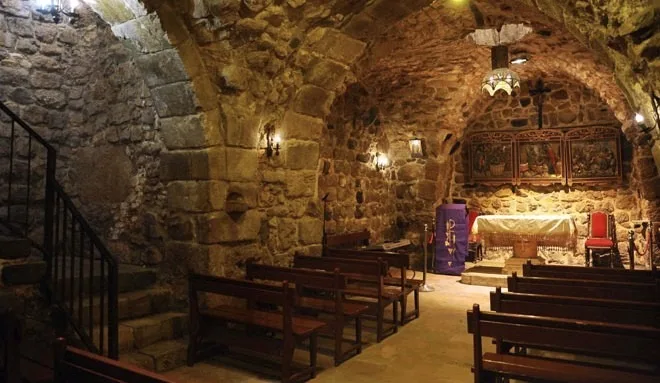
The chapel sits approximately five meters below street level, accessed by a series of stone steps. Inside, stone arches frame a space of extraordinary spiritual weight — a place of worship from a time when Christianity was still a persecuted faith, practiced in secret. This site is nearly two thousand years old and well worth the visit for anyone with an interest in early Christian history.
Bab Touma Quarter
The most vibrant neighborhood in Old Damascus and the heart of its tourism scene, Bab Touma (Gate of Thomas) is where most of the city’s finest boutique hotels and traditional Damascene restaurants are concentrated.
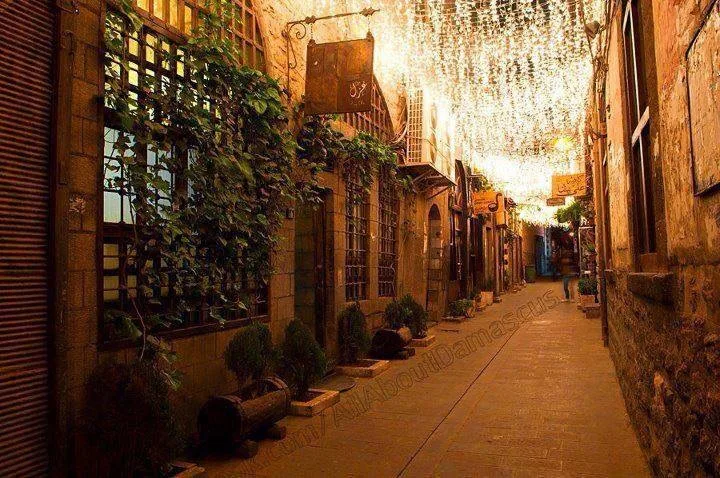
The neighborhood is defined by its narrow winding lanes, tightly packed traditional Damascene houses, and the jasmine vines spilling from corners and courtyards — the city’s most enduring symbol. Alongside historic guesthouses and restaurants, Bab Touma has a thriving café scene that blends modern energy with an authentic old-city atmosphere. It is one of the most rewarding places to spend an evening in Damascus.
Damascus Citadel
The most prominent historic monument in Old Damascus, the Damascus Citadel stands at the northwestern corner of the old city walls and served as the city’s primary military stronghold. Its importance peaked during the Ayyubid and Mamluk periods, after which its military role diminished and it was repurposed as an Ottoman garrison and later a prison.
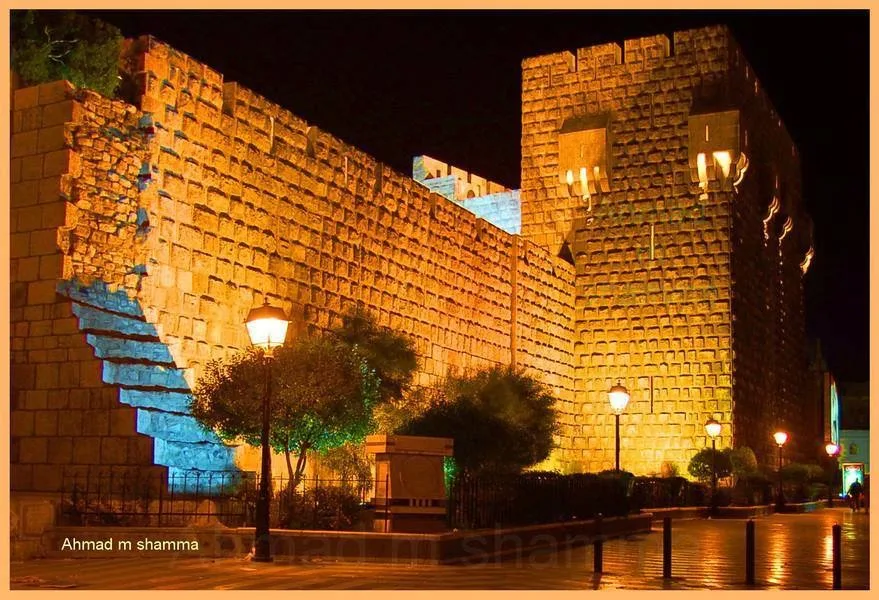
Today the citadel is a living museum and a physical record of every civilization that passed through Damascus. Its defensive towers illustrate the evolution of military architecture across successive eras, and the complex is now used as a venue for events and cultural celebrations — while remaining one of the essential stops on any Old Damascus tour.
Hammam Al-Malik Al-Zaher
A traditional hammam experience is one of the most distinctive things you can do in any ancient city — and Old Damascus delivers it exceptionally well. Historic and modern bathhouses are scattered throughout the old city, but none more notable than Hammam Al-Malik Al-Zaher, a Mamluk-era bathhouse that has preserved its original architecture and traditional customs to this day.
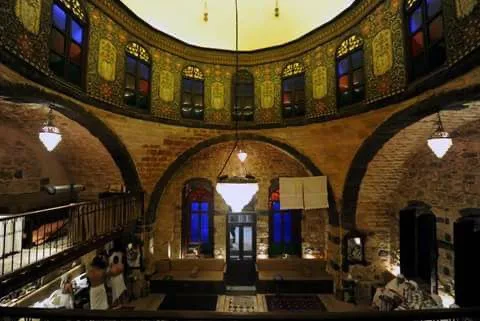
Think of it as a wellness retreat that has been running for seven centuries. A session here offers genuine relaxation and traditional body treatments in a historic setting that no modern spa can replicate. Don’t hesitate — add the hammam to your Damascus itinerary.
Bakdash Ice Cream
Bakdash is one of the oldest ice cream parlors in the world — some historians credit it as the originator of modern Arabic ice cream. Its reputation long ago outgrew Damascus, carried to every corner of the globe by visitors who tasted authentic Syrian boza here and never forgot it.
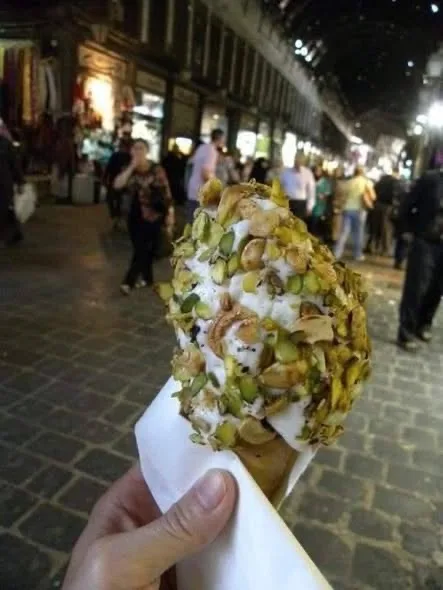
Located inside Al-Hamidiyah Souq, Bakdash serves several varieties of Syrian sweets, most famously its Arabic ice cream topped with Aleppo pistachios and the beloved Damascene mahalabia. Most visitors prefer to eat it while walking through the souq — the flavor, the noise, and the energy of the market combine into an experience that is unmistakably Damascus. Make sure Bakdash is on your list.
Al-Qaymariyya Croissant
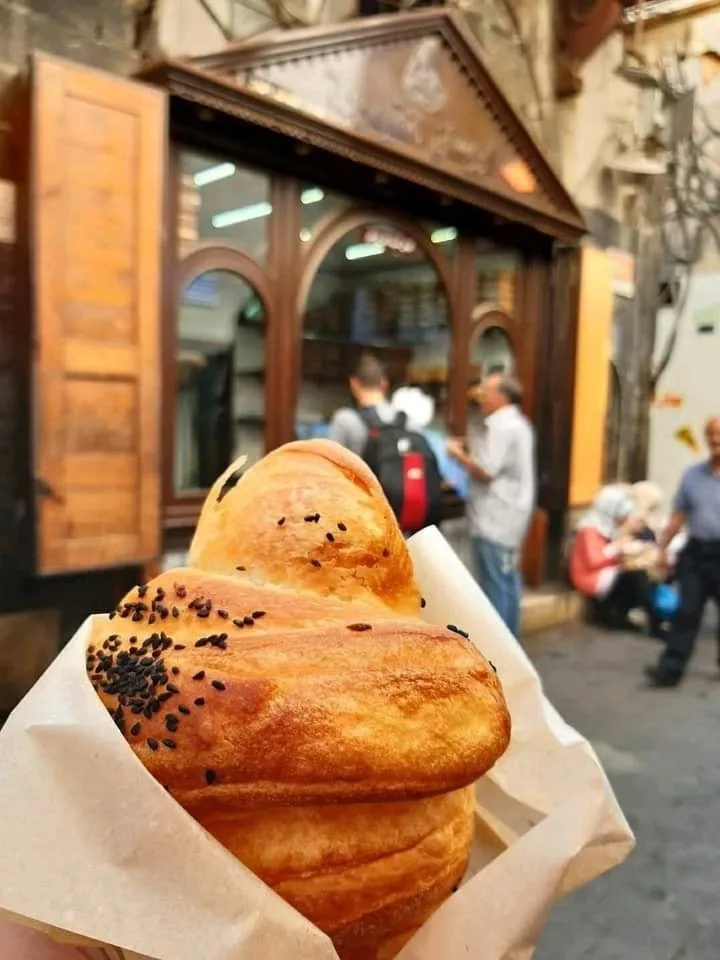
Another beloved institution in Old Damascus, Al-Qaymariyya has built a loyal following among locals and tourists alike for its freshly baked croissants and pastries. The menu offers a wide range of flavors to suit every taste, making it the ideal companion for a long walk through the old city streets.
A quick stop here elevates a simple stroll into a memorable experience. Add it to your Old Damascus route.
Al-Nawfara Café
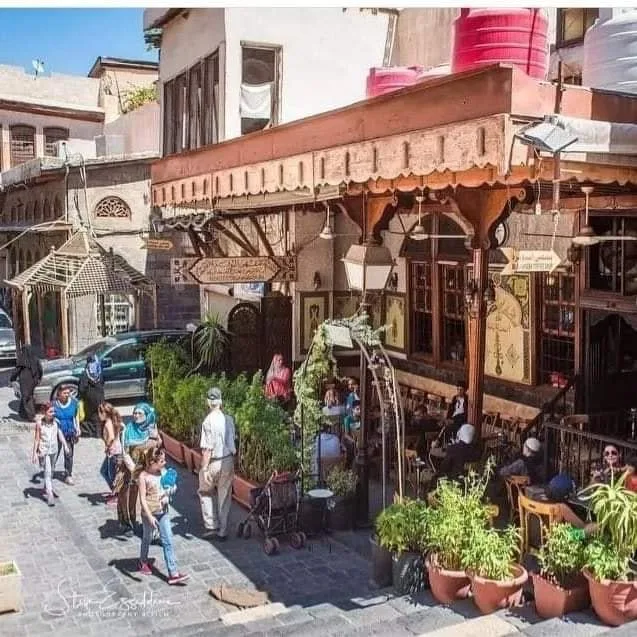
Tucked behind the Umayyad Mosque in the heart of Old Damascus, Al-Nawfara is one of the last traditional coffeehouses in the Arab world still operating in its original form. Locals gather here for a daily break — tea, a water pipe, and conversation in an interior unchanged for generations, furnished with the café’s signature rattan chairs.
What makes Al-Nawfara truly singular is its hakawati — a traditional oral storyteller, a figure that has all but disappeared from modern Arab culture. At Al-Nawfara, the hakawati still performs evening sessions, recounting the epic tales of Antar, Al-Zir Salem, and the saga of Banu Hilal. A visit here transforms from a simple coffee break into a living piece of cultural history that you will not find anywhere else in the world.