
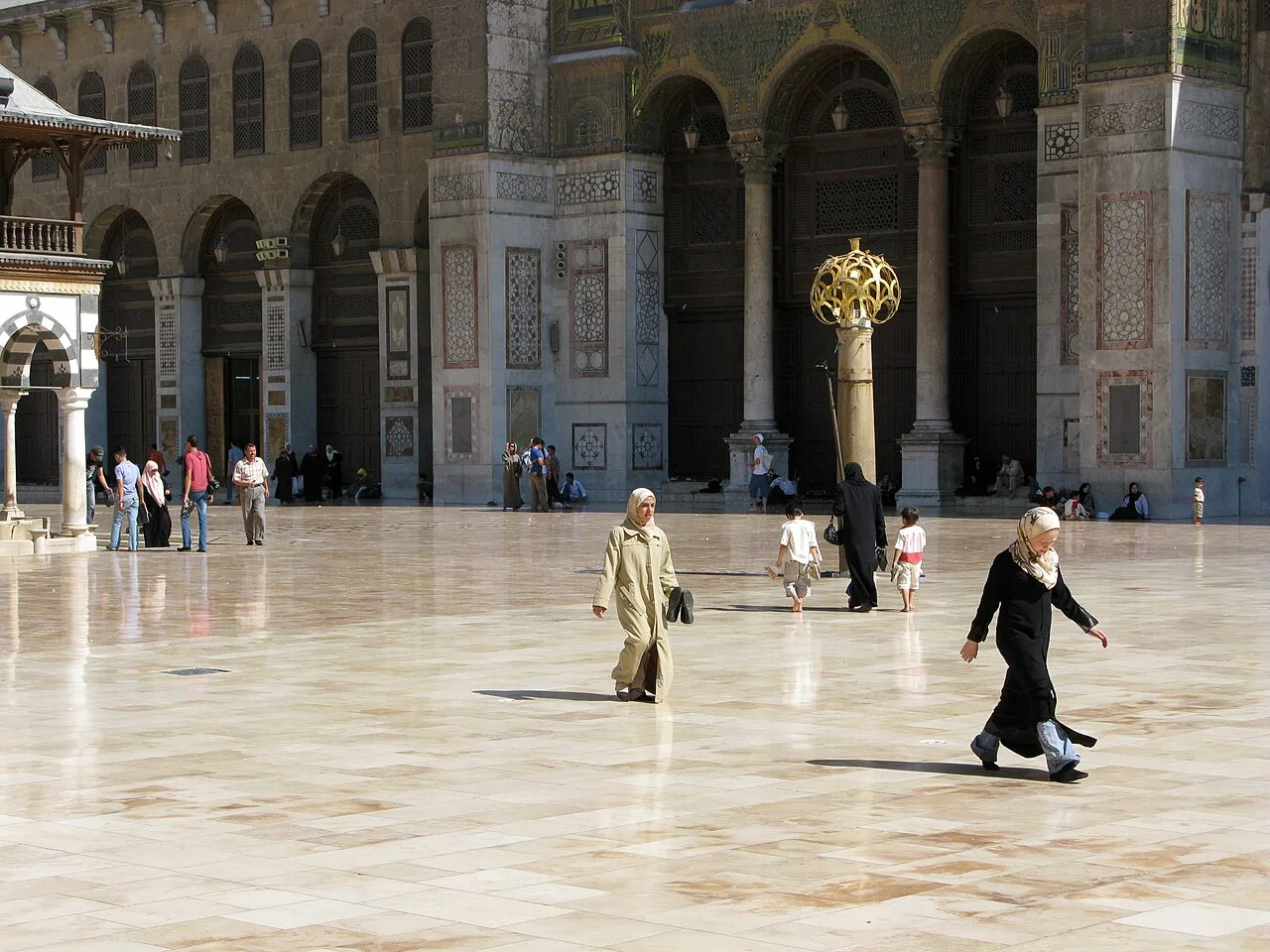
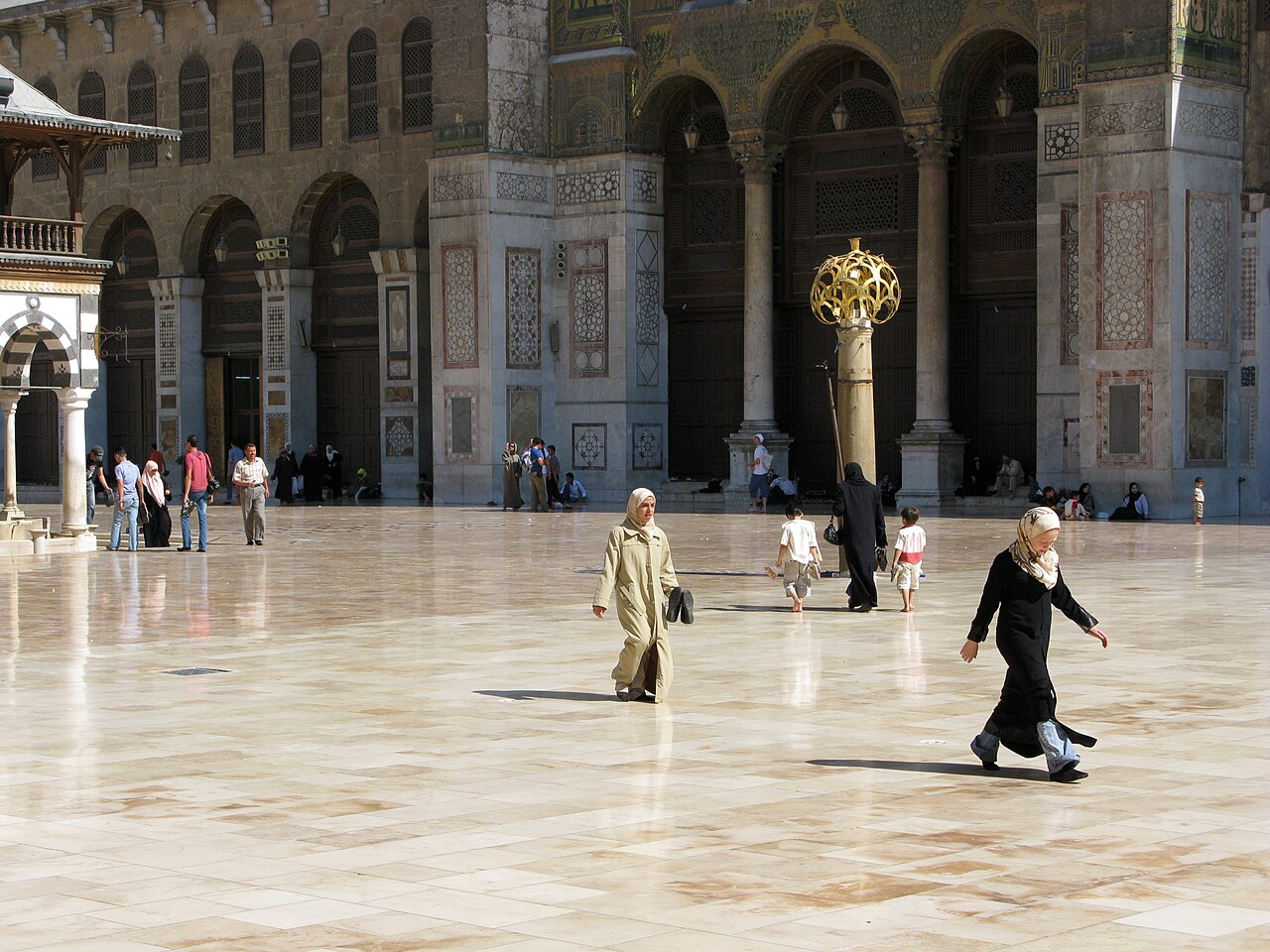
The Umayyad Mosque, also called the Great Mosque of Damascus, is the heart of the Old City and one of the oldest monumental mosques in the world. Caliph al-Walid I built it between 705 and 715 AD on a site that had been sacred for millennia: an Aramaean temple to Hadad, then a Roman Temple of Jupiter, then the Byzantine Church of John the Baptist. Standing in its courtyard, you are looking at almost every chapter of Damascus history at once.
Quick facts
| Details | |
|---|---|
| Location | Old City of Damascus, at the end of Souq al-Hamidiyah |
| Status | Part of the Ancient City of Damascus, UNESCO World Heritage Site since 1979 |
| Time needed | 1 to 2 hours |
| Dress code | Modest clothing for everyone; women borrow a robe (abaya) at a dedicated entrance |
| Best time | Morning or late afternoon, avoiding Friday midday prayers |
What to see inside
The courtyard and the Dome of the Treasury
The marble-paved courtyard is larger than the prayer hall itself. Look for the Dome of the Treasury, a small octagonal pavilion raised on columns that once held the community’s funds.
The Umayyad mosaics
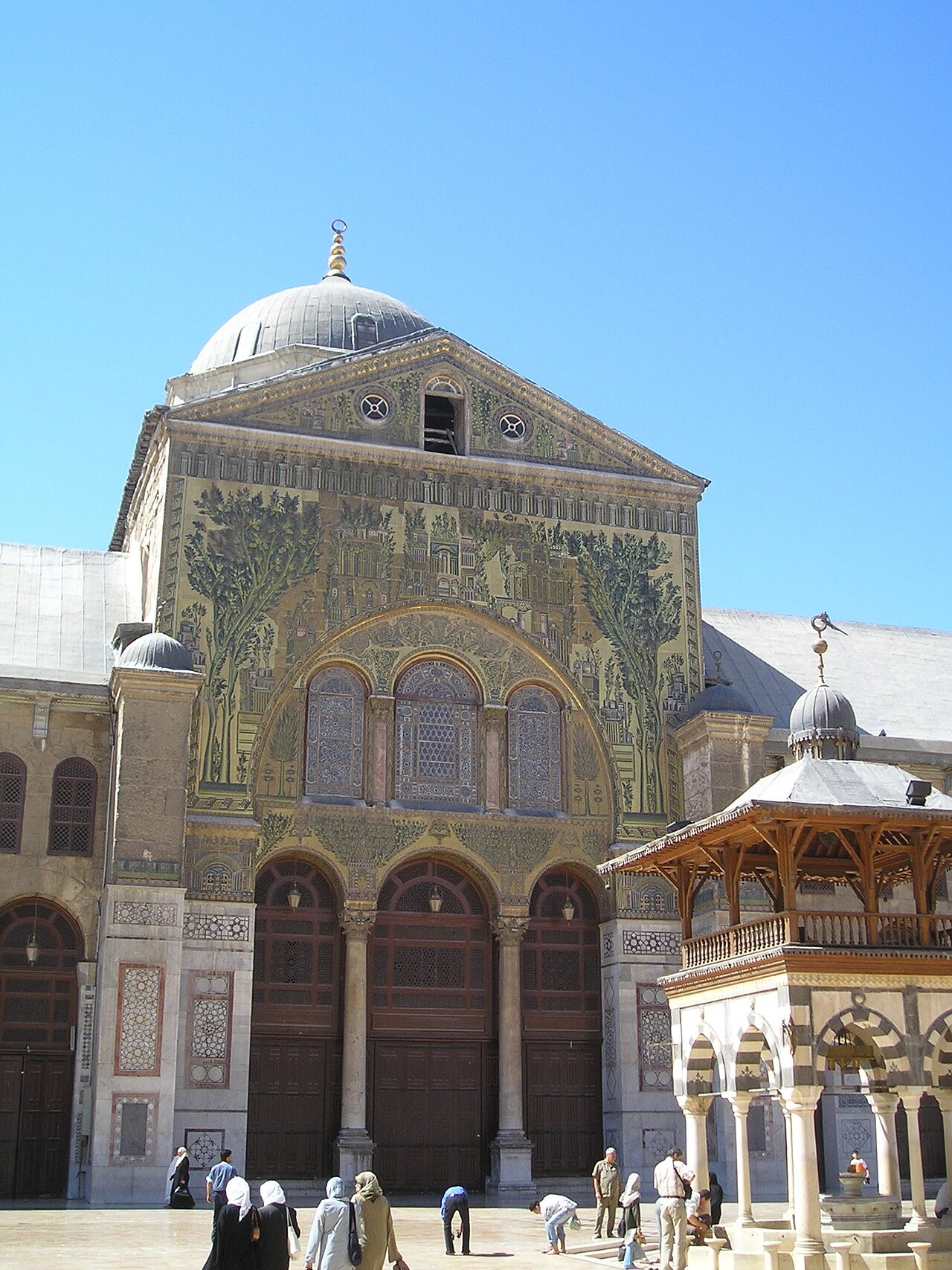
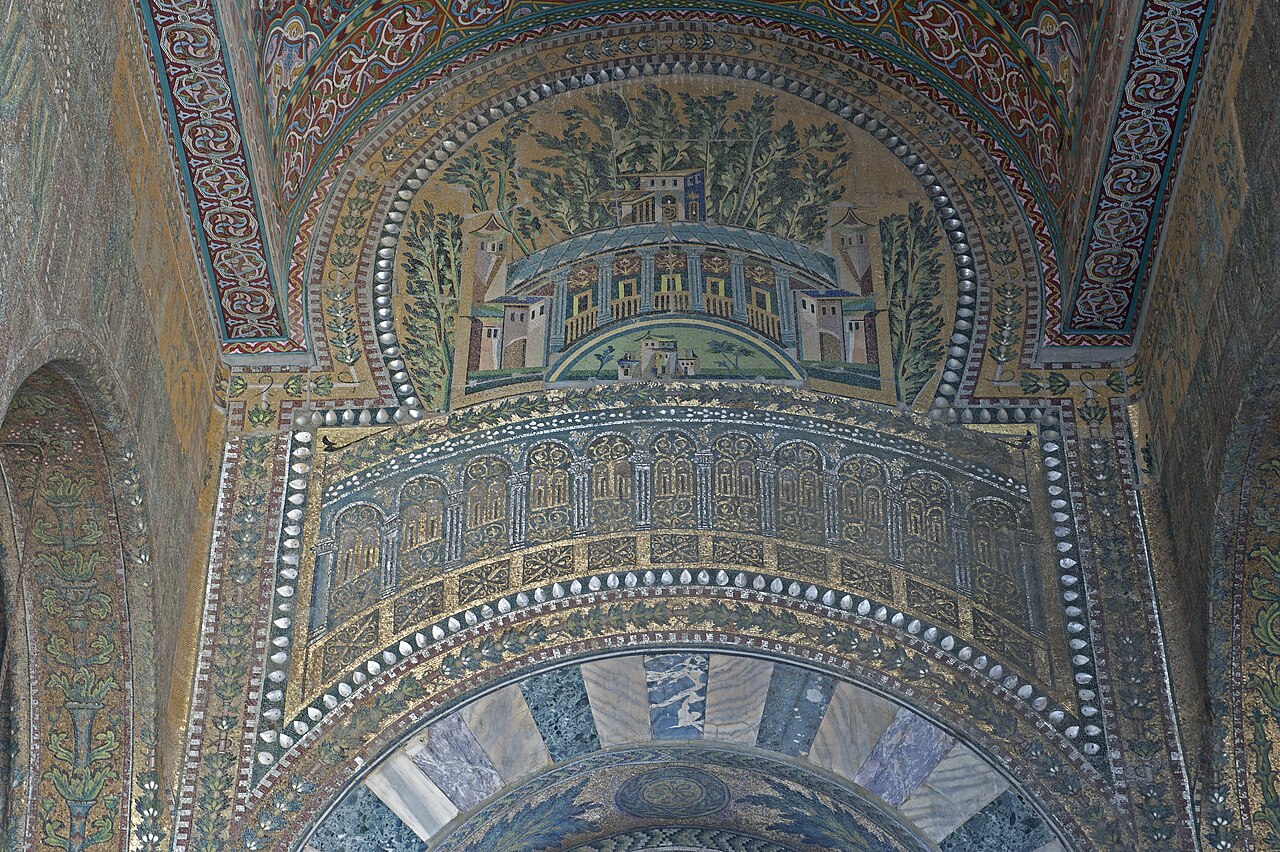
The western arcade still carries panels of green and gold glass mosaic showing rivers, trees and palaces. The best-known section, the Barada panel, is among the finest early Islamic mosaics anywhere.
Three minarets
The Minaret of the Bride on the north side, the Minaret of Jesus in the south-east corner, linked to the tradition of Christ’s return, and the Mamluk-era Minaret of Qaitbay in the south-west.
The prayer hall and the shrine of John the Baptist
Inside the long three-aisled prayer hall stands the shrine said to hold the head of John the Baptist (the Prophet Yahya), venerated by both Muslims and Christians.
Rules and dress code
- Visitors of all faiths may enter outside prayer times. Shoes come off at the prayer hall.
- Long clothing covering shoulders and knees for men and women.
- Women are lent an abaya at a dedicated entrance. A small fee for the robe or for foreign visitors has been reported; confirm the current practice before publishing.
- Avoid sightseeing during prayers, especially Friday noon.
- Photography is generally fine in the courtyard; be discreet inside.
What is nearby
- Souq al-Hamidiyah: the covered market that ends at the Roman columns right in front of the mosque.
- Mausoleum of Saladin: in a small garden against the north wall.
- Azm Palace and Khan Asad Pasha: a few minutes’ walk south.
- Straight Street and Bab Touma: continue east into the old Christian quarters.
Plan the rest of the day with our Old Damascus guide, where to eat in Damascus and the best hotels in Damascus.
Frequently asked questions
Can non-Muslims visit the Umayyad Mosque?
Yes. The mosque welcomes visitors of all faiths outside prayer times, as long as they dress modestly.
Is there an entrance fee?
Entry for worship is free. A small fee for foreign visitors or for the abaya has been reported; ask at the entrance.
When was the Umayyad Mosque built?
Between 705 and 715 AD, under the Umayyad Caliph al-Walid I.
How long do I need?
One to two hours. Combine it with Souq al-Hamidiyah and Azm Palace for a half day.
The Umayyad Mosque is a fixed stop on every Travel963 Damascus itinerary. Our free trip planner builds your Old City day in about two minutes.