A day’s walk through the Damascus old city, the oldest continuously inhabited capital in the world, is the best possible introduction to Syria. These are the 14 experiences to build a first visit around.
The Damascus old city
Old Damascus sits on the bank of the Barada. Its edges are marked by an ancient wall that once guarded the city and that carries seven gates, letting visitors in from every direction.
Al-Hamidiyah Souq
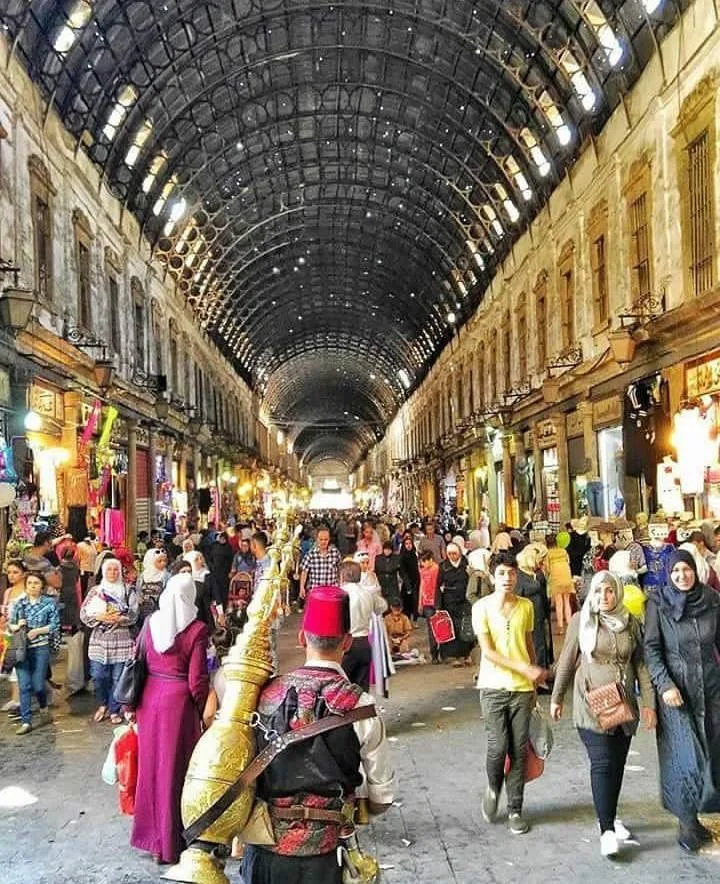
The most important landmark in the old city and its most famous market. It lies in the western part of the old city and runs from the citadel to the Umayyad Mosque, holding a large number of shops of every kind. Many of them sell the heritage pieces and traditional handicrafts for which old Damascus is known, such as copperware, inlaid wood and distinctive textiles.
What makes Al-Hamidiyah Souq unusual is that it is fully roofed and paved in stone, which gives you an odd and rather good feeling as you walk through it. The souq is usually crowded with visitors and tourists, as well as local shoppers, who favour it for the quality of its goods and relatively low prices. The traders here are also notably widely travelled in their own way: a shopkeeper in Al-Hamidiyah will normally speak several languages, which helps him deal with customers from different cultures.
Al-Hamidiyah Souq is the backbone of everything you do in the old city, and should not be missed.
The Umayyad Mosque
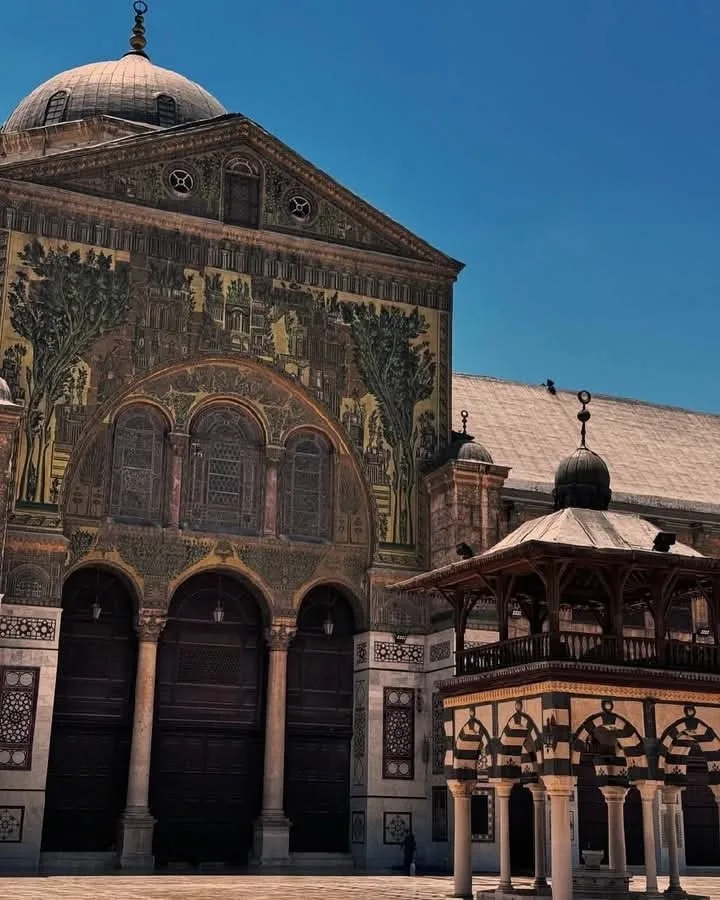
At the end of Al-Hamidiyah Souq, ancient columns appear in a fairly wide square, and at the far end of it a high wall rises, with a great doorway and several minarets inviting you in. You have arrived at the Umayyad Mosque.
The Umayyad Mosque is the icon of Damascus and one of its historical symbols. Its construction goes back to the Roman period, when it was a pagan temple; it then became a church, and finally a mosque from the Umayyad era until today. Because of that, you find an enormous mix of architectural styles and decoration throughout the building. Do not skip a visit to the Umayyad Mosque when you are passing through the old city.
Al-Bzouriyah Souq
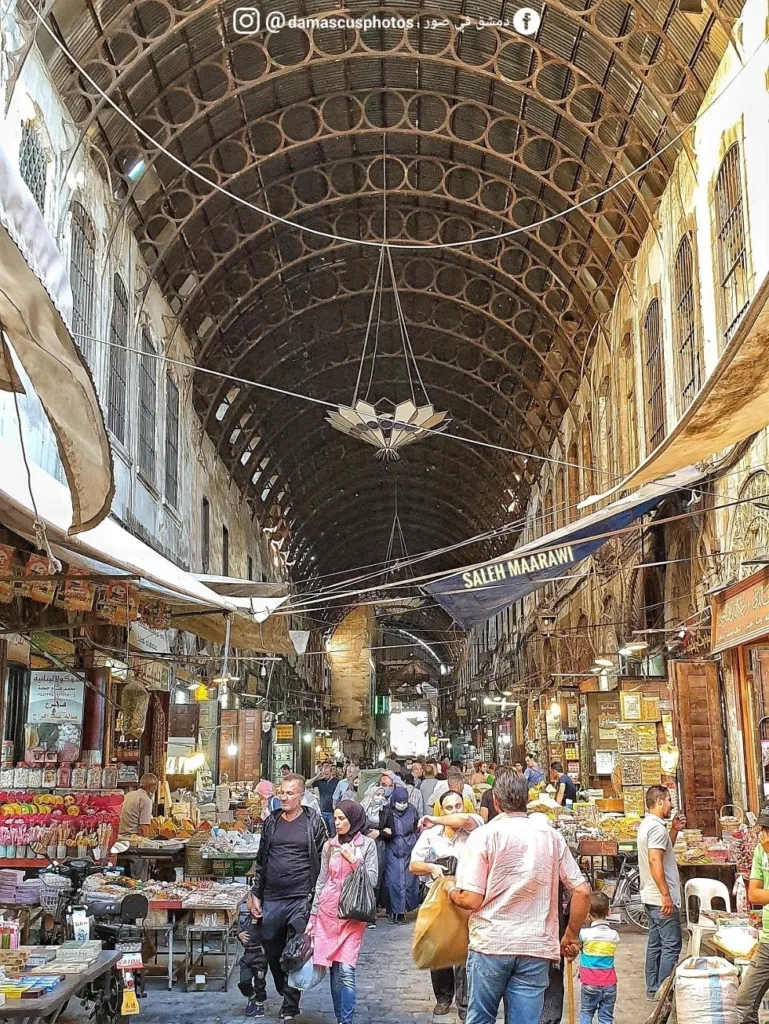
Beside the Umayyad Mosque, a set of specialist markets runs off in the same style as Al-Hamidiyah, each one given over to a particular trade. One of the most distinctive is Al-Bzouriyah Souq, which was originally the market for grains of every sort and for rare and unusual spices. Later changes brought in other goods too, until a walk through the souq became a real journey between the smells of strange spices and even stranger names. The brightly coloured sweets, and the way they are displayed, make a visit to the souq a core part of any trip through old Damascus.
Azm Palace
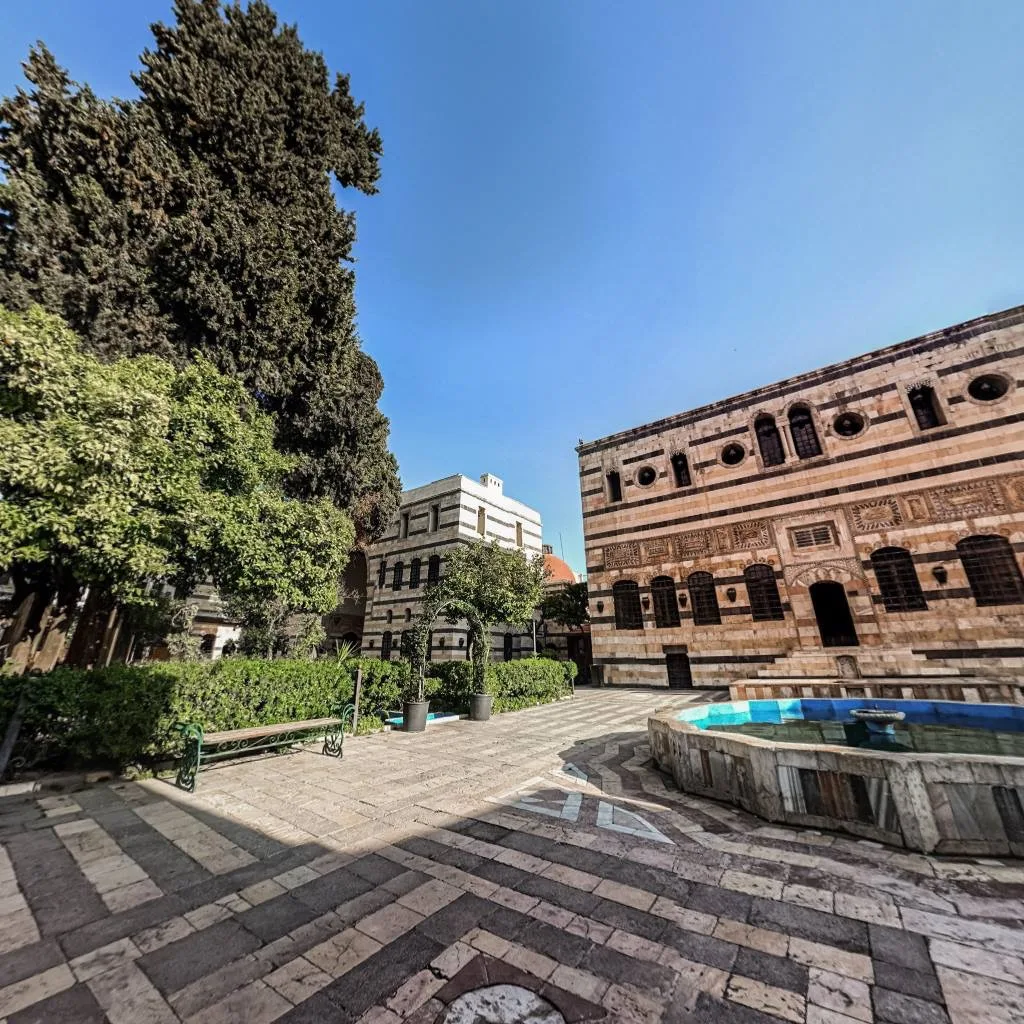
Azm Palace stands in old Damascus behind the Umayyad Mosque. It was the residence of the governor of Damascus during Ottoman rule, and later became a museum documenting what life looked like in the city generally, and in the governor’s residence in particular, at different points in history. The palace also holds a small exhibition of tools, weapons and trades that were common in those periods.
Beyond its varied collection of artefacts and its life-size wax figures, Azm Palace is a genuine architectural set piece that shows how far Damascene building had come. It is laid out in several sections, divided between living quarters and public service areas, and it holds dozens of decorative works in the form of mosaics, ornamented walls and inlaid wood that show off the beauty of Damascene handicraft.
Khan Asad Pasha
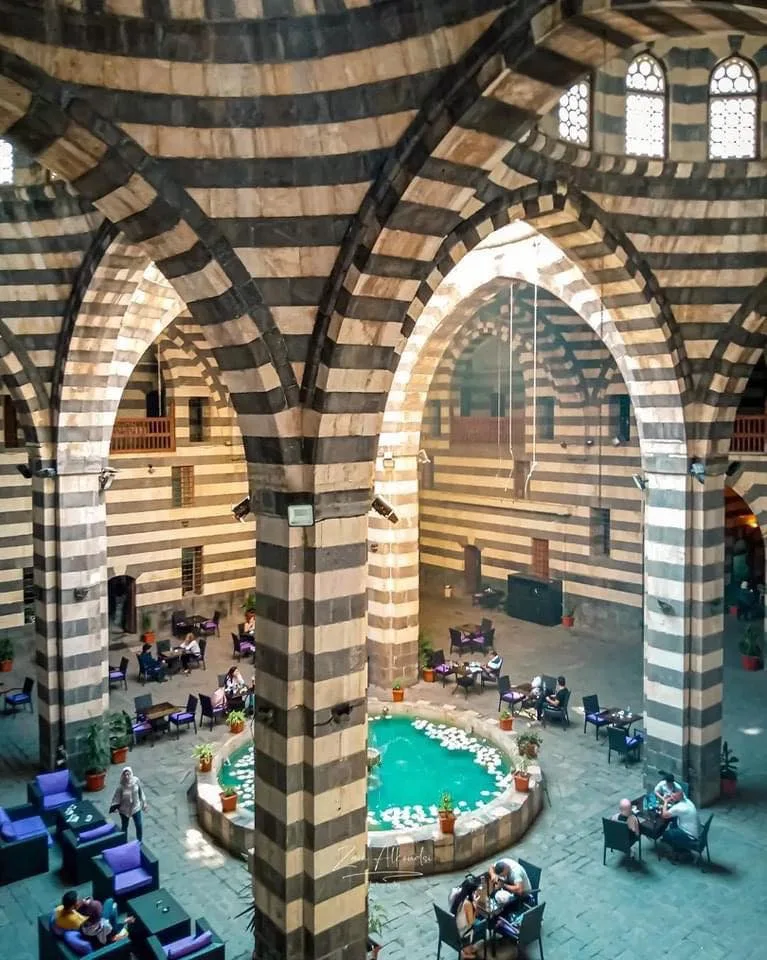
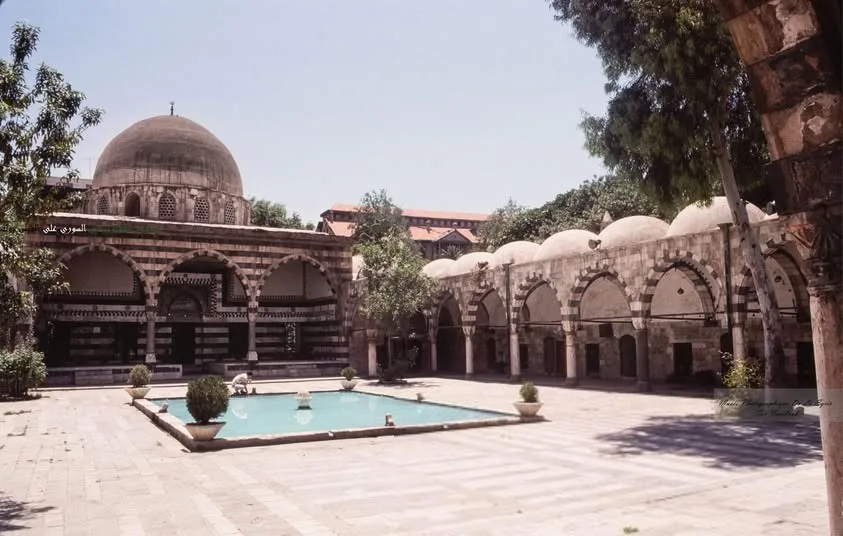
It stands close to Al-Bzouriyah Souq and was built after Azm Palace by the same governor, Asad Pasha al-Azm. The khan started life as an old inn and rest stop for the caravans arriving in Damascus from other cities, and it was one of the most beautiful buildings of its time.
Today it is used as a visitor attraction showing off the scale of Damascene architecture. The khan is known for its eight distinctive domes and the open space at their centre, and for the “ablaq” style of building, in which black and white stone alternate to form its walls and domes.
At present the khan hosts various exhibitions and charity bazaars on a regular basis, and it is open for visits, for the sense of history and the architecture.
Midhat Pasha – Straight Street
Midhat Pasha Souq, or Straight Street as it is called in the Bible, is one of the most prominent landmarks in old Damascus. Beyond its high historical value as the road Paul the Apostle took at his conversion, it carries a great deal of archaeological detail along its sides, such as crowned columns and architectural features from various periods of history.
In its modern form, Straight Street is a commercial market much like Al-Hamidiyah, with the same covered roof and paved road, running from Bab Sharqi to the Bab Srija area. The shops along its length are varied and include many of the local heritage crafts, traditional clothing in particular.
The Sulaymaniyah Takiyya
The Sulaymaniyah Takiyya lies outside the wall of old Damascus, but it belongs to the old city in everything it holds of Ottoman architecture.
The takiyya was built in the Ottoman period by Sultan Suleiman the Magnificent, and its design is the work of the most famous of Ottoman architects, Mimar Sinan. It covers a wide area of ground, where it once provided for visitors, pilgrims and the poor of the district. Attached to it is a distinctive mosque with two minarets in the Ottoman style, and the takiyya itself is marked by the many domes that shade its arcades.
Today the takiyya has become a market for traditional crafts, which makes it worth visiting both for its history and for its living folk heritage. Part of it also houses the Syrian Military Museum.
The Chapel of Saint Ananias
The Chapel of Saint Ananias is considered the oldest house church in the world, and according to the record it witnessed one of the most important events of early Christianity: the baptism of Paul the Apostle at the hands of John of Damascus.
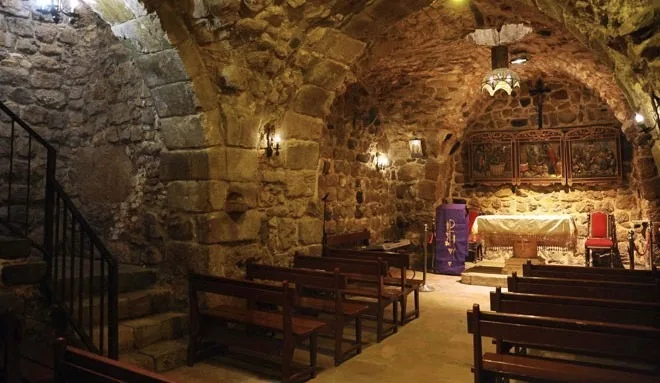
The old church lies about five metres below ground and is reached by several flights of stone steps. It is built of distinctive stone arches, but what matters most about it is the particular spiritual experience of a church that dates from the first phase of Christianity, when it was still a persecuted faith and believers hid from the authorities. This place goes back some two thousand years, and it genuinely deserves a visit.
Bab Touma
The most famous quarter of old Damascus, and the centre of tourist activity in it, with most of the better hotels and the Damascene-style restaurants concentrated here.
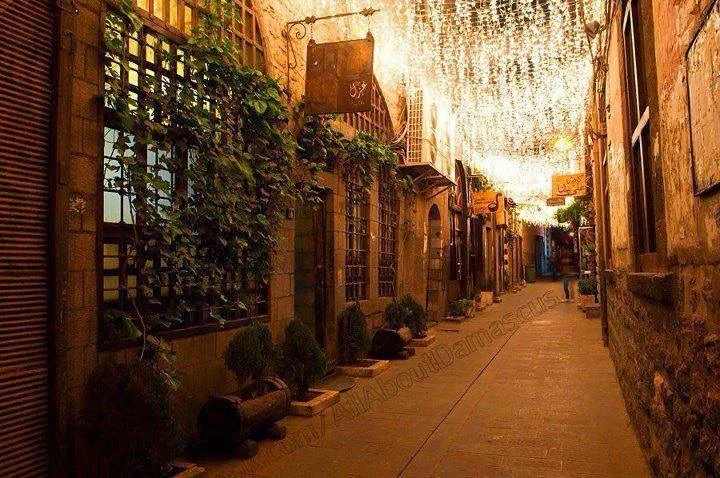
The name comes from one of the gates of old Damascus. The quarter is known for its characteristic Damascene lanes, the old houses packed tight along both sides of its narrow alleys, and of course the Damascus jasmine in the corners of the streets.
Bab Touma has a great many modern cafes, alongside restaurants and hotels that keep the distinctive character of the old Damascene houses, which makes the quarter an important place for visitors and an experience you cannot skip on a trip through the old city.
The Citadel of Damascus
The most prominent historic landmark in the old city of Damascus. It stands at the north-western corner of the old city and was the main defensive stronghold for the city. The citadel’s military importance grew in the Ayyubid and Mamluk eras, then faded gradually until it became a base for Ottoman forces and a prison.
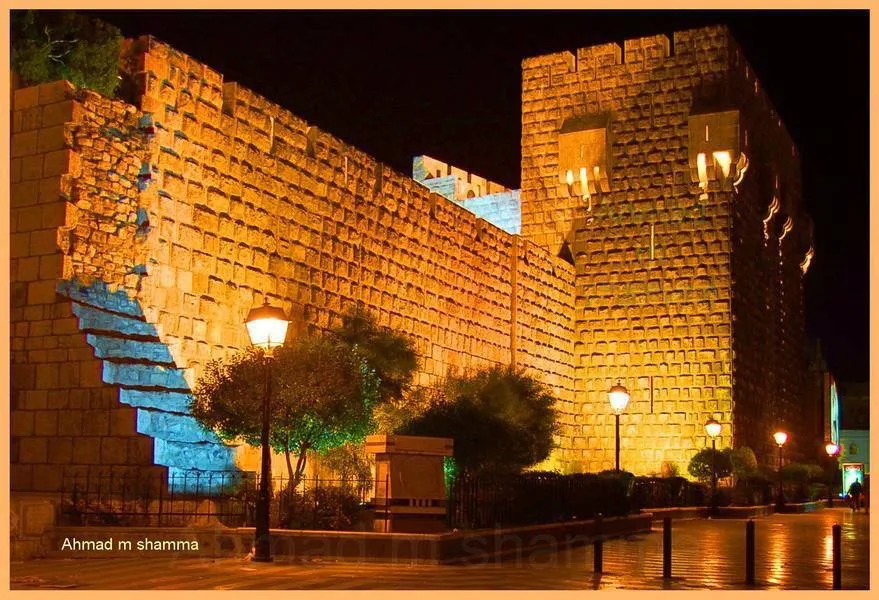
Today the citadel is a living museum and a witness to the successive civilisations that passed through the region. Its defensive towers show the nature of military architecture in each of the eras old Damascus lived through. The citadel is now also used as a notable venue for events and celebrations, but it remains one of the most important stops on any tour of the old city.
Hammam al-Malik al-Zahir
A visit to a souq bathhouse is one of the finest and most distinctive things to do in the old city of Damascus. Old cities are the only places that offer this experience, and in old Damascus the historic and modern bathhouses are spread about in a way that all but guarantees you will try one.
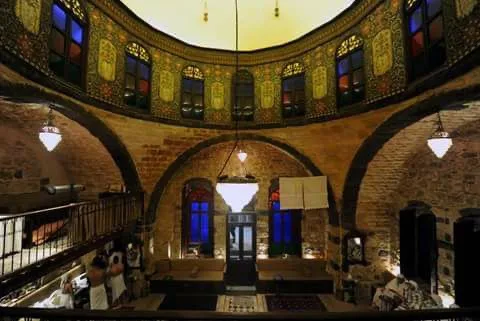
The most important of the historic bathhouses in old Damascus is Hammam al-Malik al-Zahir, which dates from the Mamluk period and still keeps its original architecture and its distinctive rituals.
You can have a fine session of traditional relaxation in the heart of the old city at this bathhouse, effectively a health spa that has come down to us from the ancient world. So do not hesitate to try a souq hammam and take your share of a very old sort of pampering.
Bakdash ice cream
Bakdash is one of the oldest ice cream shops in the world, if it did not in fact invent modern ice cream. Its fame spread well beyond the local and travelled around the world through the tourists arriving in old Damascus, who tasted the real flavour of Arabic ice cream at Bakdash.
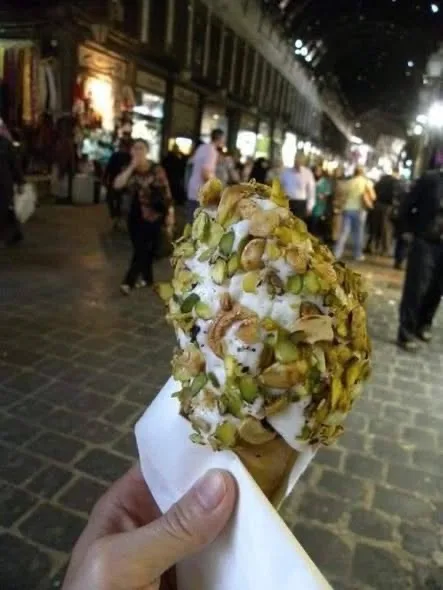
The shop is in Al-Hamidiyah Souq and, since being extended, is a notable Damascene house in its own right. Bakdash serves several kinds of sweets, the most famous being Arabic ice cream with Aleppo pistachios and the distinctive Damascene muhallaya.
Visitors can enjoy their sweets in the shop, or while walking through Al-Hamidiyah Souq as most tourists prefer. The flavour mixes with the spirit of the place, so make a point of stopping at Bakdash on your next trip.
Al-Qaimariyah croissants
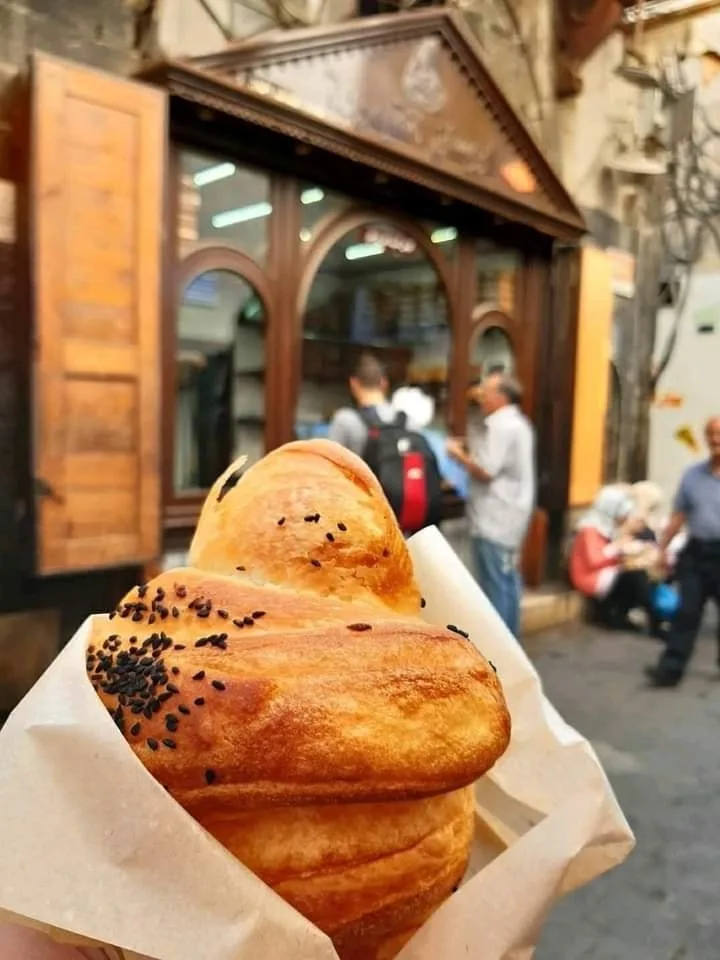
Another thing worth doing is a croissant from Al-Qaimariyah, a shop that has become well known enough to be the standard companion to a short walk through the streets of old Damascus.
It serves a varied menu of baked goods in different flavours to suit every visitor, and turns a snack in the street into an experience worth mentioning, so make sure to try it on your walk through the old city.
Al-Nawfara Cafe
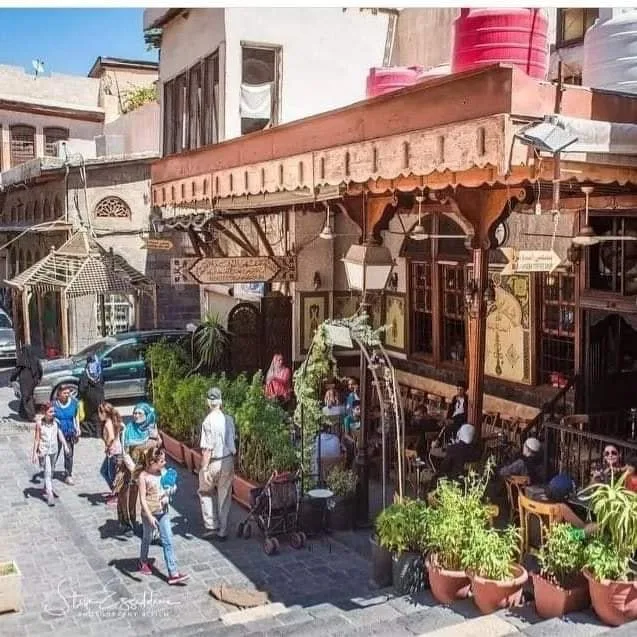
Al-Nawfara Cafe sits behind the Umayyad Mosque in the heart of old Damascus and still keeps the traditional form of a Damascene neighbourhood coffee house, where people gather for a short daily break from the business of life, to smoke a nargile with a good cup of tea. But the most remarkable thing about Al-Nawfara, beyond the traditional decor and the famous cane chairs, is the hakawati.
Yes, the historic figure of the “coffee house storyteller” is still alive at Al-Nawfara, telling his tales of Antar, Al-Zir and the Taghribat Bani Hilal through the evening, which turns a visit from something passing into a story you do not forget.
If you want the wider picture of the city beyond the old quarter, read what Damascus is famous for.