Damascus, Syria is more than the country’s capital: it is often called the oldest continuously inhabited capital in the world. Aramaeans, Greeks, Romans, Byzantines and the Islamic dynasties each ruled here across thousands of years, and each left something behind in the streets, the souks, the courtyard houses and the kitchen. This guide walks through what Damascus is famous for, so you arrive knowing what you are looking at in the city Syrians simply call al-Sham.
Historic Landmarks in Damascus, Syria
The Great Umayyad Mosque
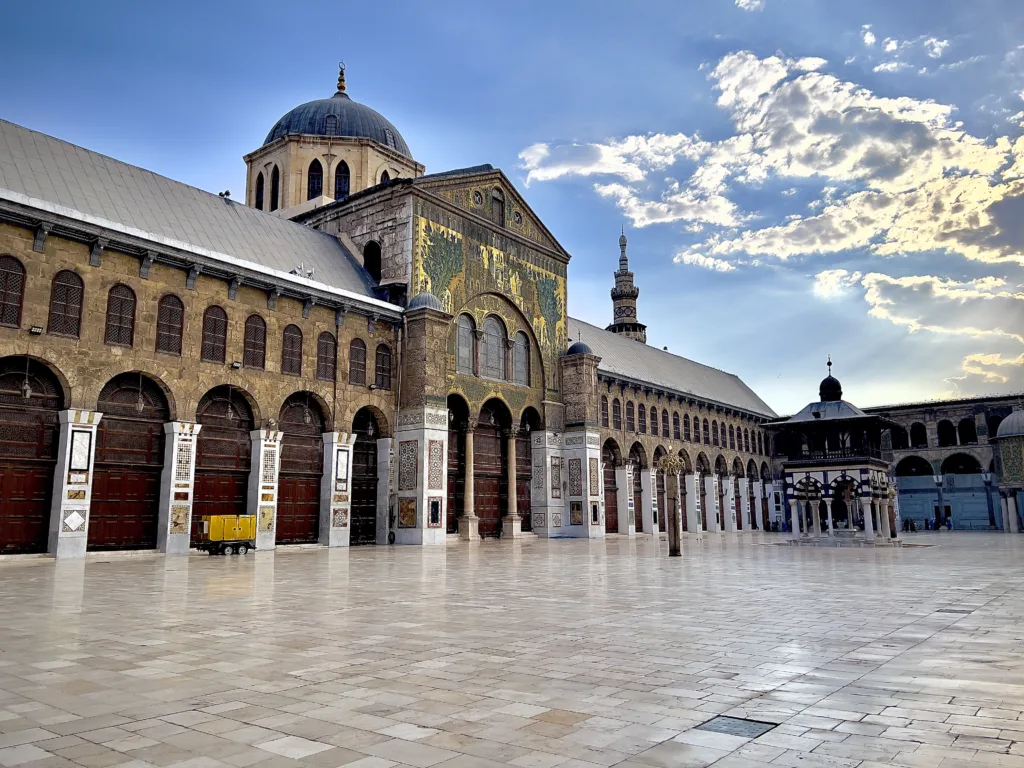
The Umayyad Mosque is one of the great mosques of Islamic history, built under the Caliph al-Walid ibn Abd al-Malik at the start of the eighth century on a site that had been an Aramaean temple, then a Roman one, then a church. It is known for the golden mosaics that picture scenes of paradise, its three minarets, the Dome of the Eagle, and the shrine holding the head of the Prophet John the Baptist inside the courtyard. Come at sunset, when the marble walls take the colour of the light.
The Citadel of Damascus
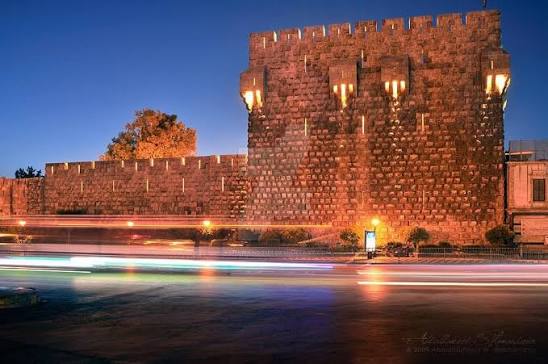
The citadel stands at the north-western corner of the old city, and is one of the few castles in the world built on flat ground rather than on a height. It went up in the Seljuk period and the Ayyubids rebuilt it; its twelve towers and heavy walls still record a long history of defending the city.
Azm Palace
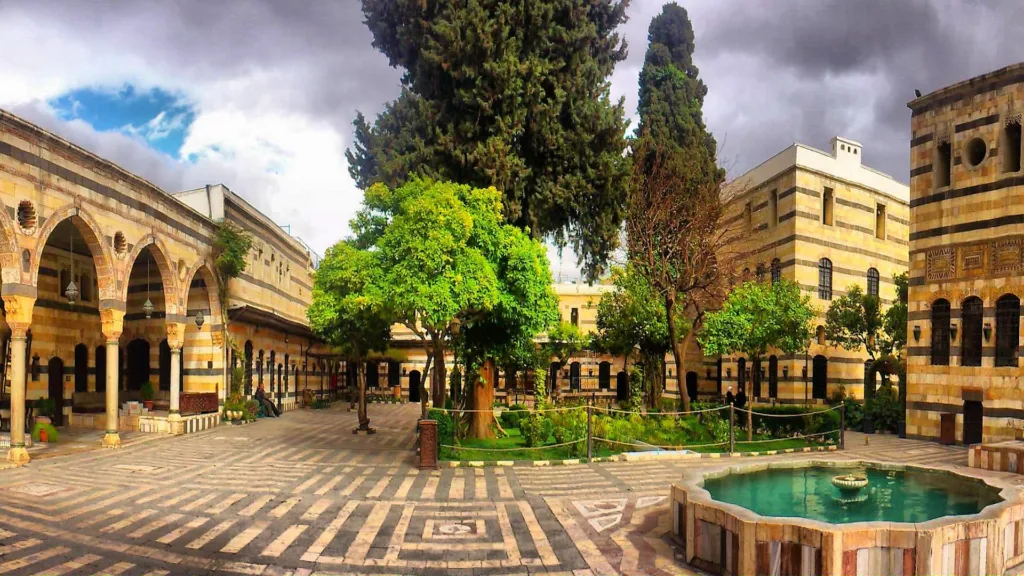
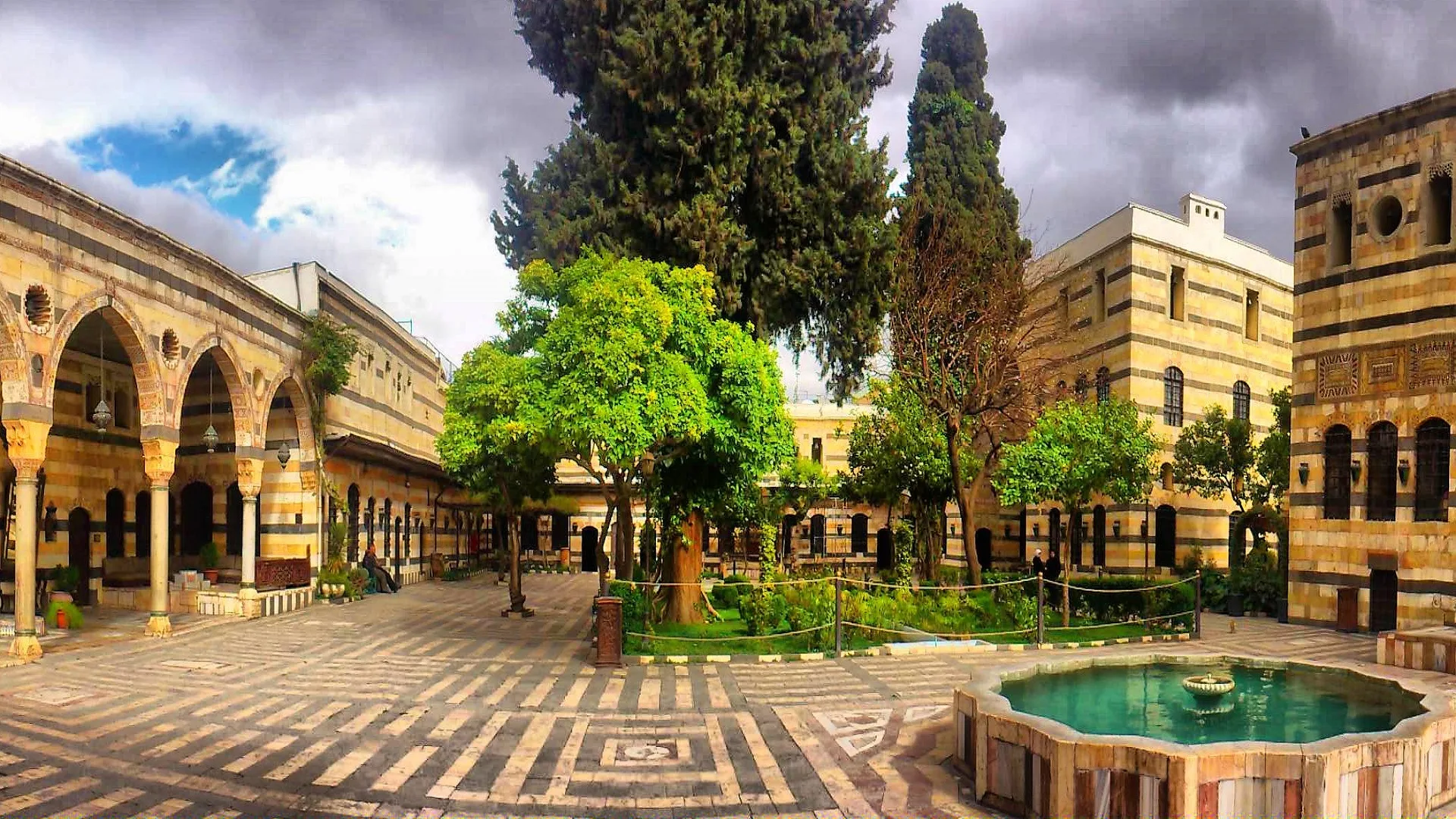
Azm Palace is the high point of Damascene architecture under the Ottomans, built by the governor Asad Pasha al-Azm in 1749. It is laid out in three parts — the haramlek, the salamlek and the khadamlek — with water basins, trees and painted woodwork, and today it holds the Museum of Popular Traditions, which stages scenes from old Damascene life.
Straight Street, Bab Sharqi and Bab Touma
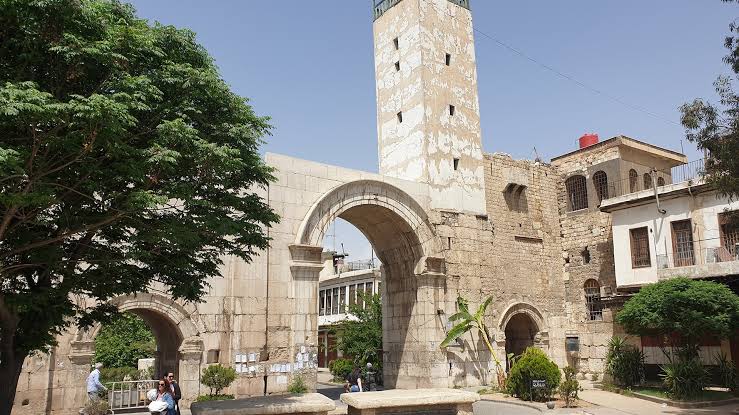
Straight Street is named in the Bible, and it is the Roman road that cuts across the old city from west to east. Along it stand the Chapel of Saint Ananias, the Roman arch and the Bab Sharqi gate, and off it run the lanes of the Bab Touma quarter, which holds some of the finest Damascene houses — many of them now restaurants, cafes and heritage hotels. For a street-by-street walk through this quarter, see our guide to the old city of Damascus.
Mount Qasioun
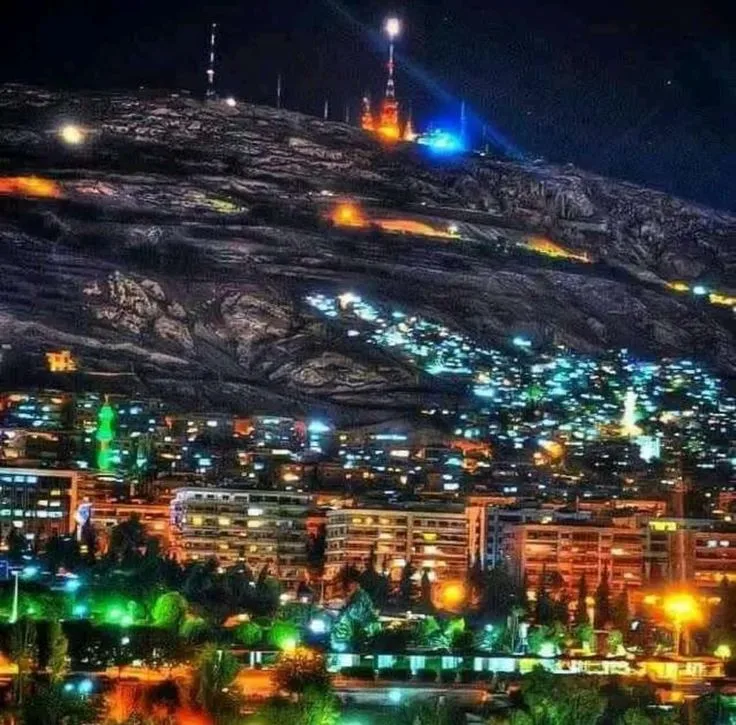
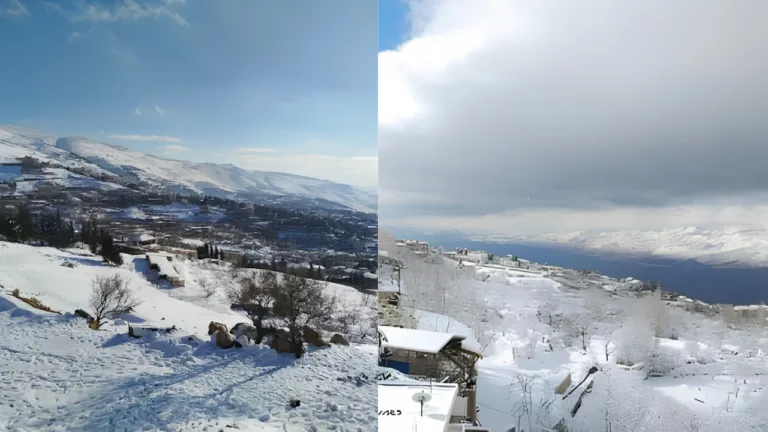
Mount Qasioun overlooks Damascus from the north, and is the best place to see the whole city lit up at night. A good deal of folklore attaches to it, including the Cave of Blood, said to be the site of the first murder in history.
The Souks and Crafts of Damascus
Al-Hamidiyah Souq
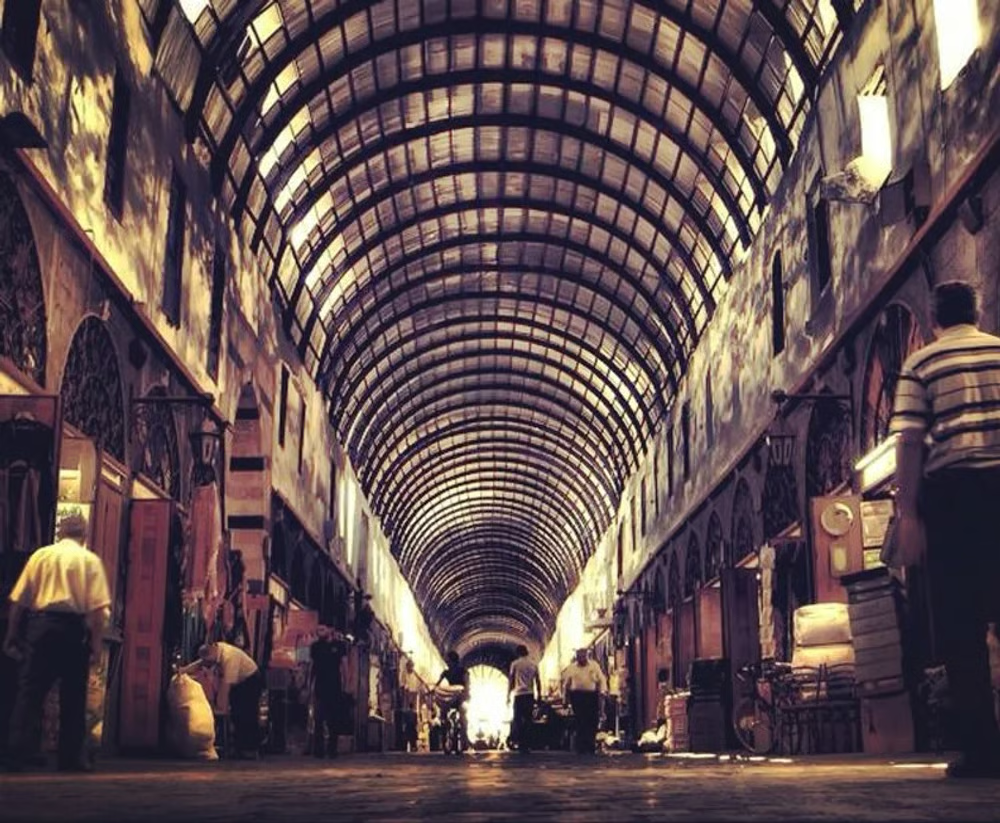
The most famous market in Syria runs from al-Nasr Street to the gate of the Umayyad Mosque, under a metal roof still punctured by bullet holes from French aircraft in 1925. Inside are shops selling cloth, abayas, gifts and copperware, and the Bakdash parlour, which serves hand-pounded Arabic ice cream and is a compulsory stop for every visitor.
Midhat Pasha Souq and Al-Bzourieh Souq
Al-Bzourieh is the souk of spices, herbs and sweets, and it contains Khan Asad Pasha, an architectural set piece under nine domes. Midhat Pasha Souq continues the line of Straight Street and is known for cloth and textiles.
Damascus Brocade and Mosaic
The name of the city is attached to damask cloth, known the world over, and brocade embroidered with gold and silver thread is the most lavish of the Damascene textiles — a piece of it was given to Queen Elizabeth II on her wedding day. The city is also known for wooden mosaic inlaid with mother-of-pearl, the Damascus sword, engraved copper and blown glass.
The Food and Sweets Damascus Is Famous For
Damascene cooking is among the richest in the Middle East. The city is known for:
- Arabic ice cream: booza pounded by hand and served with Aleppo pistachios at Bakdash in al-Hamidiyah.
- Damascene shawarma: rolled in thin bread with garlic and pickles.
- Kibbeh, stuffed vegetables and fatteh: fatteh with chickpeas, oil and ghee is a proper Damascene breakfast.
- Sweets: Damascene barazek, ghraybeh, maamoul, pistachio baklava and Nabulsi knafeh with cheese.
- Damascus preserves: Damask rose, apricot and citron jam.
- Drinks: liquorice, tamarind and Damascene mulberry syrups from street vendors, who also turn up in our guide to Damascus street food.
Flowers and Nature: Jasmine, Roses and the Ghouta
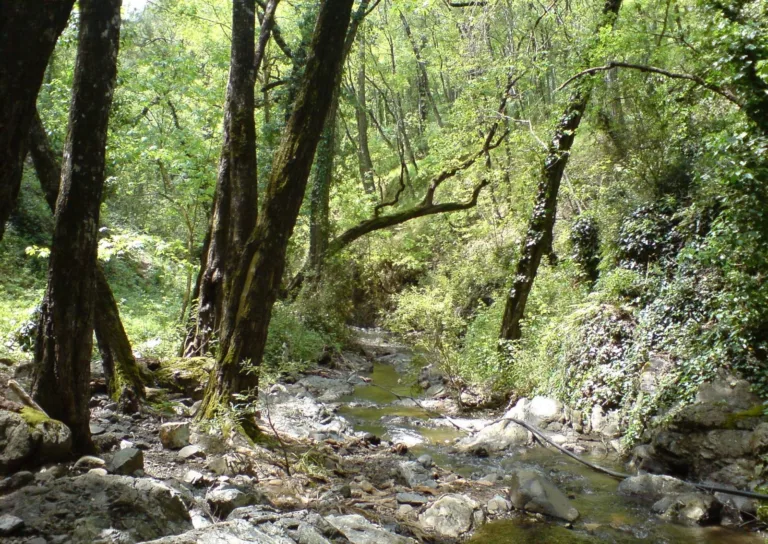
Damascenes call their city the city of jasmine; the plant climbs the walls of the old houses and scents the lanes. Damascus is also known for the Damask rose (Rosa Damascena), which spread from here to the rest of the world and is still made into rose water, jam and perfume. Around the city lies the Ghouta, the green oasis that was historically the capital’s basket of fruit and vegetables.
The Damascene House
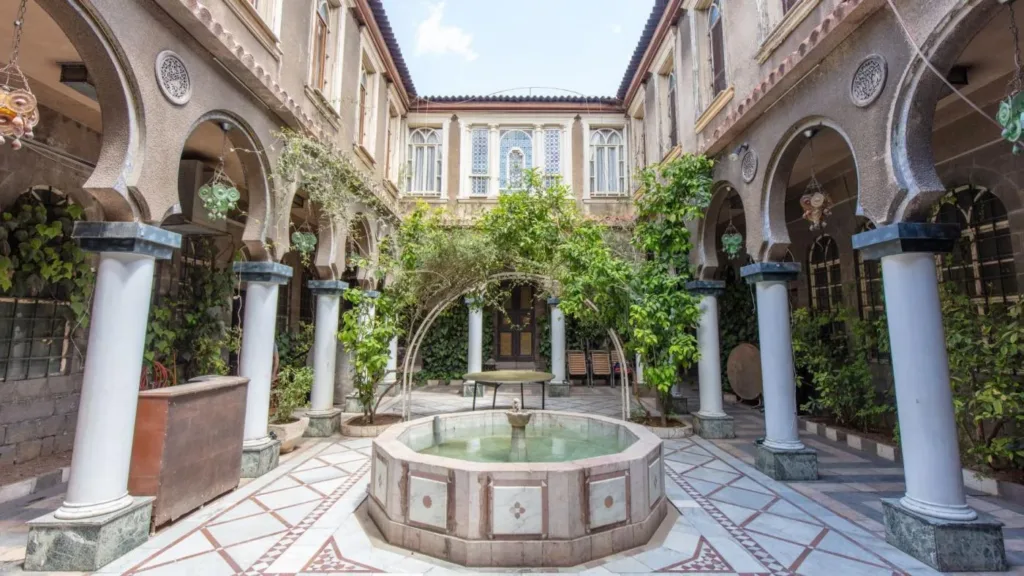
The traditional Damascene house turns its back on the street and opens instead onto an inner courtyard, the ard al-diyar, with a water basin at its centre and lemon, bitter-orange and jasmine trees around it, walls of banded ablaq stone, carved wood and painted ajami panels. Many of these houses are now heritage hotels and restaurants in Bab Touma, al-Qaymariyya and Sarouja.
Tips for Visiting Damascus
- The best time to visit is spring (March to May) and autumn (September to November).
- Give the old city at least one full day on foot.
- Start the morning with a breakfast of fuul and fatteh in al-Shaghour or al-Midan, and end the day late in the cafes of Bab Touma or up on Qasioun.
- Go to the goldsmiths’ souk for silver, the silk souk for brocade, and al-Bzourieh for spices and Aleppo soap.
Frequently Asked Questions About Damascus
What is Damascus famous for?
Damascus is famous for being the oldest continuously inhabited capital in the world, and for the Umayyad Mosque, Al-Hamidiyah Souq, brocade, jasmine, the Damask rose and Damascene sweets.
What is Damascus nicknamed?
Damascus is known as the city of jasmine, al-Fayha and al-Sham.
How many days do you need in Damascus?
Two or three days is enough for the old city and its main landmarks, with an extra day for Maaloula and Saidnaya in the Damascus countryside.