Syria is the cradle of civilization and the birthplace of the world’s first alphabet. One of the oldest regions of continuous human habitation on Earth, it has served as a crossroads of empires and a meeting point of every major world religion. Thousands of years of history are layered into its soil — Canaanite, Phoenician, Greek, Roman, Byzantine, and Islamic — which is why nearly every square meter of Syrian land holds a historical trace. This is a country where museums are not enough to contain the story.
Today we dive into the heart of that history, exploring Syria’s best museums and some of the ancient cities still standing on Syrian soil.
Best Museums in Syria
Nearly every major Syrian city has at least one principal museum, with smaller specialized museums often located directly at archaeological sites. The sheer volume of artifacts discovered across the country makes Syria one of the most museum-rich nations in the world relative to its size.
Damascus National Museum
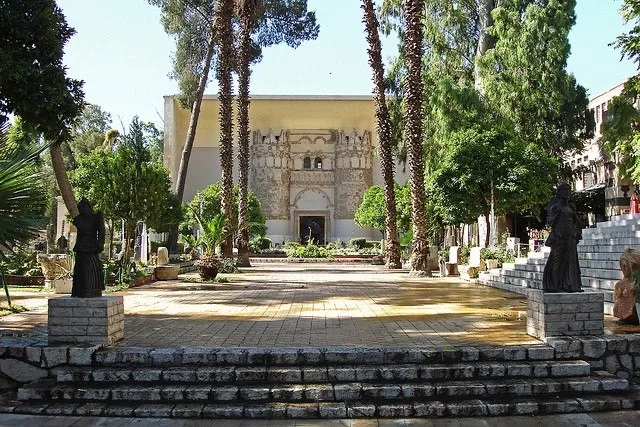
The largest and oldest museum in Syria, the Damascus National Museum sits on the banks of the Barada River in the heart of the city. Its most striking feature is its facade — the reconstructed monumental gate of Qasr al-Hayr al-Gharbi, an Umayyad desert palace originally built in the Syrian steppe and later relocated here for preservation. The museum grounds extend across a wide outdoor garden filled with sculptures spanning different periods of Syrian history.
Inside, the museum is divided into four main sections. The Prehistory section covers Syria’s earliest human inhabitants. The Ancient Oriental section spans the period from the emergence of writing to the arrival of Alexander the Great — and houses the treasures of ancient Canaanite civilization discovered at Ugarit, including the world’s oldest known alphabet, unearthed in northern Latakia. This is where you see the first letter ever written.
The Classical section covers Greek, Roman, and Byzantine artifacts found across Syria, along with a significant collection of Palmyrene antiquities — most notably the distinctive funerary busts and carved tomb towers unique to Palmyrene culture. The Islamic section adds rare manuscripts from multiple periods of Islamic rule in Syria alongside traditional artifacts.
A final section is dedicated to modern Syrian art — paintings, sculptures, and creative works by contemporary artists who have left a lasting mark on Syrian culture.
Visiting the Damascus National Museum is essential for anyone with a genuine interest in Syrian history.
Azm Palace
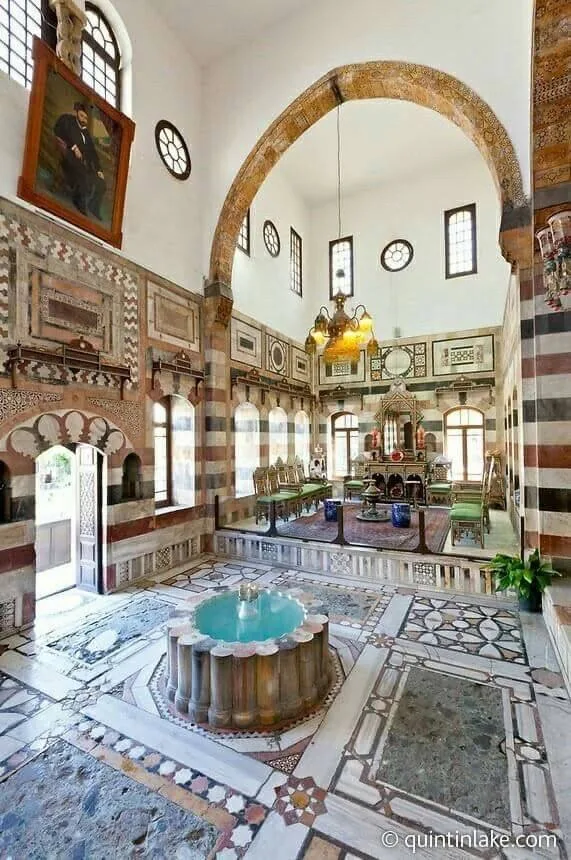
One of Syria’s most distinctive specialist museums, Azm Palace in Old Damascus was originally built as the private residence of the Ottoman governor. The palace itself is the exhibit — a masterpiece of 18th-century Damascene architecture presented alongside period weapons, tools, and artifacts. Its defining feature is a collection of life-size wax figures depicting scenes of daily life in late 19th-century Damascus.
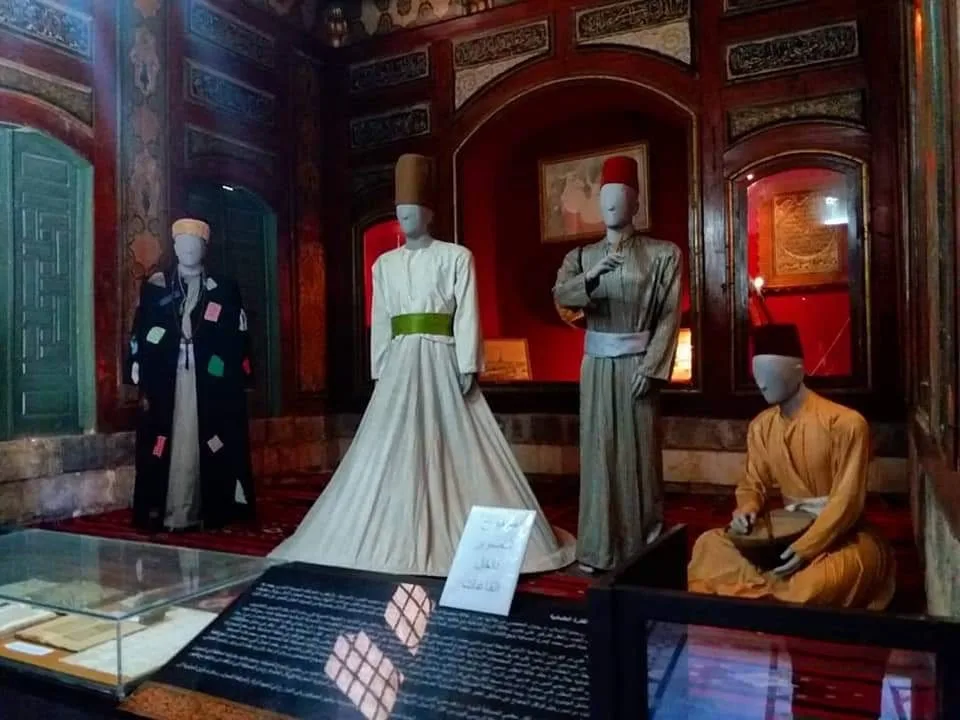
Moving through the palace’s rooms mirrors its original architectural division: the haramlik (women’s quarters) features wax figures of women in period dress; the khidamlik (service quarters) depicts household staff at work; and each successive hall presents a new tableau of domestic life — costumes, furnishings, and routines rendered in precise historical detail.
Bimaristan al-Nuri
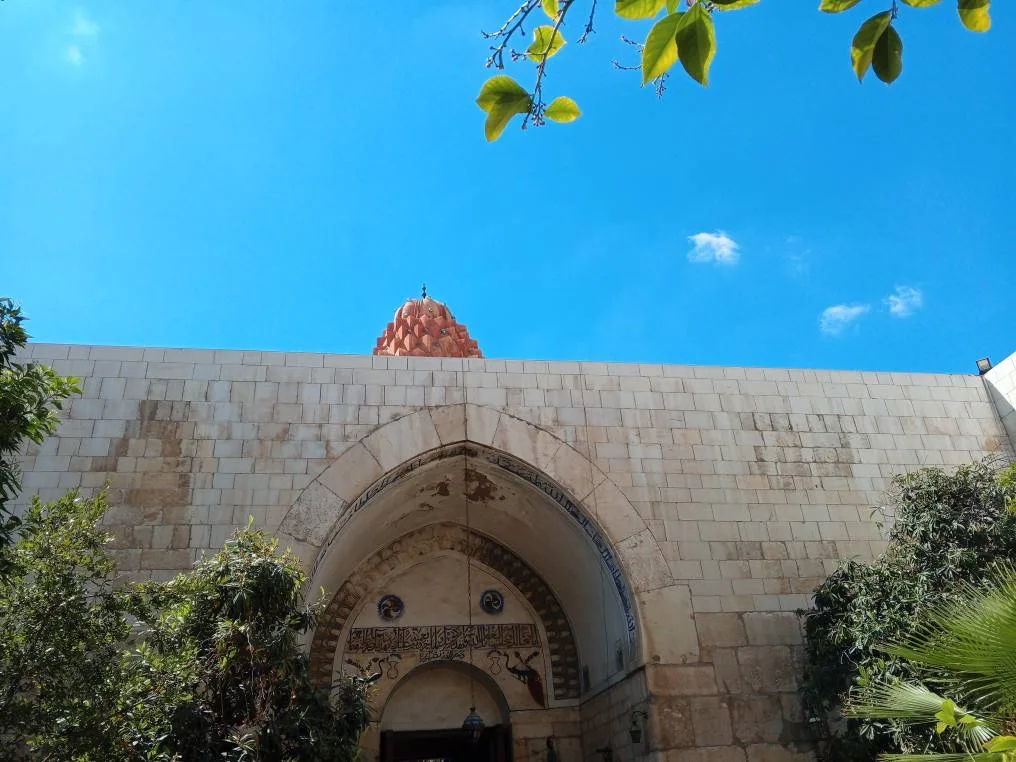
Located in the heart of Old Damascus, Bimaristan al-Nuri was founded by Nur al-Din Zangi in the 12th century as a free hospital for the poor — and went on to become one of the most important medical institutions of the medieval world.
The building follows traditional Damascene residential architecture: a central open-air courtyard with a fountain, allowing natural light and air to circulate — a design that served both a functional and therapeutic purpose for patients. Today it operates as the Museum of Arab Medicine and Science, with dedicated halls covering the history of medicine, pharmacy and drug preparation, and the natural sciences. A separate hall houses taxidermied animals once used in anatomical study.
Aleppo National Museum
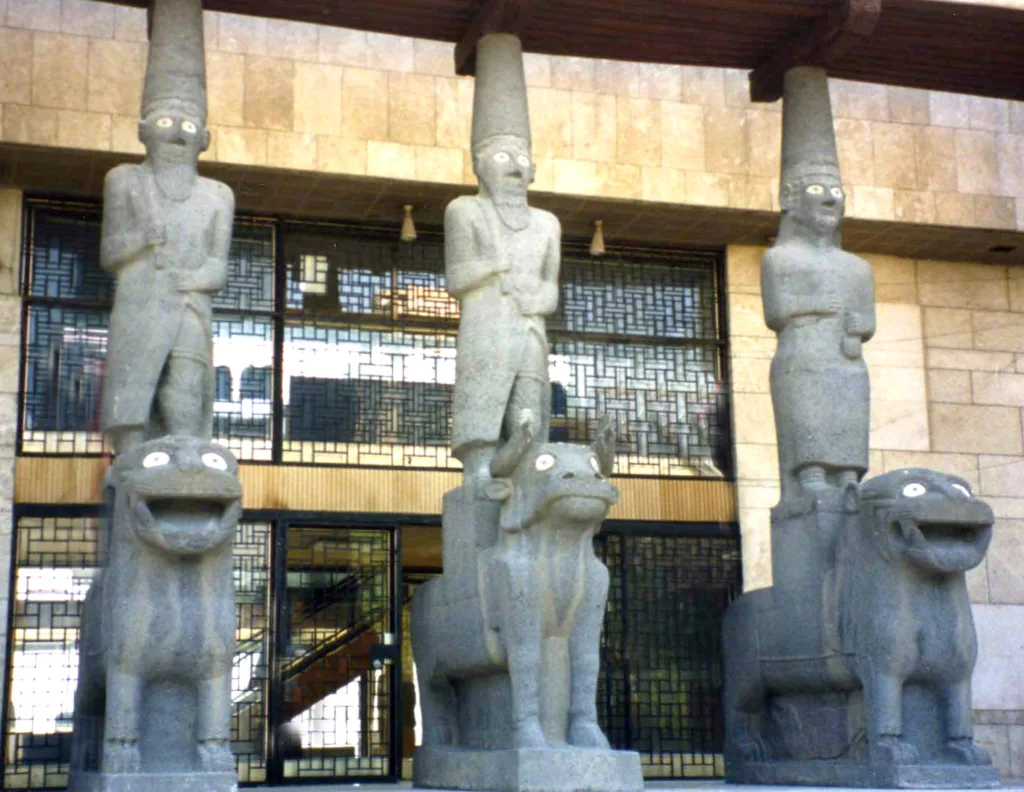
The Aleppo National Museum is an essential archive of northern Syrian civilization and one of the finest museums in the country. What sets it apart from its Damascus counterpart is that its entire collection is of Syrian origin — every artifact was discovered on Syrian soil.
The museum covers the full arc of human history in the region: prehistoric settlements along the Euphrates, the beginnings of agriculture, the great kingdoms of Ebla and Mari, through to Greek, Roman, Byzantine, and Islamic periods. The Islamic section holds particularly remarkable decorative objects.
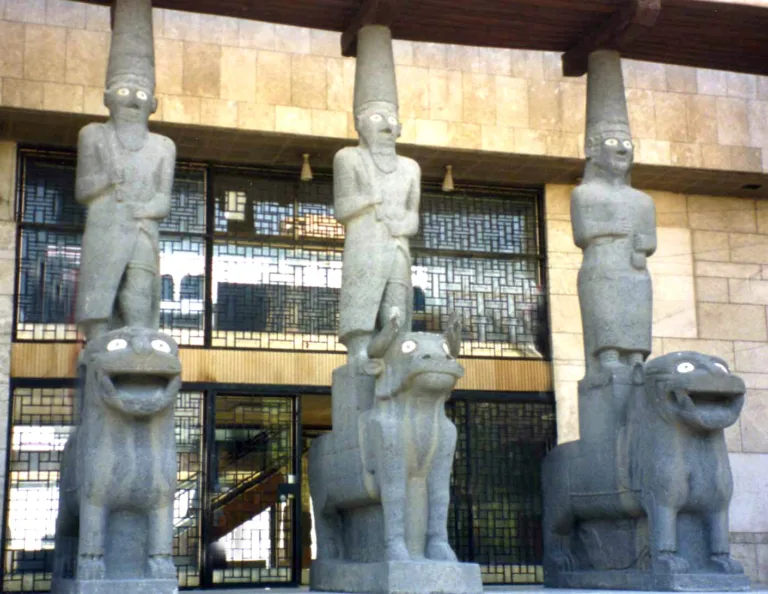
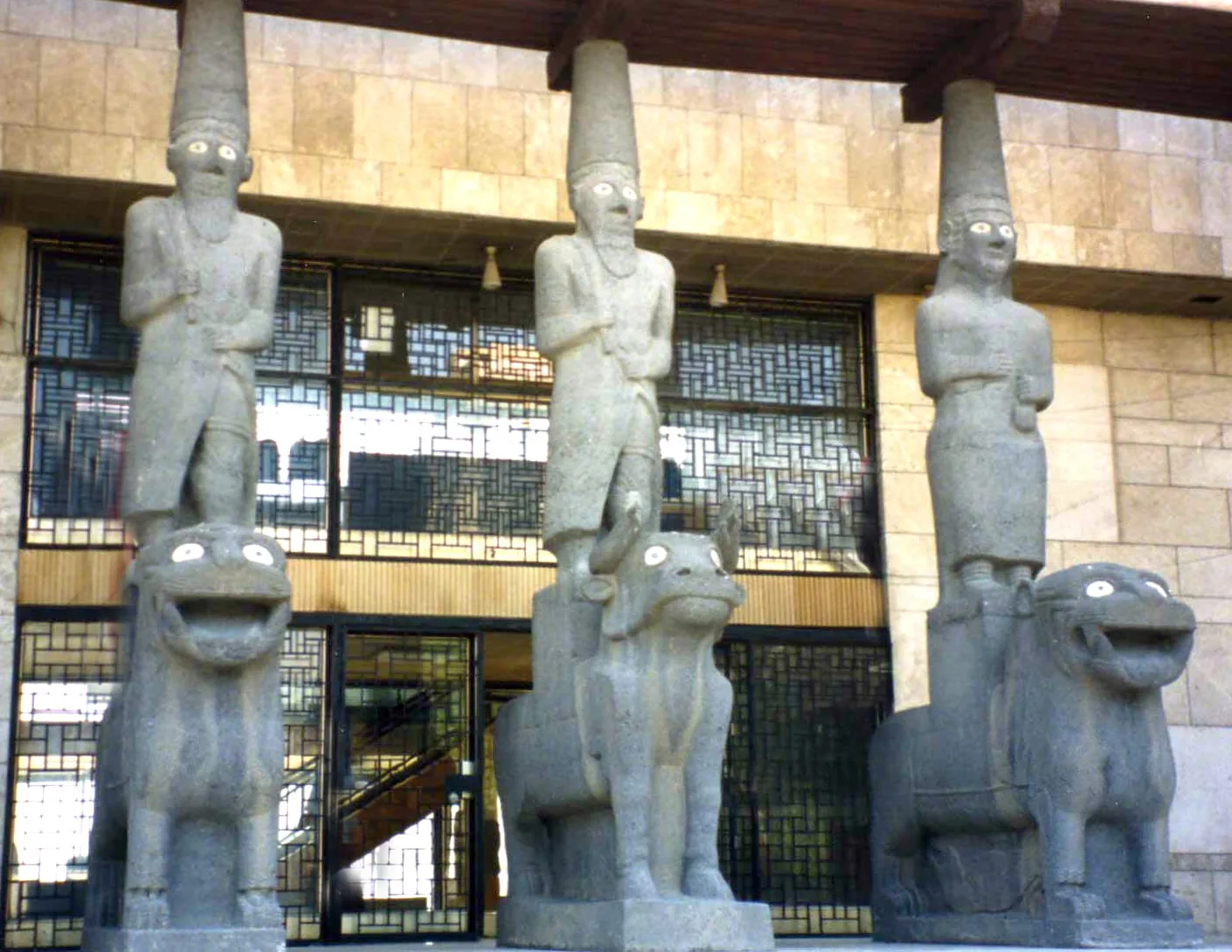
The museum’s facade is itself a landmark — a reconstruction featuring animal statues surmounted by three human figures, originally the entrance portal of a temple or palace at Tell Halaf, dating to the 10th century BCE. Aleppo National Museum is Syrian civilization distilled into a single building.
Ancient Cities
Palmyra
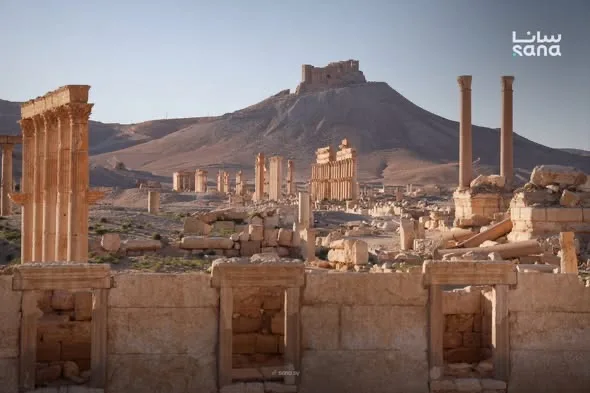
Palmyra is Syria’s most iconic archaeological site — a UNESCO World Heritage city rising from the Syrian desert, approximately 140 km east of Homs near an ancient caravan oasis.
The city rose to global prominence during the Roman era when it briefly broke free under Queen Zenobia, who expanded Palmyrene control as far as Alexandria before the empire reasserted itself and captured her. That chapter of defiance made Palmyra legendary long before archaeologists arrived.
The archaeological zone is vast — an open-air museum of Roman columns, ancient temples, distinctive tower tombs, and hundreds of funerary sculptures scattered across the landscape. A hilltop Arab castle overlooks the entire site. The essential stops are the Colonnaded Street, the Arch of Triumph, and the Temple of Bel — among the best-preserved Roman religious structures in the Near East.
Bosra
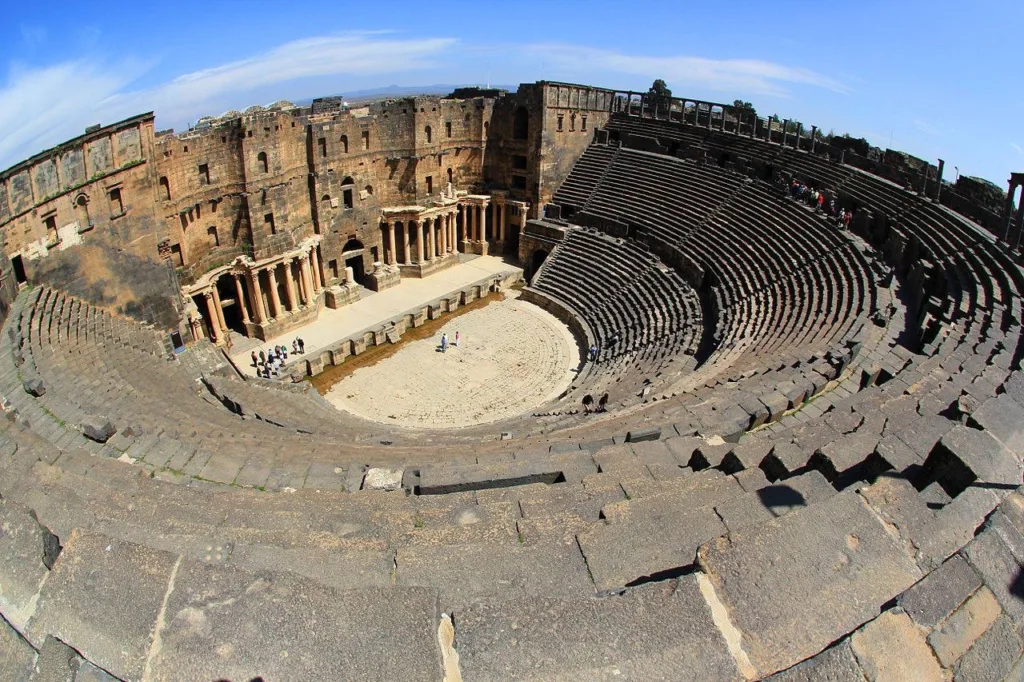
In the far south of Syria, an Islamic citadel wraps around a perfectly preserved Roman theatre — a combination you will not find anywhere else on Earth.
Bosra is a city that has been continuously inhabited for thousands of years. Located about 40 km east of Daraa near the Syrian-Jordanian border, it is built almost entirely from black basalt stone — a volcanic material that has made its structures extraordinarily resistant to the passage of time. You walk today on streets laid by Roman engineers.
The Roman theatre at Bosra is one of the best preserved in the world, with a seating capacity of over 15,000 spectators. Its most remarkable engineering feature is its acoustic system — designed to carry sound from the stage to the highest rows without any amplification, a feat of ancient engineering that continues to function today. During the Islamic period, a full citadel was constructed around and over the theatre, creating the extraordinary layered monument that stands today.
Bosra is a living city — daily life has continued here for over two thousand years — which makes walking its stone streets an experience unlike any conventional archaeological site.
Apamea
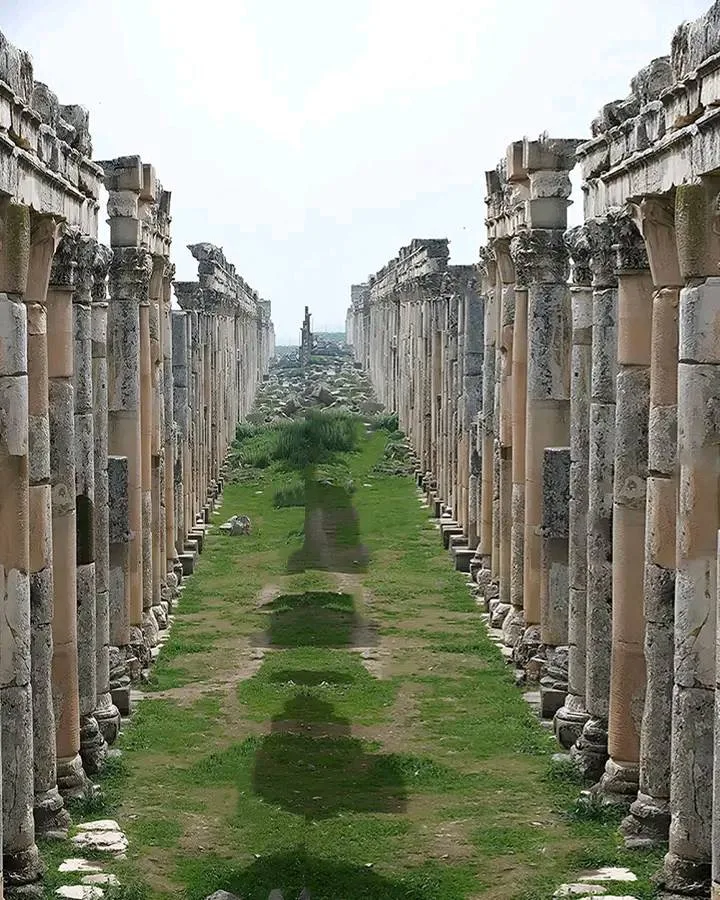
In the Ghab Plain of central Syria lies one of the ancient world’s great forgotten cities: Apamea. Founded around 300 BCE by the Seleucid commander Seleucus I Nicator and named after his wife Apama, this was once one of the most important cities in the Hellenistic Near East.
Located 60 km north of Hama near Qalaat al-Mudiq, Apamea is most famous for its extraordinary colonnaded street stretching 1,850 meters, lined on both sides by elaborately carved spiral columns — one of the longest and most complete Roman colonnaded streets in existence. The site also contains a theatre, a palace, early Christian churches, and a remarkable density of mosaic floors, many of which are considered among the finest examples of Roman mosaic art ever discovered.
Visiting Apamea is a singular experience — a complete ancient city largely forgotten by mass tourism, set within a landscape of exceptional natural beauty, especially in spring.
Amrit
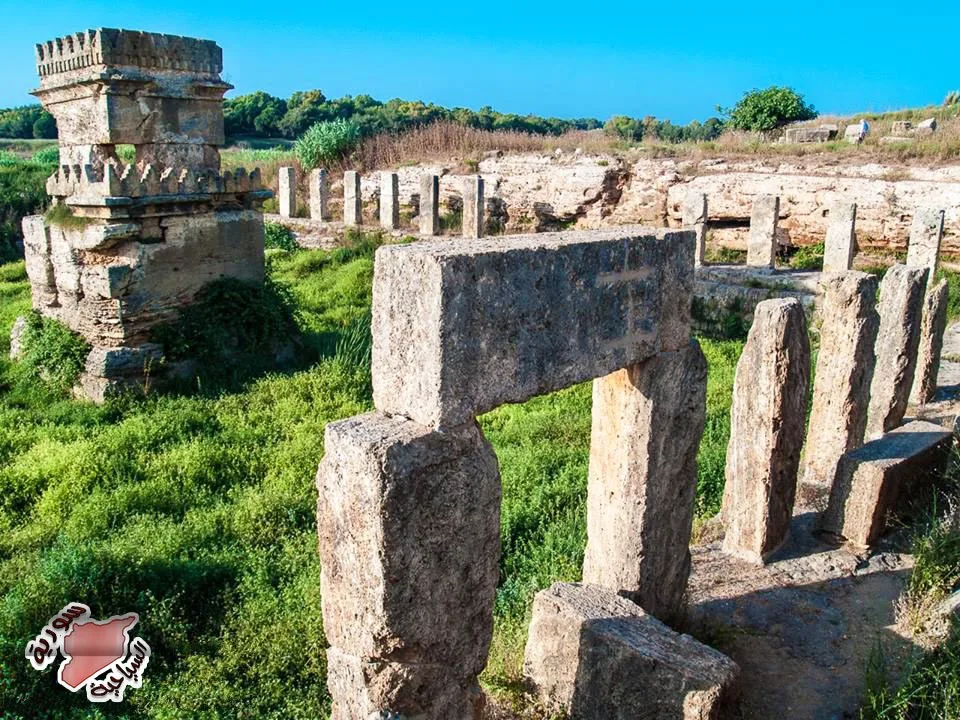
Seven kilometers south of Tartus on the Syrian Mediterranean coast lies Amrit — the only surviving Phoenician city in the world that has not been built over by later civilizations, preserving its original urban form largely intact.
The site contains several exceptional monuments. Its athletic stadium predates comparable Greek stadiums and is considered the world’s oldest known sporting arena. The city also features a Phoenician temple sanctuary carved directly into the rock, and a series of distinctive royal tower tombs known locally as al-maghazil (the spindles).
Amrit is an essential destination for anyone interested in pre-Greek Mediterranean civilizations — a rare, undisturbed window into Phoenician life on the Syrian coast.