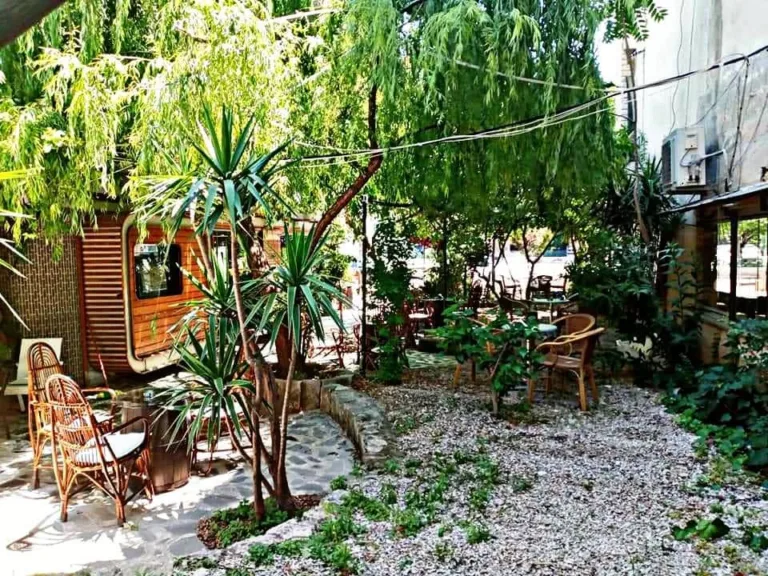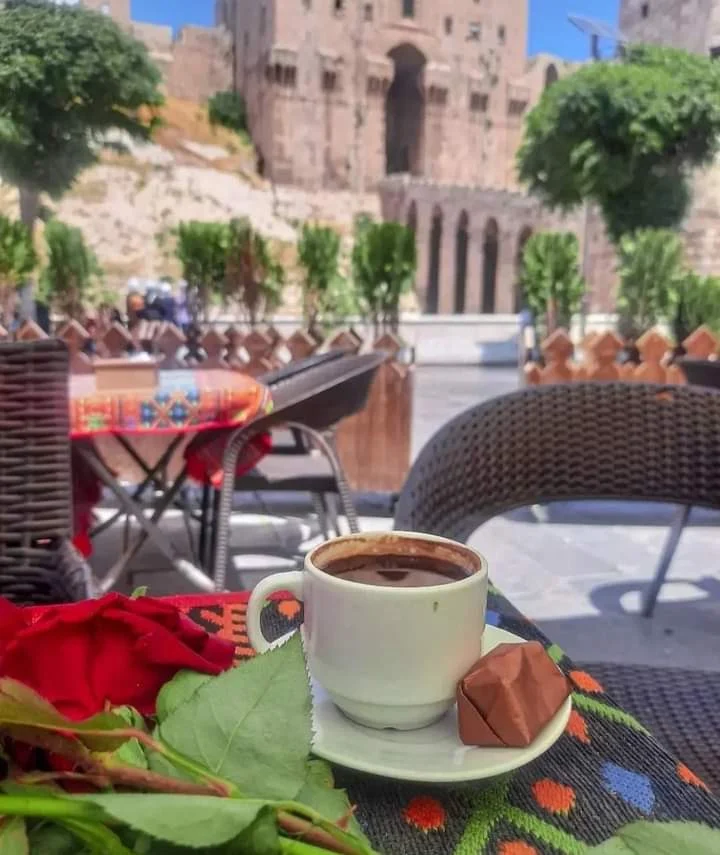
In Damascus, food is the last thing you need to worry about. Hundreds of shops and stalls selling Syrian street food are spread through the streets — literally everywhere — and the striking thing is that none of it is any less good than what the best restaurants in the city serve. If anything the reverse: some smart restaurants make a point of serving versions of these same street dishes.
Syrian street food: the savoury plates
Fatteh and hummus
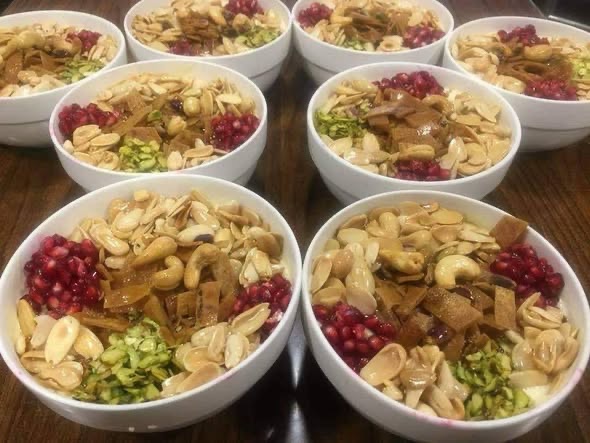
The most important of the everyday dishes, and the one most widely eaten in Syria generally and in Damascus in particular, is fatteh made with chickpeas and ful medames (ful) — what Damascenes call tasaqi. There is barely a street or lane in the city without a small shop serving these simple, very good plates, and the competition between them over who does it best has never let up.
Fatteh starts from boiled chickpeas with tahini, spices and torn bread, then gets fried in ghee with nuts — and this is where the craft and the additions come in, each version with its own flavour.
Passing through Damascus, make sure you eat at least one plate of fatteh or hummus, though be warned: the taste can become a habit.
Fatteh is served on practically every street in Damascus, but one of the oldest and most famous specialists is Bouz al-Jedi in the Salhiyeh quarter, which you could fairly call the dean of the trade. Eating there is not something you forget.
The sujuk sandwich at Syrob
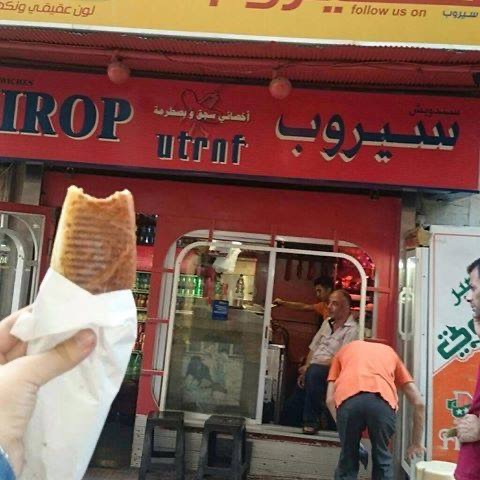
In Salhiyeh, among the crush of shops and shopfronts, Syrob holds its own on flavour alone.
The small shop opened 60 years ago, and the staff have kept to the same standard of service ever since. It has served sandwiches of sujuk and basturma in the authentic Armenian style from the day it opened, at the same quality, with experience added over the years — to the point that a sujuk sandwich from Syrob has become something of an icon.
Both the basturma and the sujuk are made from beef, prepared in a particular way with a spice mix of their own and a good deal of craft, which is what produces the flavour the place is known for.
You do not need to plan this one. Walk through Salhiyeh and the smell will catch you.
Qaymariyya croissants
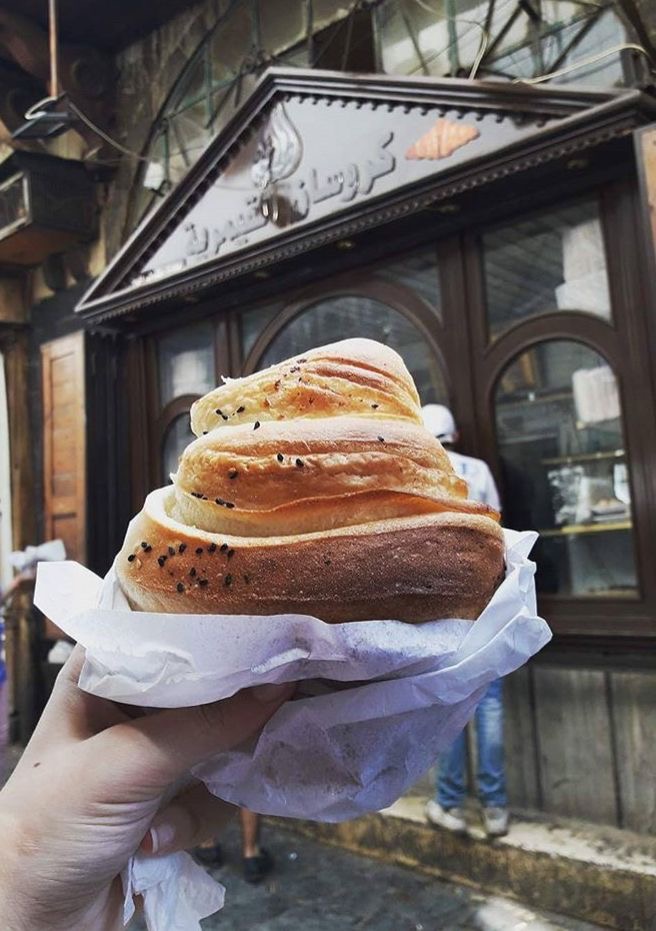
Walking the old lanes of Damascus, in Qaymariyya specifically, the smell gets you without any effort on your part. You will not need directions to find the well-known Qaymariyya croissant shop.
The shop bakes a range of things, but the croissant is what it is known for: a traditional French pastry that settled in the middle of Damascus and took on a local character. A walk through the old city is no longer complete without stopping in for the cheese croissant.
It has built its reputation over years and held the quality its customers took to, until it became a fixed stop for visitors and residents alike. There is nothing better for a quick breakfast on the move.
Tamari ka’ak
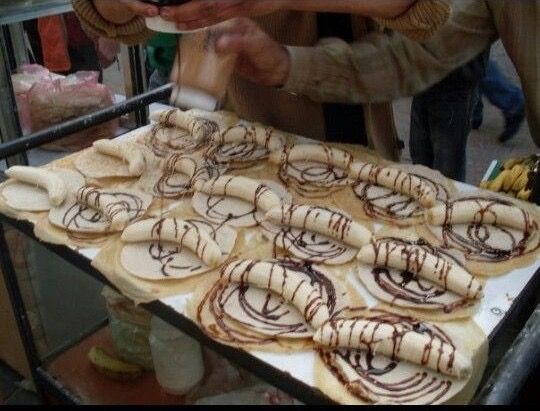
A calorie bomb. It was the companion of students and workers on the street, a small rich snack that lets you carry on with your day at full strength however tired you are — and it is very fast, sold directly on the street from dozens of mobile carts.
It is built mainly from two layers of dough, the first fried and the second baked (that is the ka’ak), then covered with a layer of date syrup — which is where the name tamari comes from — with tahini and toasted sesame added, plus optional extras such as banana, condensed milk or sugar, and finally some nuts, pistachios above all. In short: a block of calories that needs a willing heart.
The good thing about it is that you can come across it literally anywhere, and among students it counts as a tradition.
Sweets
Awameh
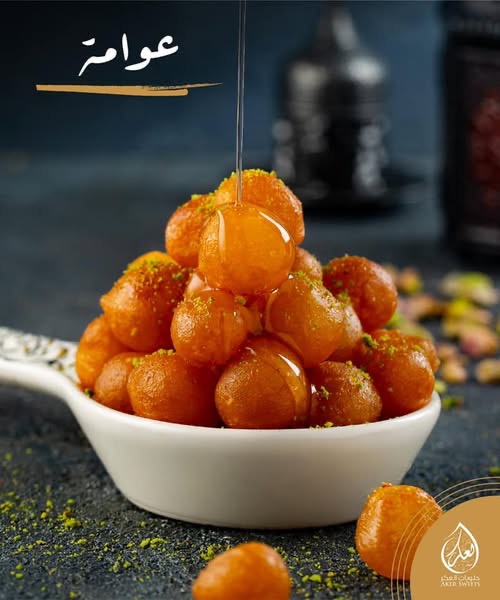
The light sweet found across the Levant, which each country names its own way: in Palestine and Jordan it is luqaimat or luqmat al-qadi, while in Damascus it is awameh. They are balls of fried dough drenched in syrup, and they are the most widespread street sweet in the city, because they are easy to make and there is constant demand for them.
You will find awameh at any sweet shop or even on a mobile cart, and when you do, do not hesitate.
Madlouqa
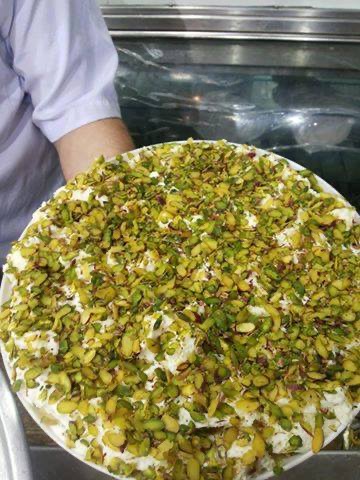
In the heart of the old quarters of Damascus, in Bab Srija specifically, a treasury of good sweets is tucked away: the well-known al-Bike, which specialises in Nabulsi kunafa and madlouqa, two things that have gone together in the city for a long time.
Al-Bike serves madlouqa, which uses the same kunafa dough with a thick layer of local clotted cream (qashta) and cream on top, finished with another layer of pistachios and syrup. It also serves Nabulsi kunafa, made with a fine dough, stuffed with cheese and soaked in syrup, and you can order the two together in a single portion. The shop has no seating: the custom is to take your order and eat it standing in the street — a royal dish on the pavement, a combination you will not see anywhere else.
If you are visiting Damascus, do not pass this up. It is genuinely worth it, and it is available at most sweet shops in the city.
Bakdash ice cream
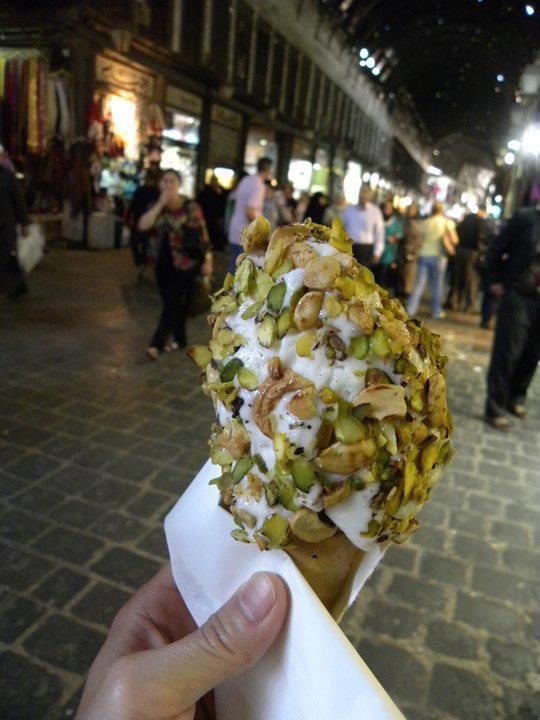
Bakdash is one of the most important and oldest fixtures of Al-Hamidiyah Souq in Old Damascus, and the original of Damascene ice cream. You cannot walk through the souq without trying the pounded Arabic ice cream under its layer of pistachios.
The ice cream comes in several forms in the old shop, and while the shop itself is a sight, many people prefer to eat their Bakdash while carrying on through the souq. The scene has become part of the street: dozens of visitors walking with a tower of ice cream in hand. Every time you taste it you are back in the lanes of the old city.
Drinks
Licorice juice
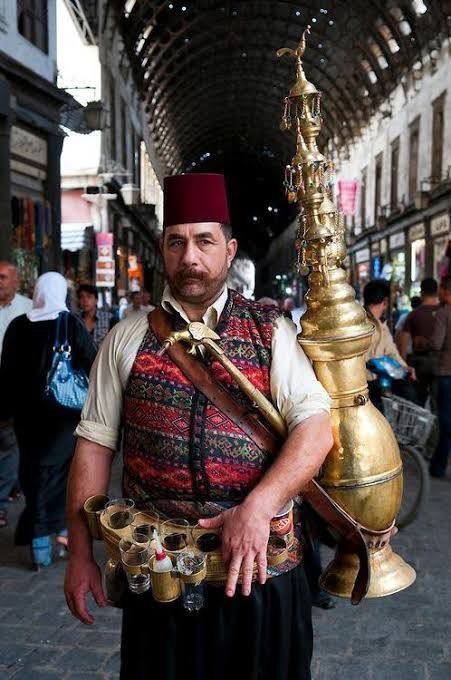
Also in Al-Hamidiyah Souq, and another of its permanent features, is the old Damascene licorice seller in traditional dress with a red tarbush, carrying a large brass tank on his back — a mobile drinks shop, or a fire engine for visitors worn out by the heat and the walking.
The seller juggles the glasses and pours you licorice (ariqsus) or tamarind, whichever you prefer, in a way that is a performance in itself.
Licorice is a Damascene tradition, and tamarind always shares the pitch with it. Both are mainly associated with Ramadan, but you will find them on the street all year round.
Visiting Damascus and walking its streets is full of things to do, food and drink among them, and what the street serves competes on quality and cleanliness with the best-equipped shops. So do not hesitate to eat on the street in Damascus: the streets, like the houses, are open to visitors and always put out the best they have. For a meal sitting down instead, see the best restaurants in Damascus.